
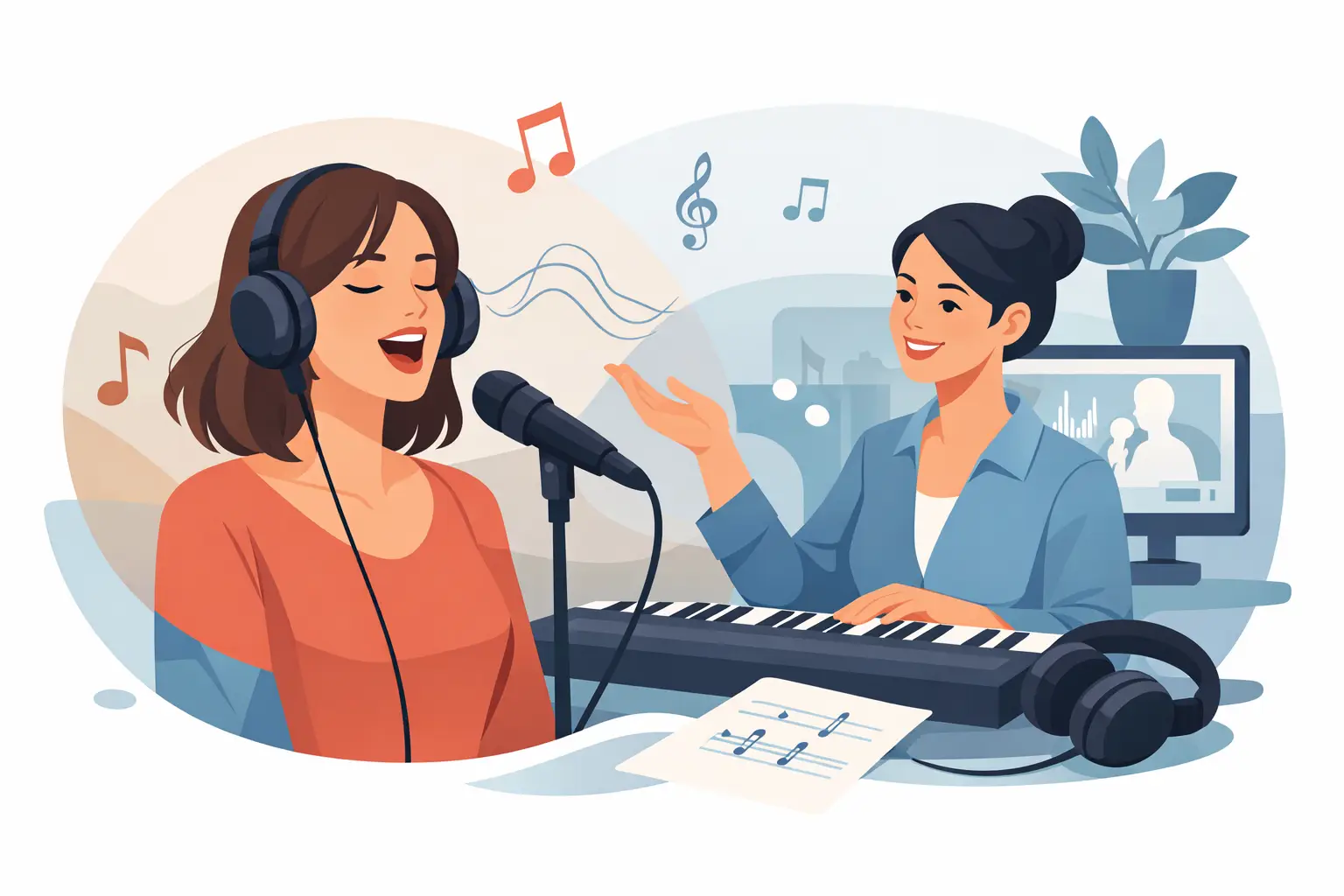
You do not need to be “a singer” before you start singing. Beginner voice lessons adults often seek are not about proving you have a perfect voice on day one. They are about learning how your voice works, building confidence one small win at a time, and finally giving yourself permission to enjoy music.
Maybe you sing quietly in the car, avoid karaoke because high notes make you nervous, or have always wanted to perform a favorite song without feeling exposed. Those are all great reasons to begin. Your voice is personal, but learning to use it does not have to feel intimidating.
What Adult Beginner Voice Lessons Really Look Like
A good first lesson should feel encouraging, clear, and surprisingly practical. You will talk with your instructor about what you enjoy listening to, what you hope to do with your voice, and any concerns you have. Some adults want to sing confidently at open mic nights. Others want to join a band, prepare for a special event, improve their church singing, or simply enjoy a new creative outlet.
From there, lessons are shaped around your goals. You may begin with easy vocal exercises, breathing work, posture, and a song you genuinely like. There is no requirement to start with a difficult classical piece or to know music theory before you walk in.
The goal is not to make every singer sound the same. It is to help you find a healthy, reliable version of your own voice.
Your First Few Lessons May Cover
Early lessons usually focus on the building blocks that make singing feel easier: relaxed breathing, steady pitch, clear vowels, comfortable volume, and the ability to move between low and high notes without straining. You will also begin learning how to practice effectively at home, even if you only have a few minutes between work, family, and everything else on your calendar.
A skilled teacher listens closely for habits that may be getting in your way. You might be pushing too much air, tightening your jaw, lifting your shoulders, or trying to copy an artist whose range does not fit your voice. These are normal beginner habits, not failures. With kind coaching and repetition, they can change.
Why Adults Often Learn Differently Than Kids
Adults bring real advantages to voice lessons. You already know what music moves you. You understand goals, can notice progress, and often have a strong reason for wanting to learn. That motivation matters.
At the same time, adults can be tougher on themselves. Many have spent years believing they are tone-deaf, that they started too late, or that singing is a talent people either have or do not have. Those beliefs can make the first lesson feel vulnerable.
The truth is more encouraging. While every voice is different, most people can improve pitch, range, tone, rhythm, and confidence with consistent coaching. Natural ability can affect the starting point, but it does not decide whether you get to enjoy singing.
The best pace depends on your schedule, your goals, and your current comfort level. Weekly lessons give you regular guidance and accountability, while a realistic home practice plan helps the progress stick. Ten focused minutes several days a week can be more useful than one long, frustrated practice session.
Beginner Voice Lessons for Adults Should Fit Your Goals
There is no single correct reason to take voice lessons. A lesson plan for someone who wants to sing pop and rock with a local band will look different from one for a singer preparing for musical theater. The fundamentals overlap, but the song choices, vocal style, performance skills, and range of exercises should support what you actually want to do.
If you love singer-songwriter music, your instructor may help you connect lyrics to your natural speaking voice and develop a warm, conversational sound. If you want to sing powerful rock choruses, you may work on breath support, resonance, and how to add energy without yelling. If musical theater is your goal, diction, storytelling, and character choices may receive more attention.
This is why personalized instruction matters. A lesson should not feel like a test you have to pass. It should feel like a plan that makes your next musical goal possible.
Do You Need to Read Music?
No. Reading music can be helpful, especially if you hope to perform with other musicians or join a choir, but it is not a prerequisite for starting. Many adult beginners learn songs by listening, using lyrics and chord charts, and developing their ear over time.
Your instructor can introduce music reading and basic musicianship when it serves your goals. You might learn to recognize rhythms, follow a melody line, understand song structure, or communicate more easily with a pianist or band. The key is learning what is useful without making the process feel overwhelming.
Confidence Is a Skill You Can Practice
Most adult singers are not only working on vocal technique. They are working on the moment right before they sing in front of someone else.
That shaky feeling is common. Your voice is part of you, so sharing it can feel more personal than playing an instrument. The answer is not to wait until you feel completely fearless. Confidence grows by taking manageable steps: singing for your instructor, recording yourself at home, sharing a verse with a friend, or performing a favorite song in a welcoming setting.
Performance opportunities can make a major difference because they give your lessons a real destination. A supportive open mic, jam session, recital, or band experience helps turn practice into a memory you can be proud of. You learn how to recover from a missed note, connect with an audience, and keep going even when your nerves show up.
At Matt Burk Music Studio, adult students can build those skills in a friendly community that values progress, fun, and the courage to share your gifts. For many beginners in Allen and Frisco, performing becomes less of a scary someday goal and more of an exciting next step.
How to Get More From Your Voice Lessons
You do not need hours of free time or a home recording setup to make progress. What matters most is showing up consistently and staying curious about what your voice can do.
Come to lessons with a few songs you love, including songs that feel comfortably within reach and one or two that challenge you. Be honest when something feels difficult. A great instructor wants to know when an exercise is confusing, a key feels too high, or a song does not feel like you.
Between lessons, keep practice simple. Warm up gently, review the exercises your teacher assigned, and work on a small section of your song instead of trying to fix everything at once. Recording a short practice clip can be useful, but do not use it as a reason to criticize every detail. Listen for one improvement and one question to bring back to your next lesson.
Your voice also benefits from basic care. Stay hydrated, give yourself rest when you are sick or unusually tired, and avoid pushing through pain. Singing can require effort, but pain, persistent hoarseness, or strain are signals to pause and get guidance.
Choosing the Right Voice Teacher
Technique matters, but the relationship with your teacher matters too. Look for an instructor who can explain ideas in a way you understand, adapts to your musical taste, and makes you feel safe trying something new. You should leave lessons with useful direction, not embarrassment.
It also helps to choose a studio with scheduling that works for adult life. Work travel, family plans, and busy seasons happen. Flexible options make it easier to keep music in your life instead of giving it up when your calendar gets full.
A free trial lesson is a smart way to see whether the teacher’s approach feels right. You can ask about their experience, discuss your goals, and experience the environment before making a decision. The right fit should leave you feeling energized, supported, and ready to come back.
Your first song does not have to be impressive. It only has to be yours. Start with the voice you have today, let a caring instructor guide you, and give yourself the chance to hear how far it can go.