
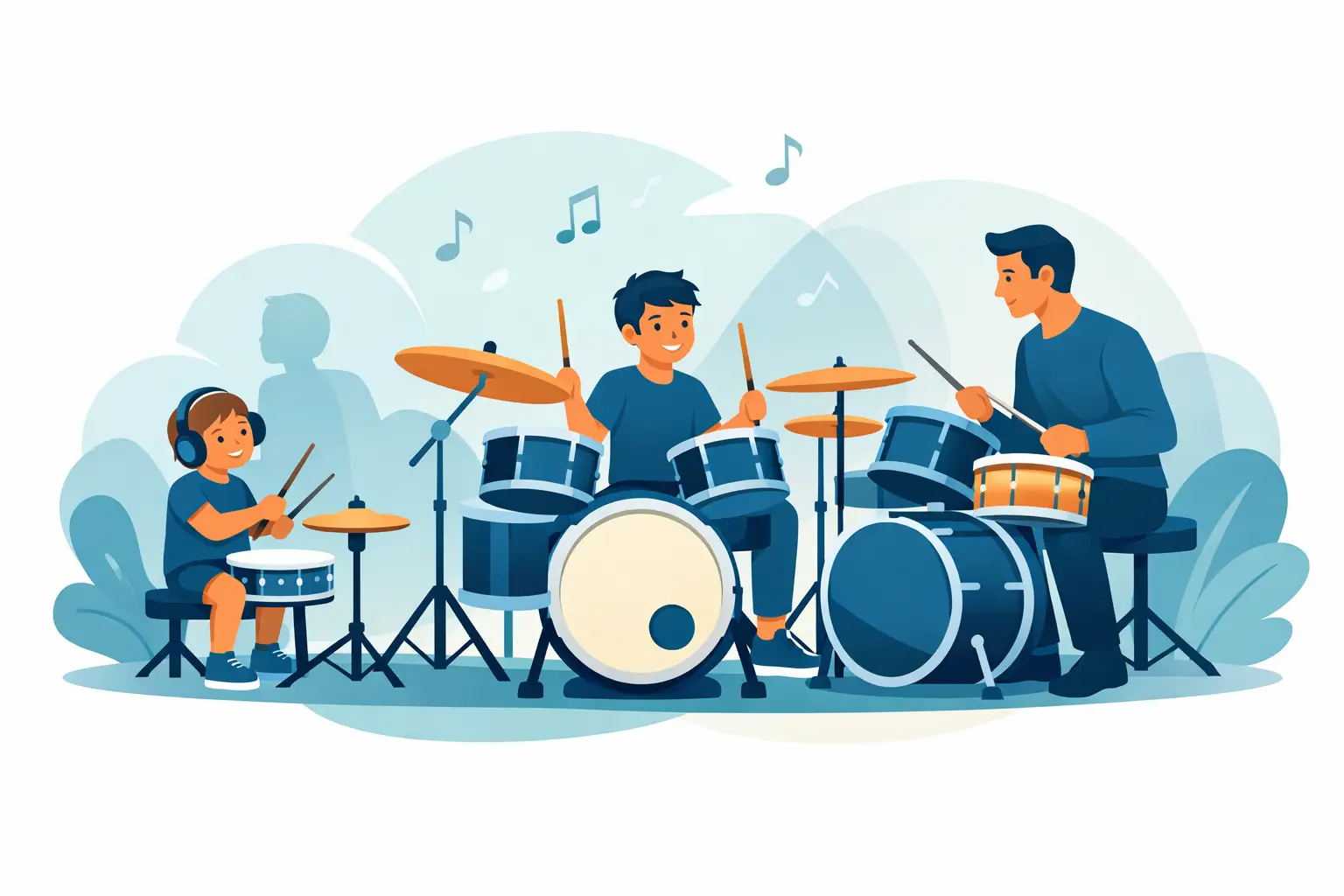
A lot of parents ask the same question right after their child starts drumming on the kitchen table with pencils: what age for drum lessons actually makes sense? The honest answer is that there is no single perfect age for every student. What matters more is readiness - attention span, coordination, interest, and whether lessons will feel exciting instead of frustrating.
Drums can be an amazing first instrument because they are physical, energetic, and fun right away. Students do not have to spend months trying to make a decent sound. They can keep a beat, learn a simple groove, and feel successful early on. That quick win matters, especially for younger kids.
What age for drum lessons is typical?
For many children, ages 6 to 8 is a very common starting window for private drum lessons. At that age, most kids can follow simple directions, count basic rhythms, and stay focused long enough to make steady progress. They are also usually big enough to sit at a drum set with some adjustments and start building good habits.
That said, some 5-year-olds are absolutely ready. Others do better waiting until 7 or 8. It depends on the child. A younger student who loves music, listens well, and enjoys repeating short exercises may do great. A child who is still developing patience or coordination may benefit from waiting a little longer or starting with shorter, playful lessons.
For teens and adults, the answer is even simpler: it is never too late. If a student is motivated, open to coaching, and excited to learn, drum lessons can start at any age.
The real signs a child is ready
Age matters less than readiness. A child does not need to be advanced or unusually serious to begin, but a few signs make the learning process smoother.
One big sign is focus. Can your child pay attention for 20 to 30 minutes with support from a teacher? They do not need perfect concentration, but they should be able to stay with an activity, try again after mistakes, and follow a few steps in a row.
Another sign is coordination. Drums ask the body to do different things at the same time. That can sound intimidating, but beginners start small. If a child can clap along to music, tap a steady beat, or copy simple patterns, that is a strong foundation.
Interest matters just as much. If your child lights up around music, pretends to play drums, or gets excited about rhythm, that natural enthusiasm can carry them through the early stages. Motivation is powerful. Students who want to be there usually progress faster and enjoy the process more.
Starting younger: the benefits and trade-offs
There are real advantages to starting early. Younger students often absorb rhythm naturally, and they tend to be less self-conscious. They are willing to experiment, make noise, and have fun. That openness can make drum lessons feel joyful from the beginning.
Early lessons can also support listening skills, timing, coordination, and confidence. For some children, drums become a positive outlet for energy and creativity. They get to move, count, listen, and express themselves all at once.
But younger is not always better. A child who starts too soon may struggle with posture, technique, or staying engaged. If lessons feel like pressure, progress can stall. In those cases, waiting six months to a year can make a huge difference. The goal is not to start as early as possible. The goal is to start when lessons will feel encouraging and productive.
Can a 4- or 5-year-old take drum lessons?
Sometimes, yes. But expectations need to be realistic.
At that age, the best lessons are usually short, interactive, and built around movement and rhythm games. A very young beginner may not jump straight into full drum set independence. Instead, they might work on keeping a beat, using sticks safely, recognizing patterns, and getting comfortable with the instrument.
This can be a great fit when the teacher knows how to make learning playful without losing structure. It is less about pushing technical skills and more about building a strong musical relationship. If the child is having fun and connecting with rhythm, that is meaningful progress.
If your 4- or 5-year-old is curious but not quite ready for full private lessons, that is not a failure. It just means their musical journey may begin with exposure, listening, movement, or a trial lesson to see how they respond.
Why ages 6 to 8 often work so well
This is the sweet spot for many beginning drummers. Children in this range are often ready to learn basic stick control, simple grooves, counting, and listening skills in a more organized way. They can usually understand practice routines, even if those routines are still short.
They also tend to enjoy visible progress. When a student realizes they can play a beat that sounds like real music, confidence grows fast. That sense of "I can do this" is one of the best reasons to begin lessons during this stage.
For families, this age range often works well because students are old enough to benefit from consistency but still young enough to build strong habits early.
What age for drum lessons if your child is older?
If your child is 9, 12, or 15 and has never taken lessons, that is completely fine. Older beginners often make excellent progress because they can focus longer, understand feedback more quickly, and practice with more independence.
They may also come in with stronger musical preferences, which helps keep lessons engaging. A student who loves rock, pop, worship music, jazz, or heavier styles can connect their lessons to songs they already enjoy. That connection keeps motivation high.
In many cases, older students move through beginner material faster than very young children. The trade-off is that they may be more aware of mistakes or compare themselves to others. That is why supportive instruction matters so much. The right teacher keeps students challenged without making them feel behind.
Adults ask too - and the answer is yes
Adults often think they missed their chance. They did not.
If you are wondering what age for drum lessons works for adults, the answer is simple: the right age is when you are ready to start. Adults bring patience, life experience, and clear goals. Some want to play in a band. Some want a creative outlet after work. Some just always wanted to learn and are finally giving themselves permission.
Adult beginners may need time to develop coordination and relax into the instrument, but they also tend to appreciate the process. With personalized lessons, steady encouragement, and music they genuinely like, adults can make strong progress and have a lot of fun doing it.
How to know if now is the right time
A trial lesson is often the best way to answer the question. You can watch how the student responds to the teacher, the instrument, and the structure of the lesson. Sometimes a child who seems unsure at home becomes focused and excited in a real lesson. Sometimes the opposite happens, and that is helpful to know too.
Look for a program that adjusts to the student instead of forcing every beginner into the same mold. Great drum instruction should meet students where they are, whether they are 5 and full of energy, 11 and curious about their first band, or an adult finally trying something new.
At a student-first studio like Matt Burk Music Studio, that flexibility can make all the difference. Personalized teaching, encouraging instructors, and real performance opportunities help students grow in skill and confidence at a pace that feels motivating.
A better question than age
Instead of asking only what age for drum lessons is best, ask this: Is my child interested, ready to engage, and likely to enjoy the experience? If the answer is yes, lessons may be a great next step. If the answer is not yet, that is okay too. Music is not a race.
The best start is one that builds excitement, confidence, and momentum. When students feel supported from the beginning, they are much more likely to stick with it, grow, and eventually share their music with others. Sometimes the perfect age is 6. Sometimes it is 10. Sometimes it is 42. What matters most is starting when the experience can feel joyful, encouraging, and worth coming back to next week.