
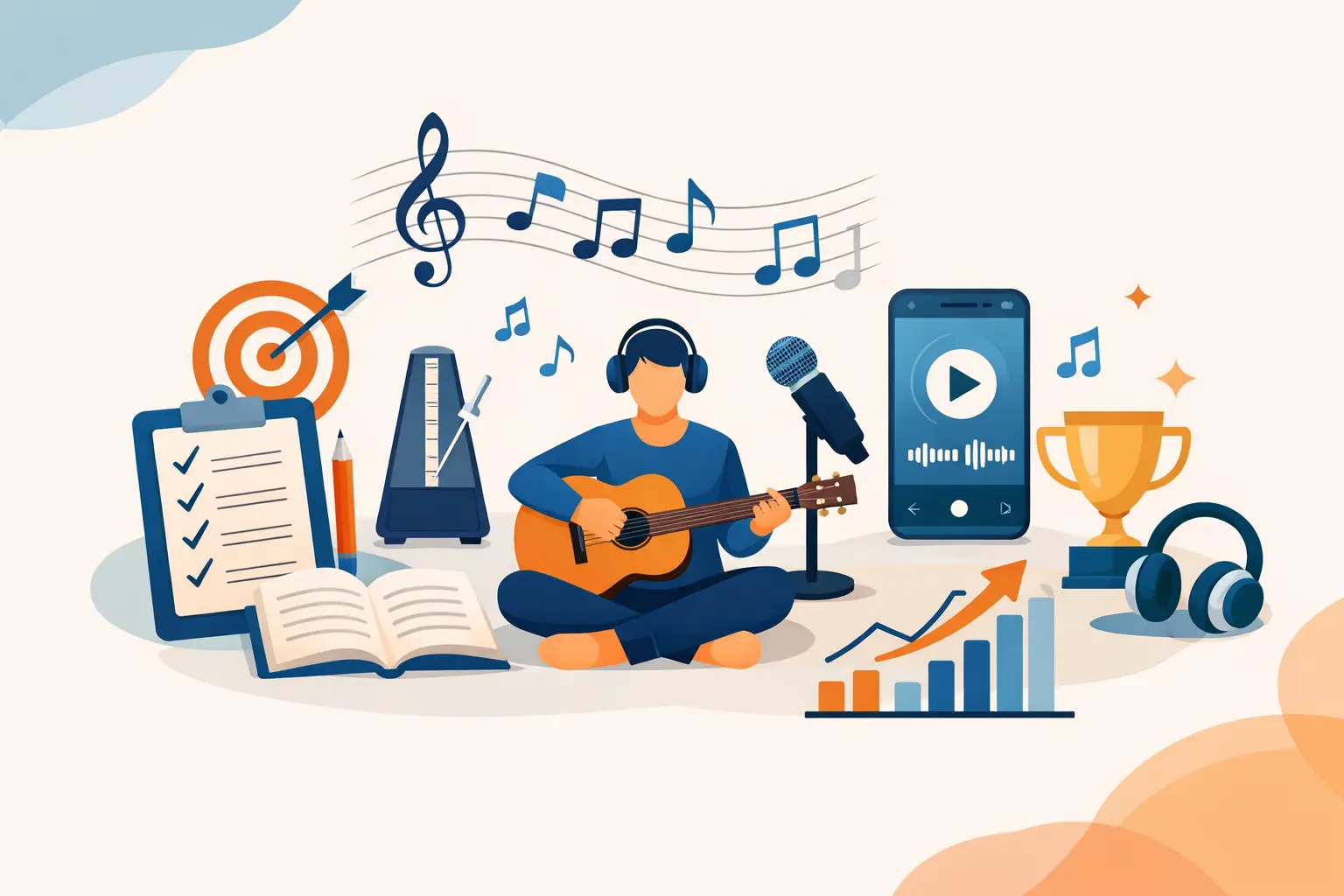
Most beginners do not quit music because they lack talent. They quit because their goals are too vague. If you want the best music goals for beginners, the answer is not "get better" or "practice more." The best goals are clear, encouraging, and small enough to help you feel progress early.
That matters whether you are a parent looking for the right starting point for your child, a teen trying a new instrument, or an adult finally giving music lessons a shot. Good goals make practice less frustrating, lessons more productive, and growth a lot more fun.
What makes the best music goals for beginners?
A beginner goal should do three things at once. It should be specific enough to measure, realistic enough to achieve in the near future, and meaningful enough to keep you motivated when practice feels clunky.
That last part gets overlooked. A goal that sounds impressive but feels disconnected from your actual interests usually will not last. A seven-year-old piano student may light up over learning a favorite movie theme. An adult guitar beginner may stay committed because they want to play at a family gathering. A teen vocalist may care most about singing confidently at open mic night. Different goals can all be right if they match the student.
There is also a trade-off between ambition and momentum. Big dreams are great, but beginners usually do best when those dreams are broken into smaller wins. You do not need to aim for perfection. You need a reason to come back next week excited to keep going.
8 best music goals for beginners
1. Learn one full song
This is often the best first goal because it feels real. Exercises matter, but songs are where music starts to feel rewarding. Learning one complete piece gives beginners a sense of accomplishment that scales and drills alone rarely provide.
The key is choosing the right song. Too easy, and it feels forgettable. Too hard, and it becomes discouraging. A teacher can help match the song to the student's level while still keeping it fun and recognizable.
2. Build a steady practice routine
A beginner does not need marathon practice sessions. They need consistency. Ten to fifteen focused minutes several days a week usually beats one long, stressful session on Sunday.
This goal works well for kids and adults because it creates momentum without overwhelming anyone. For younger students, that may mean practicing right after homework. For adults, it may mean keeping the instrument out and ready so getting started takes less effort.
3. Play or sing with good basic technique
Technique can sound serious, but really it is about making music feel easier and safer. A pianist learning healthy hand position, a drummer working on stick control, or a singer learning breath support is building a foundation that prevents bad habits from getting in the way later.
This goal matters because beginners often want fast results. That is understandable. But rushing past technique can create frustration down the line. The sweet spot is learning just enough technique to support confidence without making lessons feel stiff or overly academic.
4. Keep time with a steady beat
This is one of the most valuable beginner goals on any instrument. Students who can stay with a beat sound more musical almost immediately, even if they only know a few notes or chords.
It also prepares them for the fun stuff - playing with other people, joining a band class, jamming with friends, or performing live. Rhythm is a confidence builder. When a student can feel the groove and stay locked in, everything starts to click.
5. Read basic music symbols or chord charts
Not every beginner needs to become a strong sight-reader right away. But every beginner benefits from learning how to follow some kind of musical roadmap.
For piano students, that may mean reading simple notes on the staff. For guitar, bass, or ukulele students, it might be learning chord charts or tablature. For vocalists, it could mean understanding lyric sheets, rhythm markings, and basic pitch direction. The goal is not to become perfect at reading overnight. It is to become more independent.
6. Perform for one person or one small group
Performance does not have to mean a packed room and bright lights. For a beginner, a performance goal can be as simple as playing for a parent, a friend, or a teacher at the end of a lesson.
This kind of goal builds courage early. It teaches students to finish a song, work through nerves, and share what they have learned. That shift is powerful. Music stops being something private and uncertain and starts becoming something they can actually offer to others.
For many students, especially kids and teens, this is where confidence really begins to grow.
7. Learn how to practice effectively
Practicing is a skill. Beginners often think practice means starting at the top of the song and hoping it gets better. A better goal is learning what to do when something feels hard.
That may include slowing a section down, clapping the rhythm first, isolating one measure, repeating a transition, or using a backing track or metronome. Students who learn how to practice smart do not just improve faster. They feel less stuck, which makes them much more likely to keep going.
8. Reach a milestone performance or musical moment
Beginners stay motivated when they can see where their effort is leading. That is why milestone goals are so helpful. Maybe it is playing at a recital, singing at an open mic, joining a beginner band class, recording a first song, or performing at a local venue.
This type of goal gives lessons direction. It also makes progress visible. Students are not just taking weekly lessons because they should. They are moving toward something exciting.
How to choose the right beginner music goals
The best music goals for beginners depend on age, personality, schedule, and learning style. A six-year-old who loves attention may thrive with an early performance goal. Another child may need a few months of quiet skill-building before they are ready to share. An adult beginner with a full schedule may do best with smaller weekly targets instead of one big outcome.
Interest matters too. If the student loves pop songs, the goals should include music they recognize. If they are fascinated by bands, group playing may become a strong motivator. If they enjoy creating, songwriting or beginner music production could be part of the plan sooner than expected.
This is why personalized instruction makes such a difference. A goal only works if it fits the person pursuing it.
Common beginner goals that sound good but often backfire
Some goals look ambitious on paper but lead to frustration. "Become advanced quickly" is one of them. So is "learn everything about music theory" or "play like my favorite artist in three months."
There is nothing wrong with dreaming big. But beginners usually need goals that create early wins. If a student feels behind all the time, they may start believing music is not for them. Usually that is not true. Usually the goal was just poorly matched to the starting point.
A better approach is to combine short-term and long-term goals. Learn two chords this week, then work toward playing a full song next month. Perform for family this month, then prepare for a bigger event later. Small wins create staying power.
Why support and community matter so much
Music goals are easier to reach when students feel encouraged, not judged. That is especially true for beginners, who are often managing nerves, self-doubt, and the awkward stage where nothing feels natural yet.
Support from a great teacher helps students stay on track, but community helps too. When beginners get chances to play with others, attend studio events, join jam sessions, or work toward live performances, their goals stop feeling isolated. Progress becomes something they can celebrate.
That is one reason many families and adult learners look for more than weekly lessons alone. They want a place where growth is guided, milestones are recognized, and students feel like they belong. At Matt Burk Music Studio, that kind of goal-driven, encouraging environment helps beginners keep going long enough to surprise themselves.
Start with goals that make music feel possible
If you are just starting out, pick goals that build confidence as much as skill. Learn one song. Practice consistently. Keep a steady beat. Share your music with someone. Those are not small goals. They are the goals that turn a beginner into a real musician.
The best first step is not waiting until you feel ready. It is choosing a goal that makes you want to come back tomorrow and try again.