
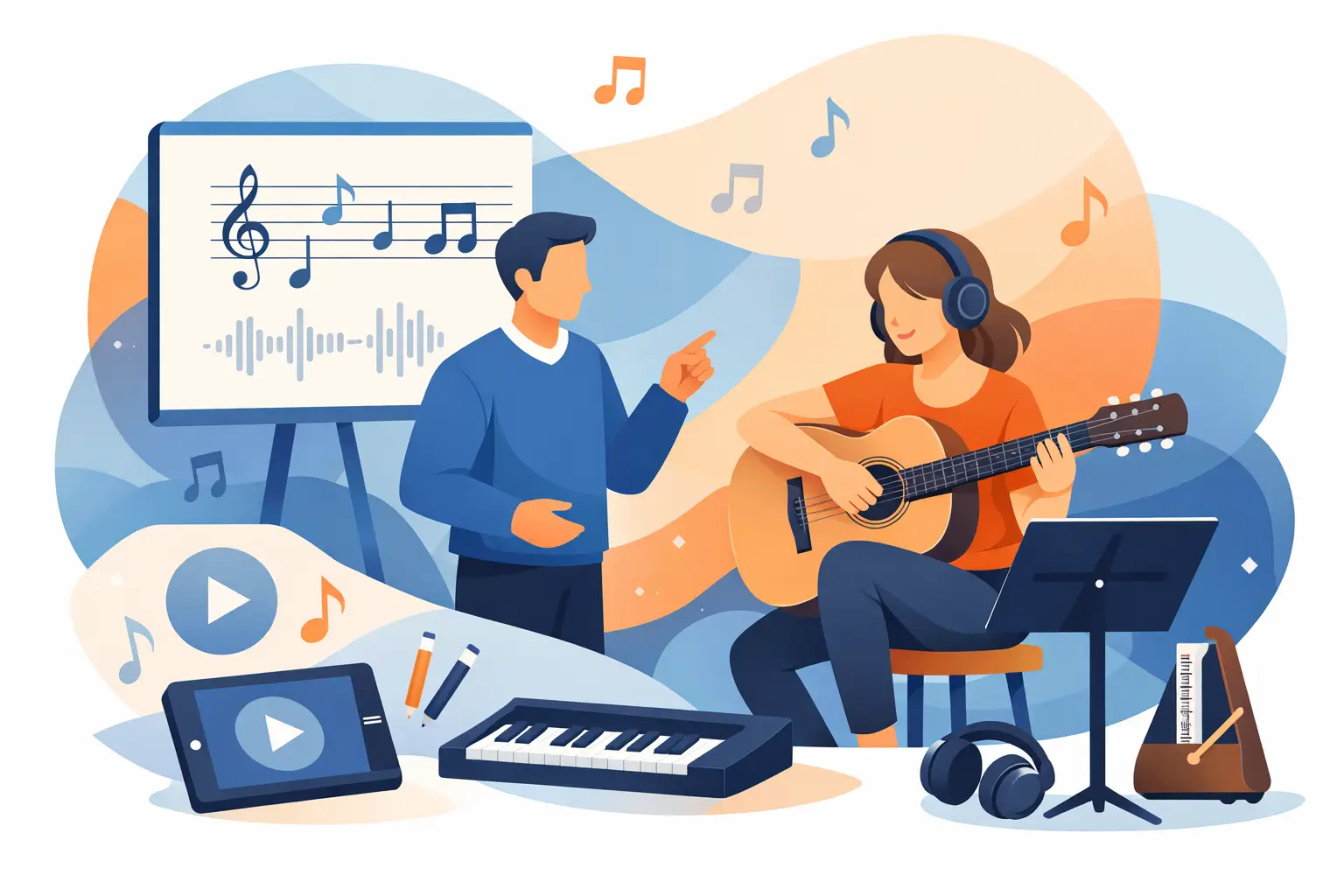
Starting an instrument is exciting right up until the moment you wonder, Am I too old, too busy, or too inexperienced for this? That question shows up for kids, teens, and adults alike. The good news is that music lessons for beginners are not about being naturally gifted. They are about getting the right support, the right pace, and a learning plan that makes progress feel doable from day one.
A strong beginner experience should feel encouraging, structured, and fun. You should leave lessons knowing what you worked on, why it matters, and what to practice next. If that sounds simple, it should be. Beginners do best when music feels welcoming instead of overwhelming.
What beginners really need from music lessons
Many first-time students assume lessons are supposed to be strict, technical, and a little intimidating. In reality, the best early lessons build confidence first. Technique matters, of course, but beginners stay motivated when they can hear themselves improving and enjoy the process along the way.
That means a good teacher does more than explain notes or fingerings. They pay attention to the student in front of them. A younger child may need short, engaging activities and lots of encouragement. A teen may want music that feels current and personal. An adult beginner may want a calm, zero-pressure environment with clear weekly goals. The approach changes, but the goal stays the same: help the student make real progress without losing the joy that made them want to start.
This is where personalized instruction makes such a difference. Some beginners move quickly with rhythm but need help reading music. Others have a great ear but need structure. Some want to sing and accompany themselves. Others want to join a band or simply play for fun at home. There is no one-size-fits-all path, and that is exactly why customized lessons work.
Music lessons for beginners should feel clear, not confusing
A lot of people quit early because the first few weeks feel messy. They are trying to learn posture, timing, note names, technique, and practice habits all at once. Without a clear roadmap, it can feel like too much.
Good music lessons for beginners break big goals into small wins. Instead of trying to learn everything immediately, students focus on manageable steps. Maybe that means learning a simple beat on drums, a few chords on guitar or ukulele, a short melody on piano, or breathing and pitch basics in voice lessons. Those early wins matter. They prove to the student that progress is happening.
Clarity also helps families. Parents want to know their child is not just staying busy but actually growing. Adult students want to know that even with a full schedule, their effort is leading somewhere. A strong lesson program makes that growth visible. You can hear it in smoother transitions, steadier rhythm, stronger tone, and rising confidence.
Choosing the right instrument as a beginner
One of the biggest beginner questions is which instrument to start with. The honest answer is: it depends on the student.
Piano is a great starting point for many beginners because it makes musical patterns easy to see. Guitar and ukulele are popular because students can play recognizable songs fairly quickly. Drums are ideal for students who feel rhythm naturally and want a high-energy outlet. Voice lessons are perfect for students who want to develop their own sound and confidence. Bass can be an amazing fit for students who love groove and want to play with others. Music production can also be a strong entry point for creative students who connect with technology and songwriting.
The best instrument is usually the one that makes the student excited to come back next week. Practical factors matter too, like space at home, budget, age, and attention span. But motivation is a big deal. When students connect with the instrument, practice becomes much easier to sustain.
What a beginner should expect in the first few lessons
The first lesson should not feel like a test. It should feel like a starting point.
A thoughtful teacher will usually begin by learning about the student’s goals, experience level, and musical interests. That conversation matters more than people realize. A child who dreams of performing on stage needs a different kind of encouragement than an adult who just wants to play after work to relax. Both are valid. Both deserve a plan that fits.
From there, the teacher will introduce a few core fundamentals and give the student something they can succeed with right away. That might be a simple exercise, a short song, or a rhythm pattern. The point is not to impress anyone with complexity. The point is to build momentum.
Over the next few weeks, beginners should start developing routines. They learn how to sit or stand correctly, how to practice in short focused sessions, and how to repeat material without getting frustrated. That foundation may not look flashy, but it is what leads to confident playing later on.
Why fun matters more than many people think
Fun is not a bonus in beginner lessons. It is part of what makes progress possible.
When students enjoy lessons, they stick with them long enough to improve. That sounds obvious, but it gets overlooked. A beginner who feels constant pressure often shuts down, even if they have talent. A beginner who feels supported and challenged in the right ways is much more likely to keep going.
This is especially true for kids and teens, but adults are no different. Nobody wants their weekly lesson to feel like another stressful obligation. The best studios create an environment where students feel safe making mistakes, asking questions, and trying new things. That kind of atmosphere builds confidence fast.
Fun also does not mean a lack of standards. Students can laugh, enjoy themselves, and still learn serious skills. In fact, they usually learn better that way.
The value of performance opportunities for beginners
A lot of people think performances are only for advanced students. That is not the case. Beginners often grow faster when they have the chance to share what they are learning in a low-pressure, supportive setting.
Performance gives practice a purpose. It helps students work toward something real. For some, that might be an open mic, a recital, a jam session, or a band class. For others, it may simply be playing for family or recording a song they are proud of. The format can vary, but the effect is powerful. Students start seeing themselves as musicians, not just learners.
That shift matters. Confidence does not appear out of nowhere. It grows through experience. A beginner who takes the stage, even for one song, often comes away standing taller than before.
How to know if a lesson program is the right fit
Not every lesson experience is built the same, and beginners can feel that quickly. A good fit usually comes down to a few things: the teacher listens well, the pacing feels appropriate, the student leaves encouraged, and there is a clear plan for growth.
Flexibility matters too. Families and adult learners have busy schedules. If lessons are difficult to manage, even a great program can become hard to maintain. That is why convenience, responsiveness, and a welcoming support system make such a difference.
Community is another factor people often underestimate. Students tend to stay motivated when they feel part of something bigger than a weekly appointment. Events, group experiences, and performance opportunities can turn lessons into a more meaningful part of life. That sense of belonging helps beginners keep going through the awkward early stages when everything is still new.
At Matt Burk Music Studio, that student-first approach is a big part of why beginners feel comfortable starting. The goal is not just to teach songs or scales. It is to help students grow, have fun, and build the kind of confidence that carries into every part of their musical journey.
The best time to start is before you feel fully ready
Most beginners wait for the perfect moment. They want more free time, more confidence, or a little more certainty that they will be good at it. But music does not usually start that way. It starts when someone decides to begin.
If you are a parent, that might mean giving your child a creative outlet where discipline and self-expression can grow together. If you are an adult, it might mean finally making room for something you have wanted to do for years. Either way, starting small is still starting.
The first lesson does not need to prove anything. It just needs to open the door. From there, with the right teacher and the right environment, beginner steps turn into real skills, real confidence, and real joy. That is how lasting musical growth begins.