
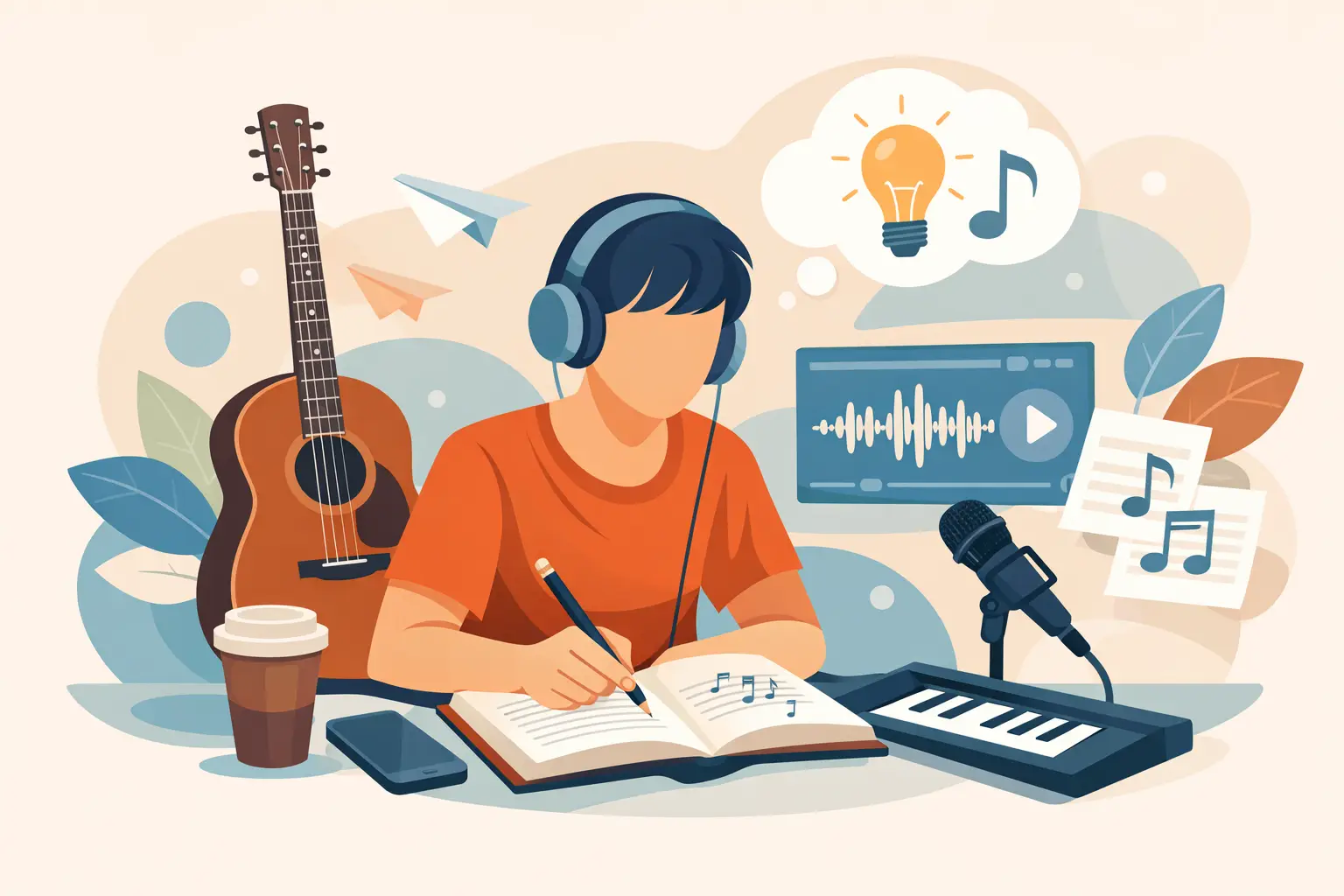
A great first song rarely arrives as a perfect three-minute masterpiece. It often starts with one honest line, a chord progression you enjoy playing, or a melody you keep humming in the car. That is exactly why songwriting lessons for beginners can be so exciting: they give those small ideas a place to grow.
For kids, teens, and adults, songwriting is not about waiting to feel talented enough. It is about learning how to notice an idea, shape it, and keep going when the first draft sounds different from what you imagined. With encouraging guidance and a few practical tools, beginners can turn the music they love into songs that sound like them.
What beginners really learn in songwriting lessons
Many new writers assume songwriting is only about writing lyrics. Lyrics matter, but a song is a conversation between words, melody, rhythm, harmony, and emotion. A beginner lesson helps you understand how those pieces work together without making the process feel overly complicated.
You might begin with a simple question: What do you want this song to make someone feel? Maybe it is the excitement of a first crush, the frustration of a rough school day, a funny story about a family pet, or the peaceful feeling of a late-night drive. Once you have an emotional direction, it becomes easier to make choices about the words, tempo, chords, and melody.
A good instructor also helps you move beyond the idea that every song must be deeply serious or instantly original. It is normal to begin by studying songs you already enjoy. You can learn why a chorus feels bigger than a verse, why a lyric sticks in your mind, or why a small chord change creates tension. The goal is not to copy someone else. It is to build your own musical vocabulary.
Songwriting lessons for beginners start with simple building blocks
You do not need advanced piano skills, a huge vocal range, or music theory knowledge to write your first song. Instrument skills can certainly help, but the best starting point depends on your goals. A singer may begin with melody and lyrics. A guitarist may begin with a favorite chord loop. A young piano student may create a short musical idea before adding words.
Most beginning songs become much more manageable when you focus on a few core building blocks.
A clear song idea
A song needs a point of view. That does not mean it has to tell a complicated story. It could simply be, “I want to go home,” “I finally feel brave,” or “This summer is going too fast.” A clear idea gives your lyrics a center and keeps every line from pulling in a different direction.
Instead of trying to explain everything, start with one moment. Describe the room, the weather, what someone said, or what you wished you had said. Specific details often make a song feel more real than broad statements.
A melody you can remember
A melody does not have to be difficult to be effective. Some of the strongest hooks use a small range of notes and a rhythm that feels natural to sing. Beginners often make the mistake of changing the melody constantly because they think variety equals quality. Sometimes repetition is what gives a song its identity.
Try singing your idea without your instrument first. If you can remember it a few minutes later, you may have found something worth keeping. If it feels awkward, change one small part rather than throwing the whole thing away.
Chords that support the feeling
A familiar chord progression is not a shortcut in a bad way. It is a helpful framework. Beginning writers can create meaningful songs with three or four chords, especially when the lyric and melody have a clear purpose.
The trade-off is that simple chords need thoughtful choices around them. A repeated progression can feel powerful when the melody grows into the chorus or when the lyric reveals something new. It can feel flat if every section uses the same energy. Your instructor can show you small changes that create contrast without making the song too hard to play.
A shape listeners can follow
Most popular songs have sections such as verses, choruses, and bridges because listeners like knowing where they are in a musical story. The verse usually adds details. The chorus delivers the central message. A bridge can offer a new thought, change the energy, or lead back into a final chorus.
You do not have to follow one formula every time. But structure gives a beginning songwriter a useful container. When you are stuck, ask whether your best line belongs in the chorus and whether the verse is doing enough to set it up.
Why feedback makes such a difference
Writing alone can be fun, but it can also be frustrating. You may love a lyric one day and wonder whether it makes sense the next. You may have a melody that feels great in your room but becomes hard to sing when you record it. This is where personalized feedback can save you from getting discouraged.
A supportive songwriting teacher does not take over your song. They listen for what you are trying to say and help you say it more clearly. They may suggest shortening a line so it fits the rhythm, raising the melody at the start of the chorus, or replacing a vague word with a stronger image. Small changes can make a big difference.
Feedback also teaches an important creative habit: revision is not failure. Professional songwriters revise constantly. The first draft is where you discover the idea. The next drafts are where you help listeners feel it.
For younger students, this encouragement is especially valuable. A child who learns that their ideas deserve attention is building more than music skills. They are building confidence, communication skills, and the courage to share something personal. Adults benefit from the same freedom. It is never too late to write a song just because you have something to say.
A practical way to write your first song
The easiest way to start is to give yourself a small, finishable assignment. Do not aim to write your greatest song. Aim to write one complete verse and chorus. A finished simple song teaches more than ten abandoned ideas.
Begin by choosing a title or phrase you want to repeat. Then write down a few images, memories, or feelings connected to it. Pick a chord progression that feels right, even if it is only three chords. Hum several melody options and record them on your phone so you do not lose the one that feels best.
Next, build your verse around details and let the chorus say the main message. If a line feels difficult to sing, speak it out loud. Spoken rhythm often reveals extra words. If you cannot find a rhyme, do not force one. A natural lyric is usually better than a clever rhyme that changes your meaning.
When you have a rough draft, play it for someone kind. That could be an instructor, a parent, a friend, or a fellow student. Ask one focused question, such as, “What line do you remember most?” or “Does the chorus make sense?” Specific feedback is more useful than asking whether they simply like it.
Performance gives a song a new purpose
A song changes when you share it. Performing, even in a small setting, teaches you where the melody needs breathing room, which lyrics connect with people, and how to recover if you make a mistake. It also gives your work a finish line.
Not every songwriter wants to be a solo performer. Some people prefer writing for a band, producing tracks, or collaborating with singers. Still, learning to present your music with confidence is a valuable skill. A supportive open mic, jam session, or student performance can make songwriting feel less private and much more rewarding.
At Matt Burk Music Studio, songwriting can be part of a larger musical journey that includes private instruction, band experiences, production skills, and real opportunities to perform. That combination helps students hear how their ideas work with other musicians, not just on paper or in a bedroom recording.
Make room for play, not perfection
The fastest way to silence a new songwriter is to judge every idea before it has a chance to develop. Give yourself permission to write lines that are silly, melodies that are unfinished, and songs that may never leave your notebook. Play is part of the process.
At the same time, consistent practice matters. Set aside a small amount of time each week to collect ideas. Keep a note on your phone for titles, phrases, and melody recordings. Listen closely to the songs you love, not to copy them, but to ask better questions about why they work.
Your first song does not need to impress everyone. It needs to teach you that you can begin with an idea and bring it to life. Keep writing, keep listening, and let each finished song be proof that your musical voice is worth sharing.