
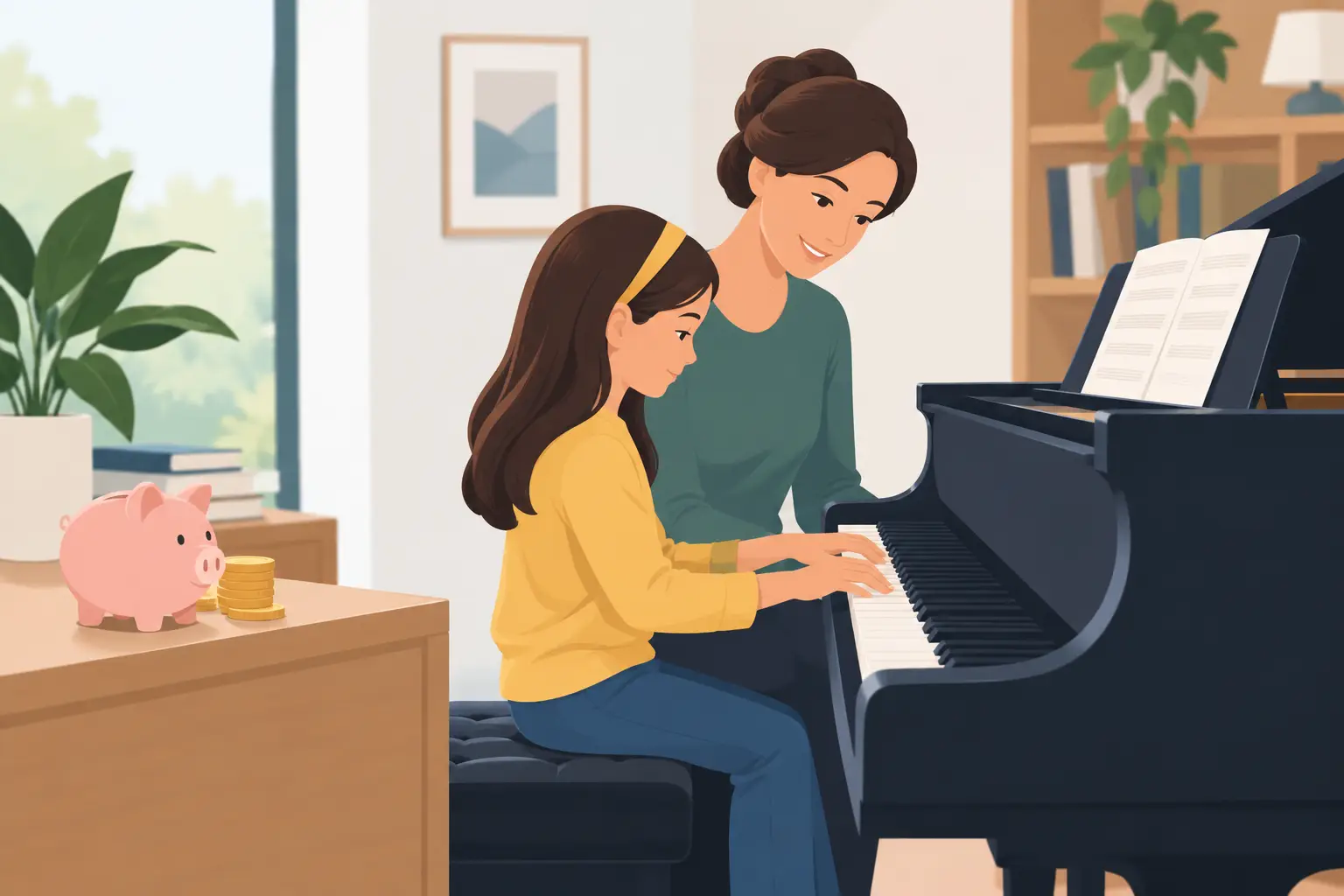
A child comes home tapping out a melody on the kitchen table. An adult finally decides it is time to return to the piano after years away. The exciting question is not just, “Can I learn?” It is also, “What will this cost?” Piano lesson costs can vary quite a bit, but understanding what is behind the price helps families and adult students choose lessons that feel worthwhile from day one.
The lowest price is not always the best value, and the highest price is not automatically the right fit. Great piano instruction should help a student build real skills, enjoy the process, and gain confidence they can carry into school, work, friendships, and the stage.
What Do Piano Lesson Costs Typically Include?
In the Allen and Frisco area, private piano lessons often fall into a broad range based on lesson length, teacher experience, location, and what the studio provides beyond the weekly appointment. A 30-minute private lesson may commonly cost around $30 to $55, while 45- or 60-minute lessons can range from roughly $50 to $100 or more.
Those numbers are a starting point, not a rule. Some independent teachers charge less because they teach from home or offer a simpler lesson experience. Established schools may charge more because tuition supports professional instructors, scheduling help, a dedicated learning environment, recitals, community events, and other opportunities that help students stay motivated.
When comparing prices, ask what the rate actually covers. Is it only the time on the piano bench? Or does it include thoughtful lesson planning, progress tracking, communication with parents, performance opportunities, and support when a family needs to reschedule? Those details can make a meaningful difference over a full year of learning.
Why Piano Lesson Costs Vary So Much
Lesson length and frequency
A weekly 30-minute lesson is a wonderful starting point for many young beginners. It gives them focused instruction without asking them to sit for too long, and it creates a dependable weekly rhythm for practice. As students grow, longer lessons can offer more room for technique, reading music, favorite songs, creativity, and goal-setting.
A student preparing for an audition, working through advanced repertoire, or learning songwriting may benefit from 45 or 60 minutes. Adults with limited practice time may also prefer a longer lesson because they can receive more coaching in one visit. The right length depends on the student, not just their age.
Teacher training and experience
An experienced instructor does more than point out wrong notes. They know how to notice when a student is frustrated, when a method needs to change, and when a small win deserves to be celebrated. They can teach proper technique early, helping students avoid habits that may hold them back later.
Teachers with extensive performance, education, and coaching experience often charge more because they bring deeper expertise to each lesson. For families, that can mean a clearer plan and fewer months spent wondering whether their child is truly progressing.
Private, semi-private, and group formats
Private lessons provide individual attention and a lesson plan tailored to one student’s goals. That format usually has the highest per-student price, but it is especially valuable for beginners who need personal guidance or students who want to move at their own pace.
Semi-private lessons can lower the cost while adding a social element. They work best when students are close in age and ability and enjoy learning alongside a friend or sibling. Group classes may be the most budget-friendly option, but they naturally offer less one-on-one coaching. None of these formats is universally better. The best choice is the one that keeps the student engaged and making progress.
Location and convenience
Traveling to a teacher’s home, attending lessons at a professional studio, or meeting online can all affect pricing. In-person instruction at a well-equipped local studio may cost more than a virtual lesson, but many families appreciate having a consistent place dedicated to music, away from homework, chores, and household distractions.
Convenience matters, too. A lower-priced lesson across town can become expensive in time and stress if it creates a difficult weekly drive. For busy North Texas families, a nearby schedule that works can be part of the value.
Look Beyond the Monthly Tuition
Before enrolling, ask how billing works. Some teachers charge by the lesson, while others use monthly tuition based on a set number of weekly lessons each year. Monthly tuition can make budgeting easier, but families should understand how holidays, teacher absences, and makeup lessons are handled.
A flexible reschedule policy can be especially helpful for families balancing school events, sports, illness, and travel. Adults often value the same flexibility when work schedules change. No one wants to feel that one hectic week has erased their investment in music.
There may also be occasional costs outside of tuition. These can include books, sheet music, recital fees, festival registration, instrument maintenance, or a piano at home. Not every student will need every item, but asking early prevents surprises.
A quality acoustic piano is wonderful, but beginners do not need to wait for one before starting. A full-size digital keyboard with weighted keys and a pedal can be an excellent first setup. It gives students a reliable place to practice while they discover how deeply they want to pursue the instrument.
What Makes Lessons Worth the Investment?
The real value of lessons is not measured only by how many songs a student can play after a few months. Music can teach patience, listening, discipline, creative problem-solving, and the courage to try again after a mistake. Those are big returns on a weekly commitment.
For children, piano lessons should feel like a place where they are known and encouraged. A shy student may gradually become comfortable playing for family members. A teenager who loves movie themes or pop songs may discover that theory makes those songs easier to understand. An adult beginner may find a joyful break from screens and responsibilities.
Performance opportunities can add another layer of value. Playing for others is not about pushing every student into the spotlight. It is about giving them a supported chance to share what they have worked hard to create. A recital, open mic, jam session, or small studio event can turn practice into a meaningful goal.
At Matt Burk Music Studio, students can grow through personalized instruction while also having opportunities to connect with other musicians and develop live performance confidence. That wider community experience may matter just as much as the lesson itself for a student who needs motivation to keep going.
How to Choose the Right Piano Lesson Option
Start with the student’s goal. A young beginner may need fun, structure, and a teacher who makes music feel friendly. A serious student may want help with auditions, advanced technique, or performance preparation. An adult may want to learn favorite songs without feeling judged for starting later in life.
Then pay attention to how the teacher communicates. Are expectations clear? Do they ask about the student’s interests? Do they have a plan for helping students through the inevitable weeks when practice is difficult? A great teacher meets students where they are while still inviting them to reach higher.
It is also wise to ask about commitment terms before making a decision. Families should understand whether there is a contract, how much notice is needed to stop lessons, and whether missed lessons can be rescheduled. Clear policies build trust and make it easier to focus on learning.
A free trial lesson can be one of the best ways to decide. Students get to meet the teacher, touch the instrument, ask questions, and see whether the environment feels encouraging. Parents can observe whether their child leaves excited to come back. Adults can find out quickly whether the experience feels welcoming rather than intimidating.
The best piano lesson choice is one that fits your budget and gives the student a reason to keep playing next week. Choose a place where progress is noticed, goals feel possible, and every small victory gets the celebration it deserves.