
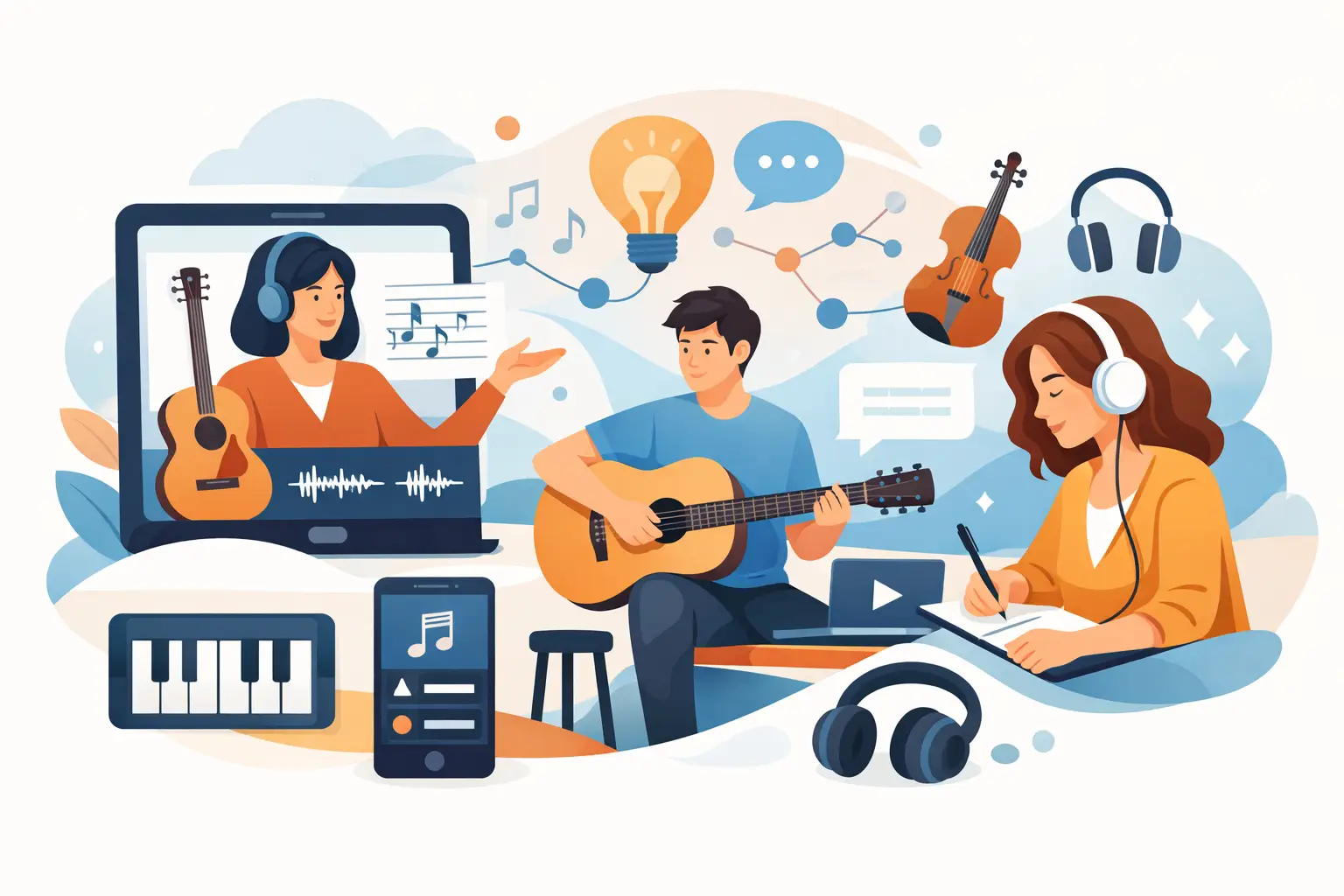
A child who wants to play the song they heard on the way to school needs something different from a teen preparing for a band audition. An adult returning to piano after 20 years has a different starting point, too. That is how personalized music lessons work: the lesson begins with the student, then builds a clear and encouraging path toward the music they want to make.
At Matt Burk Music Studio, personalized instruction is not a pre-set workbook with a student’s name written at the top. It is a weekly coaching relationship shaped by your goals, interests, learning style, schedule, and current skill level. Students still learn the foundations that make lasting progress possible, but those foundations are taught through music that keeps them excited to come back next week.
How Personalized Music Lessons Work From Day One
Personalization starts before a student plays a single note. The first conversation helps an instructor understand what the student wants from lessons. For a young beginner, that might mean building confidence, exploring an instrument, and developing a positive practice routine. For a teen, it may mean writing songs, joining a band, improving technique, or getting ready to perform. For an adult, it could be learning favorite songs, reducing stress through music, or finally following through on a longtime goal.
The instructor also looks at practical details. Is the student brand new to music, or do they already know a few chords? Do they learn best by listening, reading, watching, or repeating a short section slowly? Are they drawn to pop, rock, country, classical, jazz, worship music, or something else? These answers guide the lesson plan.
A personalized plan does not mean lessons have no structure. Great instruction has a direction. Students may work on technique, rhythm, note reading, ear training, songwriting, music theory, or performance skills, depending on what will help them move forward. The difference is that the instructor chooses the right next step for that individual student rather than forcing everyone through the same sequence at the same speed.
Goals Turn Lessons Into a Clear Path
Students make stronger progress when they can see what they are working toward. A goal might be as immediate as playing the chorus of a favorite song without stopping. It might be bigger, such as performing with a band, singing confidently at an open mic night, auditioning for a school program, or producing an original track.
Those larger goals are broken into manageable wins. A guitar student who wants to perform may first learn clean chord changes, then steady strumming, then how to recover if they make a mistake. A voice student may begin with healthy breath support and pitch matching before working on stage presence. A piano student may build hand coordination through familiar melodies, then learn how to keep a steady beat with other musicians.
This approach matters because progress is rarely a straight line. Some weeks feel easy. Other weeks require patience, especially when a student is balancing school, sports, work, or family life. Personalized lessons make room for real life. If a concept is clicking, the instructor can build on that momentum. If it is frustrating, they can explain it a new way, slow it down, or use a song the student genuinely loves.
The Right Challenge Builds Confidence
Lessons should be fun, but fun does not mean avoiding challenge. Playing music requires focus, repetition, and the willingness to try again after a missed note. The best challenge is not too easy and not so difficult that a student shuts down. It stretches their skills while giving them a real chance to succeed.
For beginners, that could mean playing a recognizable song in the first few lessons. For experienced musicians, it may mean improving timing with a metronome, learning a more advanced solo, or communicating better in a group rehearsal. The instructor adjusts the challenge as the student grows.
That adjustment is especially valuable for children and teens. Confidence often grows when students can say, “I could not do that last month, and now I can.” Adults benefit from the same feeling. There is no age limit on the pride that comes from playing a song for someone you love or sitting down at an instrument and realizing it finally feels natural.
Music Students Learn in Different Ways
Two students can be the same age and play the same instrument but need completely different teaching approaches. One may love written music and clear step-by-step assignments. Another may learn quickly by listening and copying. One student may want detailed feedback after every attempt, while another needs a little room to experiment before receiving coaching.
Personalized instruction respects those differences without lowering expectations. An experienced, kind instructor can demonstrate a rhythm, write it out, clap it, count it aloud, and connect it to a song. If one explanation does not land, there are other ways to make the idea click.
Practice plans can be personalized as well. A busy family may need a short, realistic routine that fits between homework and dinner. An adult with limited time may make meaningful progress with focused practice several days a week instead of long sessions. A highly motivated student preparing for a performance may want more detailed assignments and recordings to review at home. Consistency matters more than perfection, and a practical plan is more likely to become a habit.
Performance Is Part of the Learning
Many students say they want to perform someday, but the idea can feel intimidating when it stays far away. A personalized music program can make performing a gradual, supported part of the journey instead of a single high-pressure moment.
A student may begin by playing for their instructor, then for family, then in a low-pressure studio setting. From there, they can build toward jam sessions, open mic opportunities, band classes, masterclasses, and larger recitals. These experiences teach skills that cannot be learned from a practice book alone: how to count in a song, listen to other musicians, recover from nerves, adjust to a stage, and share music with an audience.
Not every student wants the spotlight, and that is okay. Performance goals should fit the person. Some students want to play at respected local venues such as House of Blues or Hard Rock Cafe. Others want the confidence to play at church, school, a family gathering, or simply for themselves. Personalized lessons honor both paths while keeping opportunities available for students who are ready to stretch.
Parents Stay Informed Without Becoming the Teacher
For parents, personalized lessons provide more than a weekly activity. They create a meaningful outlet where a child can develop discipline, creativity, resilience, and confidence. Parents should have a sense of what their student is learning and how they can help at home, even if they do not play an instrument themselves.
The goal is not for parents to turn practice into a battle or become a second instructor. A helpful role can be as simple as protecting a regular practice time, celebrating effort, asking to hear a new song, and reminding a child that mistakes are part of learning. When students feel supported instead of judged, they are more likely to keep trying.
For adult students, support may look different. It may mean choosing a lesson time that fits a demanding schedule, setting a small goal for the week, and giving yourself permission to be a beginner. Adults often arrive thinking they are behind. They are not. They are starting where they are, and that is enough.
What Progress Looks Like in Personalized Lessons
Progress is more than checking off songs. You may notice stronger rhythm, cleaner technique, a better ear, more confidence singing, or the ability to play with other people. A student may start asking deeper questions, choosing songs independently, or volunteering to perform. Those are meaningful signs that music is becoming part of who they are.
There are trade-offs to consider. Students who want fast results may need to accept that solid technique takes repetition. Students focused on favorite songs still benefit from learning some theory and rhythm basics. Students who want performance opportunities need time to prepare. But personalized instruction keeps those trade-offs connected to a purpose, so the work feels worthwhile rather than random.
A free trial lesson is a simple way to see whether the instructor, environment, and learning approach feel right. Bring your questions, share the music you love, and be honest about your goals. The right lesson experience should leave you or your child feeling encouraged, capable, and excited to make music again.