
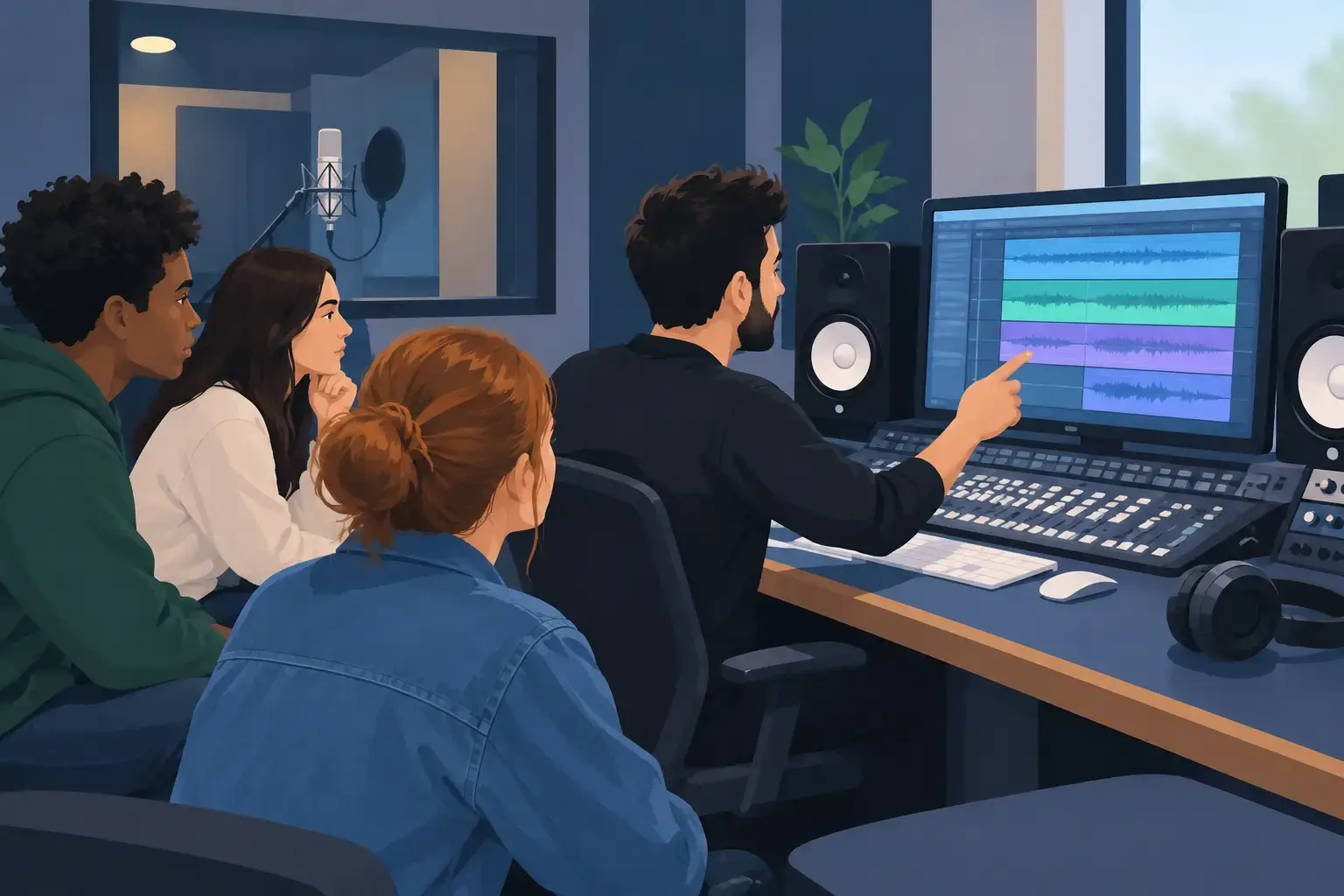
A song can sound completely different the moment a student hears it played back through speakers. The vocal is suddenly clear, the beat has space, and an idea that lived only in their head is now something they can share. That is why recording studio classes are such a powerful next step for musicians who want to create, not just practice.
For kids, teens, and adults, learning to record builds more than technical ability. It develops listening skills, creative confidence, patience, and the ability to finish a project. Whether your musician dreams of releasing original music, recording a cover, producing beats, or simply understanding how their favorite songs are made, the right class makes the process feel exciting instead of intimidating.
What Do Recording Studio Classes Teach?
Great recording studio classes teach students how music moves from an instrument, microphone, or computer into a finished recording. The technology matters, but the best instruction keeps the focus on the music itself. Students should not feel like they have to become engineers before they are allowed to be creative.
A beginning student may start by learning how to set up a microphone, make a clean recording, and use basic recording software. From there, they can explore timing, layering instruments, editing takes, balancing volume, and shaping a song with effects such as reverb or delay. As skills grow, students can learn the bigger creative choices behind production: Which guitar part supports the chorus? Should the vocal be intimate or powerful? Does the song need a faster tempo?
The goal is not to memorize every button in a program. It is to train students to hear what a song needs and give them the tools to make it happen.
Recording Starts With Better Musicianship
One of the best surprises for families is that recording often strengthens a student's performance skills. A student who records a piano part hears small rhythm slips they may miss while playing. A singer can notice unclear words, inconsistent pitch, or a breath that breaks the flow of a phrase. A drummer begins to understand why steady time matters so much when other tracks are built around the beat.
That feedback can feel vulnerable at first. In a supportive class, though, it becomes useful information, not criticism. Students learn that a second take is not a failure. It is how artists improve. They become more focused listeners, more prepared performers, and more confident musicians.
Who Benefits From Recording Studio Classes?
Recording classes are not only for students who already write songs or own expensive gear. They work especially well for curious beginners who want a hands-on way into music, experienced players ready for a new challenge, and young artists who have a lot to say but are not sure how to shape it into a full track.
For a child taking piano, guitar, drums, or voice lessons, recording can make practice goals feel more concrete. Rather than practicing a song only for the next lesson, they may work toward recording a polished version they are proud to play for family and friends. That kind of finish line can be highly motivating.
Teens often enjoy recording because it gives them a creative voice. They can experiment with genres, build beats, arrange a favorite song, or develop an original sound with guidance from an instructor. It is a constructive space to explore their interests while learning habits that carry over into school, performances, and collaborative projects.
Adults benefit too. Maybe you have always wanted to record the songs you write on acoustic guitar. Maybe you played years ago and want a creative hobby that fits your current life. Or perhaps you want to make a simple recording as a personal milestone. You do not need to arrive with a finished plan. A good instructor can meet you at your starting point and help you move forward at a comfortable pace.
What a Great Recording Class Feels Like
The best learning environment combines structure with room to experiment. Students need clear instruction, but they also need permission to try an unusual sound, make a messy first draft, and find out what they like.
A typical session might begin with a listening goal or a short skill lesson. Then the student records, edits, or builds part of a project with the instructor nearby to coach the next decision. Instead of handing over a finished track, the teacher explains why a change helps and lets the student take part in the process. That is what builds independence.
Personalization matters here. A singer-songwriter may spend time on vocal recording, lyric phrasing, and acoustic arrangements. A drummer may work on playing to a click track and recording layered percussion. A student who loves pop production may focus on beats, loops, song structure, and vocal effects. The tools may overlap, but the path should reflect the student's goals.
At Matt Burk Music Studio, music production instruction can complement private lessons, semi-private learning, and band experiences. That connection matters because recording does not have to happen in isolation. Students can bring stronger instrumental skills into the studio, learn how parts fit together, and gain more confidence sharing their music with others.
Recording Studio Classes vs. Learning Alone Online
Videos and tutorials can be useful, especially when a student wants to explore a specific software feature or production style. The trade-off is that online learning can become a maze. A beginner may spend hours comparing equipment, watching conflicting advice, and clicking through settings without knowing what to practice next.
A class gives that curiosity direction. An experienced instructor can hear a problem quickly, explain it in plain language, and keep the student focused on a realistic next step. If a vocal sounds distant, the solution may be microphone placement, room sound, performance energy, or mixing choices. A video cannot listen to that student's recording and respond in the moment.
Personal coaching also helps students finish. Starting a song is fun. Revising it, organizing the tracks, recording another take, and making final decisions are the parts that teach discipline. A supportive teacher keeps the process encouraging while helping students see a project through.
How to Choose the Right Class
Start with the student's goal, not the fanciest equipment list. Ask whether the class teaches practical recording and production skills, gives students time to create, and adapts to their experience level. A young beginner needs a welcoming introduction. A serious teen songwriter may need more detailed coaching on arrangement and vocal production. An adult learner may value flexible scheduling and a pace that feels enjoyable rather than rushed.
It also helps to ask how the program connects recording to musicianship. Students make better recordings when they understand rhythm, melody, dynamics, and performance. A class that supports those skills alongside technology will usually create stronger long-term growth than one focused only on software shortcuts.
Finally, look for an environment where students are encouraged to share progress. That does not mean every student needs to post music publicly or perform right away. It means they should have meaningful milestones: playing a finished track for family, collaborating with a friend, recording a favorite song, or building the confidence to perform live when they are ready.
A Few Simple Questions to Ask
Before enrolling, ask how much hands-on recording time students receive, whether instruction is individualized, what equipment they will learn on, and how projects are chosen. You can also ask how the instructor helps a student who feels stuck or nervous about hearing their own voice on a recording.
The answers should leave you feeling encouraged. Recording is technical at times, but it should never feel like a test students have to pass before they get to make music.
Give Their Ideas a Place to Grow
Every musician begins with a rough idea: a beat tapped on a desk, a lyric in a phone note, a guitar riff played between homework assignments, or a melody that will not leave their head. Recording gives that idea a place to grow.
The first track may not sound like a radio release, and that is perfectly okay. What matters is the moment a student realizes, “I made this.” With kind coaching, consistent practice, and a creative space to experiment, that moment can become the beginning of a lifelong relationship with music.