
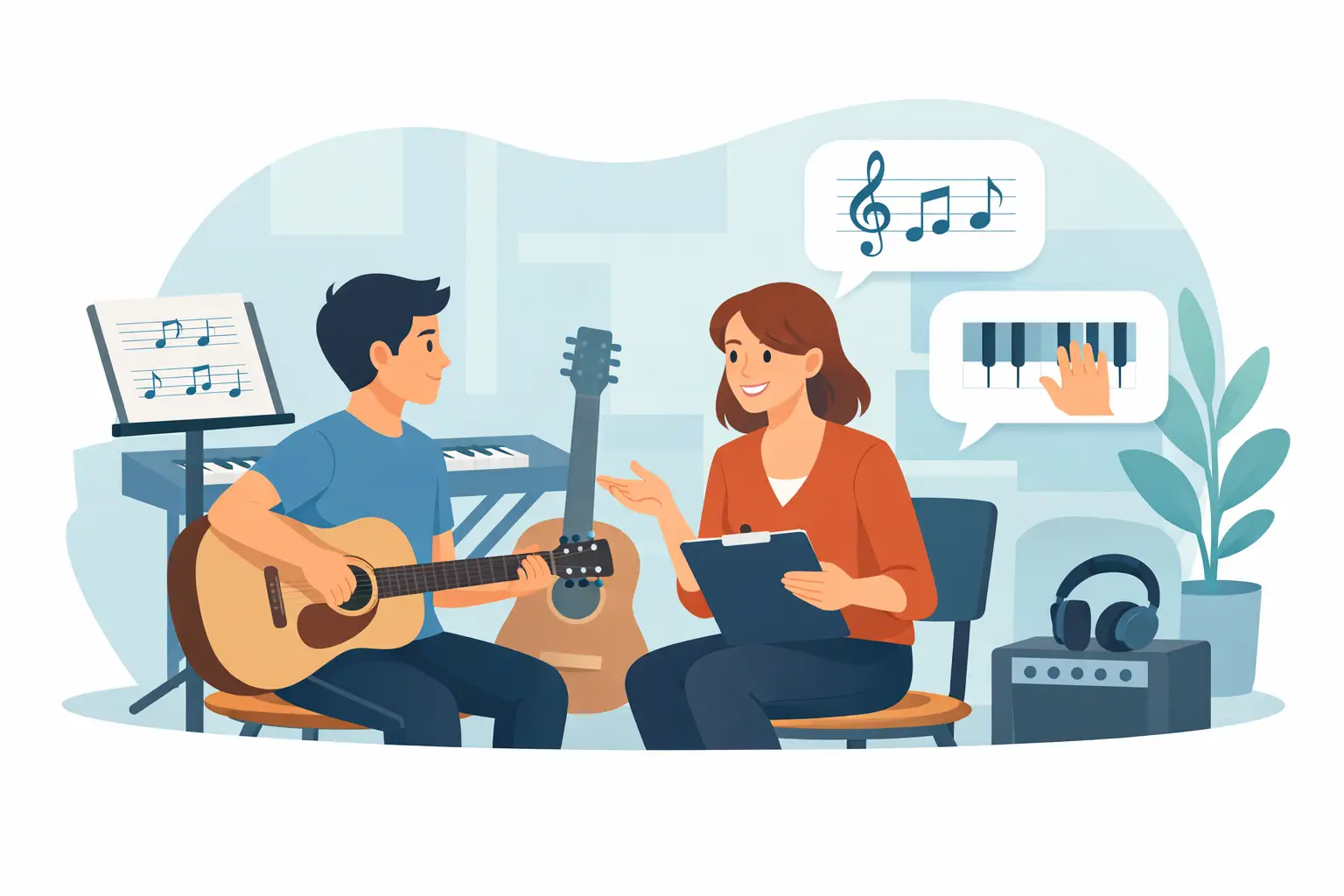
Walking into your first music lesson can feel exciting, awkward, and a little nerve-racking all at once. If you’re wondering what happens at first lesson, the short answer is this: you are not expected to show up already confident, polished, or experienced. A good first lesson is about getting comfortable, meeting your teacher, and starting in a way that feels doable and encouraging.
That matters whether you’re a parent bringing in a child for piano, a teen trying guitar for the first time, or an adult finally giving voice lessons a shot after years of saying, “Maybe someday.” The first lesson should feel like the beginning of something fun, not a test you have to pass.
What happens at first lesson in a good music studio
The first few minutes usually set the tone. Your teacher will welcome you, help you settle in, and start getting to know you. For younger students, that may mean a relaxed conversation with both the student and parent. For teens and adults, it often starts with simple questions about musical interests, past experience, and what inspired them to begin.
This part is more important than many people realize. A strong teacher is not just figuring out what you can do. They’re learning how you learn, what kind of music lights you up, and what goals actually matter to you. Some students want to play favorite songs as soon as possible. Some want formal technique. Some want confidence. Some want a creative outlet after a long workday. Those are different starting points, and a personalized lesson should reflect that.
At Matt Burk Music Studio, that student-first approach is a big part of making beginners feel at ease. The goal is to help each student build skill and confidence in a way that fits their age, pace, and interests.
Expect a conversation before a lot of playing
Many families assume the first lesson will jump straight into drills or exercises. Sometimes it does move quickly into hands-on work, but usually there’s a short conversation first. That conversation helps the instructor make smart decisions from the beginning.
A teacher may ask whether the student has used the instrument before, whether they can already read music, what songs or artists they enjoy, and whether they’re hoping to play for fun, auditions, worship, school band, or live performance. If the student is young, the teacher may also ask about attention span, practice routines, and what motivates them.
This is not filler. It helps avoid one of the biggest mistakes in music education - teaching every beginner exactly the same way. Structure matters, but so does fit. A six-year-old piano beginner needs something different from an adult drummer returning after ten years away.
Your teacher will likely assess a few basics
Once the conversation gets going, most first lessons include a light, low-pressure assessment. That word can sound intense, but it usually isn’t. Nobody is trying to catch you doing something wrong.
If you’re brand new, the assessment may simply be about comfort level, coordination, rhythm, listening, and readiness to follow simple directions. A guitar student may learn how to hold the instrument and place their hands. A voice student may talk through vocal comfort, range, and favorite styles. A drum student may try basic stick grip and a simple beat. A piano student may explore finger numbers, key patterns, and posture.
If you already have some experience, the teacher may ask you to play or sing something short. That helps them see current strengths and where instruction should begin. The point is not to judge. The point is to meet you where you are.
What happens at first lesson for beginners
If you’re a complete beginner, the lesson often focuses on a small win. That’s one of the best parts of a strong first lesson. Instead of overwhelming you with everything there is to learn, a good teacher helps you leave feeling, “I can do this.”
That win might be playing a simple melody, learning the names of a few notes, clapping rhythms, matching pitch, strumming your first chord, or understanding how to sit and hold the instrument correctly. It may not seem huge from the outside, but it matters. Early momentum builds confidence, and confidence makes students more likely to stick with lessons.
For kids, fun is especially important here. If a child leaves smiling and proud, that first lesson did something valuable. If an adult leaves feeling less intimidated than when they arrived, that’s a win too.
The first lesson also sets expectations
A lot of people want to know not just what happens at first lesson, but what happens after it. That’s why teachers often use the first meeting to explain how progress works.
You may talk about practice between lessons, how often to attend, what materials will be used, and what goals make sense over the next few months. This is where a good studio stands apart from a random one-size-fits-all approach. Great instruction doesn’t just teach a skill. It creates a path.
That path may include weekly lessons, favorite songs, musicianship skills, technique, confidence-building, and eventually opportunities to perform. For some students, live performance becomes a huge motivator. For others, the right first milestone might simply be playing for family in the living room. Both are valid.
Parents can expect clarity, not pressure
If you’re a parent, the first lesson should give you a clearer sense of fit. You should walk away understanding how your child responded, how the teacher connected with them, and what the next steps could look like.
A healthy lesson environment is supportive and organized, but not rigid. Kids learn best when they feel safe enough to try, miss, laugh, and try again. That does not mean lessons are casual in a careless way. It means they are encouraging enough for real learning to happen.
Parents also appreciate practical clarity. How should practice look at home? How much help does the child need? What’s realistic for their age? Those questions matter because progress is usually stronger when expectations are simple and manageable.
Adults should expect encouragement, not embarrassment
Adult beginners often come into lessons carrying more self-consciousness than kids do. They worry they’ll be behind, awkward, or not naturally talented enough. The truth is, adults usually benefit from lessons that balance structure with reassurance.
A thoughtful teacher understands that adults may learn quickly in some ways and slowly in others. They often bring strong listening skills, patience, and clear goals, but they may also bring tension, perfectionism, or fear of making mistakes. A great first lesson helps lower that pressure.
If you’re an adult student, you should expect to be treated with respect, not talked down to. Your musical interests should matter. Your pace should matter. And your lesson should feel like something you can build into real life, not one more thing to feel bad about not mastering instantly.
The best first lessons feel personalized
There’s no single script for a first lesson because different students need different things. That’s actually a good sign. A personalized lesson may move slower with one student and faster with another. One teacher might spend more time on comfort and connection, while another lesson may jump into a song right away because that’s what motivates the student.
The trade-off is that personalization can feel less predictable than a strict formula. But in music education, that flexibility is often what helps students stay engaged long term. A lesson that matches the student is usually more effective than one that simply checks boxes.
You do not need to be “ready” to begin
One of the biggest myths about music lessons is that you should start only after buying the perfect instrument, learning some basics online, or feeling more naturally confident. Most of the time, that just delays progress.
The first lesson is where readiness begins. It’s where questions get answered, nerves calm down, and a student sees that learning music is not reserved for a tiny group of gifted people. It’s something real people can do, step by step, with the right guidance.
So if you’ve been putting it off because you’re unsure what happens at first lesson, here’s the honest answer: you meet a teacher, you get comfortable, you try a few things, and you start building a plan that fits you. You don’t have to impress anyone. You just have to begin.
And sometimes that first small beginning turns into a student who plays with confidence, joins a band, performs live, or simply finds a part of themselves they’ve been waiting to share.