
Some kids are singing full volume in the back seat at age 4. Others hum quietly for years before they ever want to be heard. So when parents ask what age should kids start voice lessons, the honest answer is not one magic number. It depends on the child’s voice, attention span, confidence, and interest level.
That said, there are very clear signs that help you know when the timing is right. A great start can build confidence, healthy vocal habits, and a real love for music. Starting too early, or with the wrong expectations, can make singing feel like pressure instead of joy.
What age should kids start voice lessons for real progress?
For most children, formal private voice lessons tend to work best around ages 7 to 9. At that stage, many kids can focus for a full lesson, follow coaching, remember simple practice goals, and begin understanding how their voice works without overthinking it.
But that does not mean younger children should wait to sing. Many kids ages 4 to 6 do very well in music classes, beginner piano, musical theater, or light introductory singing activities. They can learn pitch matching, rhythm, breathing awareness, and stage confidence in a fun, age-appropriate way. Those early experiences often make later voice lessons much smoother.
For older beginners, there is no downside to starting later. A 10-year-old, 13-year-old, or even high school student can make excellent progress, especially if they are motivated and excited to learn. In fact, some kids benefit from waiting until they are emotionally ready to handle feedback and consistent practice.
So if you are looking for the simple answer, here it is: many kids are ready for voice lessons around 7 to 9, some are ready earlier in a playful format, and plenty do beautifully starting later.
Readiness matters more than age
A child’s birthdate tells you less than their behavior. The better question is not only what age should kids start voice lessons, but also, is this child ready to enjoy and benefit from them?
A child may be ready if they love singing on their own, can stay focused for short periods, and are open to gentle coaching. They do not need to be advanced. They do not need perfect pitch. They just need curiosity, willingness, and enough attention span to participate.
You may also notice that your child repeats songs accurately, remembers melodies, or naturally performs for family and friends. Those are good clues. So is a child who asks for lessons without being pushed.
On the other hand, if your child likes music but resists structured activities, that is not a failure. It may simply mean they need more time, a different format, or another instrument first. Sometimes piano or group music classes build the listening skills and confidence that make voice lessons click later.
What good voice lessons look like for younger kids
When parents hear “voice lessons,” they sometimes picture serious classical training, long warmups, and technical correction. That is usually not the best fit for young beginners.
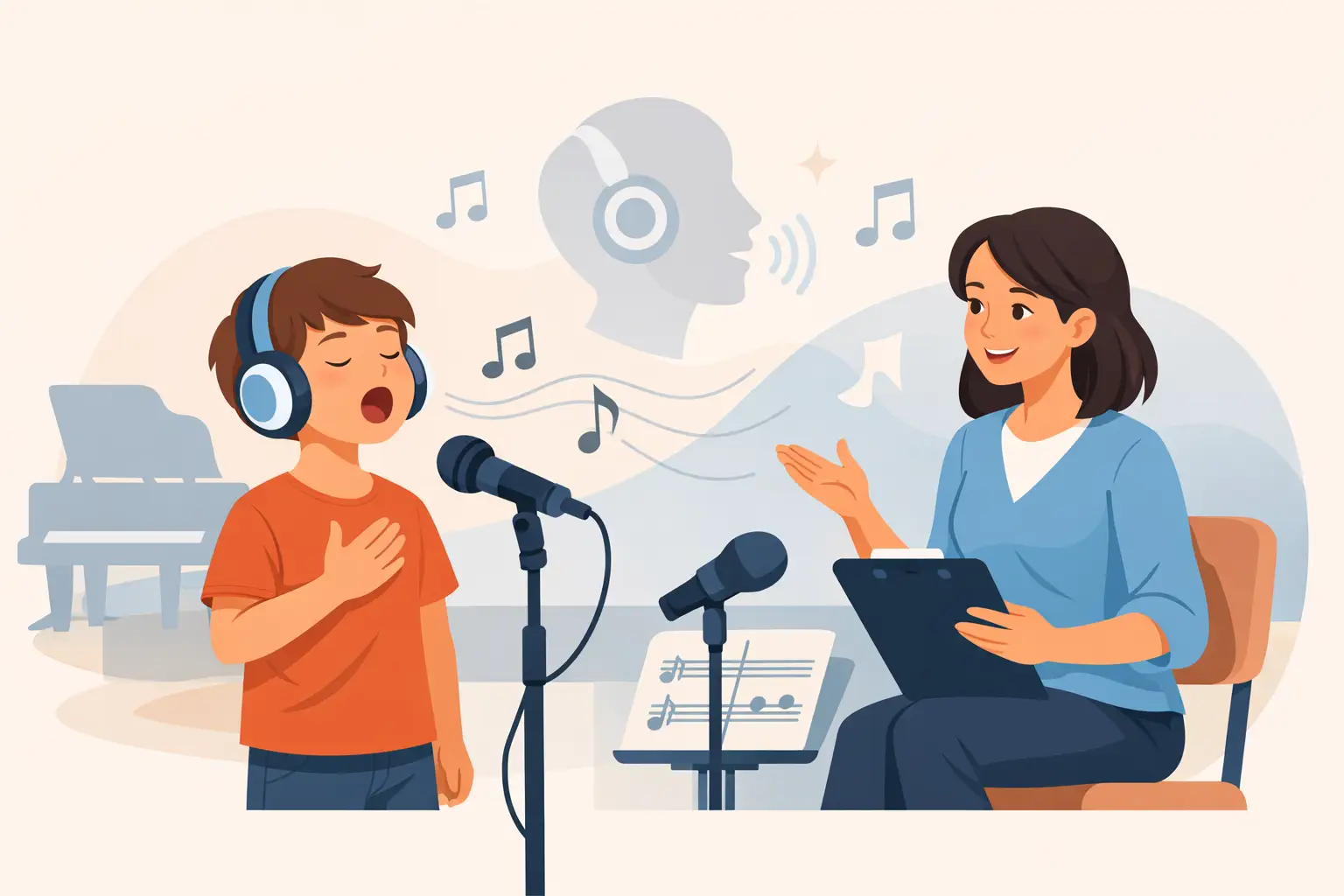
For elementary-age students, good voice lessons should feel active, encouraging, and age-appropriate. Kids learn best when teachers combine singing with movement, ear training, musical games, and simple technique. The goal is not to make a child sound like an adult singer. The goal is to help them sing freely, stay healthy, and have fun while building skills.
A strong teacher will keep things light while still teaching real fundamentals. That might include posture, breath awareness, vowel shaping, pitch matching, rhythm, and basic microphone or performance skills. Done well, it feels natural and exciting, not intimidating.
This is especially important because children’s voices are still developing. They do not need heavy vocal pressure or overly advanced repertoire. They need guidance that protects the voice while helping confidence grow.
Is age 5 or 6 too young?
Not always. It just depends on the lesson style.
A 5- or 6-year-old can absolutely benefit from singing instruction if the teacher understands young learners. At that age, lessons are usually shorter, more playful, and built around exploration. A child may learn to match pitch, sing with expression, listen carefully, and develop comfort using their voice in front of others.
What usually does not work is expecting a very young child to handle a traditional, technique-heavy private lesson the same way an older student would. If a teacher pushes too much structure too soon, kids can lose interest fast.
That is why fit matters so much. A young singer needs an instructor who knows how to turn learning into a positive experience. When that happens, early lessons can be wonderful.
Is there such a thing as starting too late?
No. There is only starting from where your child is now.
Some students do not show serious interest in singing until middle school or high school. Others become interested after joining choir, musical theater, church music, or talent shows. They may actually progress quickly because they are more self-aware, more motivated, and better able to practice consistently.
Puberty does change the voice, especially for boys, so that can create a temporary adjustment period. But it is not a reason to avoid lessons. In fact, quality instruction during vocal changes can be incredibly helpful. Students learn how to work with their changing voice instead of feeling frustrated by it.
If your child is older and just getting started, that is still a great moment to begin. Confidence can grow fast when they feel supported and know what to do.
Signs your child is ready for voice lessons
If you are unsure, look for a pattern rather than one big sign. Kids are often ready when they show interest consistently over time.
Your child may be ready if they sing often by choice, enjoy performing, can follow simple directions, and respond well to encouragement. It also helps if they can handle a little repetition without getting upset, since singing skills grow through practice.
Another good sign is when a child wants to improve, not just sing. Maybe they ask how to hit higher notes, learn a favorite song, or sound better for a school performance. That kind of motivation goes a long way.
If your child is shy, do not assume they are not ready. Many shy kids thrive in voice lessons because singing gives them a safe way to express themselves. The right environment can make all the difference.
What parents should avoid
The biggest mistake is treating voice lessons like a test of talent. Lessons are not only for kids who are already amazing singers. They are for kids who want to learn.
Another common mistake is focusing too much on fast results. Singing is personal, and progress is not always linear. One child may improve pitch quickly but take longer to gain confidence. Another may be fearless on stage but need time to build control. Both are progressing.
It also helps to avoid forcing a child into lessons because they sing well in the living room. Interest matters. Encouragement works better than pressure every time.
Finally, make sure the teacher and format fit your child’s personality. A warm, student-centered lesson often leads to much better long-term growth than a more rigid approach, especially in the beginning.
How to choose the right first step
If your child is 7 or older and eager to sing, private voice lessons may be the right move now. If they are younger, or still building focus, a more introductory format may be better. Sometimes starting with beginner music lessons, group classes, or an instrument alongside singing creates a stronger foundation.
The best first step is one that keeps your child excited to come back next week. That is where real progress starts.
At a student-first studio like Matt Burk Music Studio, the goal is not just to teach songs. It is to help each student grow in skill, confidence, and joy at a pace that fits them. For some kids, that starts early. For others, it starts when they are finally ready to raise their hand and say, “I want to sing.”
If you are wondering whether now is the right time, trust what you see in your child. Look for interest, readiness, and the kind of support that makes music feel welcoming. The right age is not the one printed on a chart. It is the moment your child is ready to be encouraged, guided, and given the chance to use their voice with confidence.