
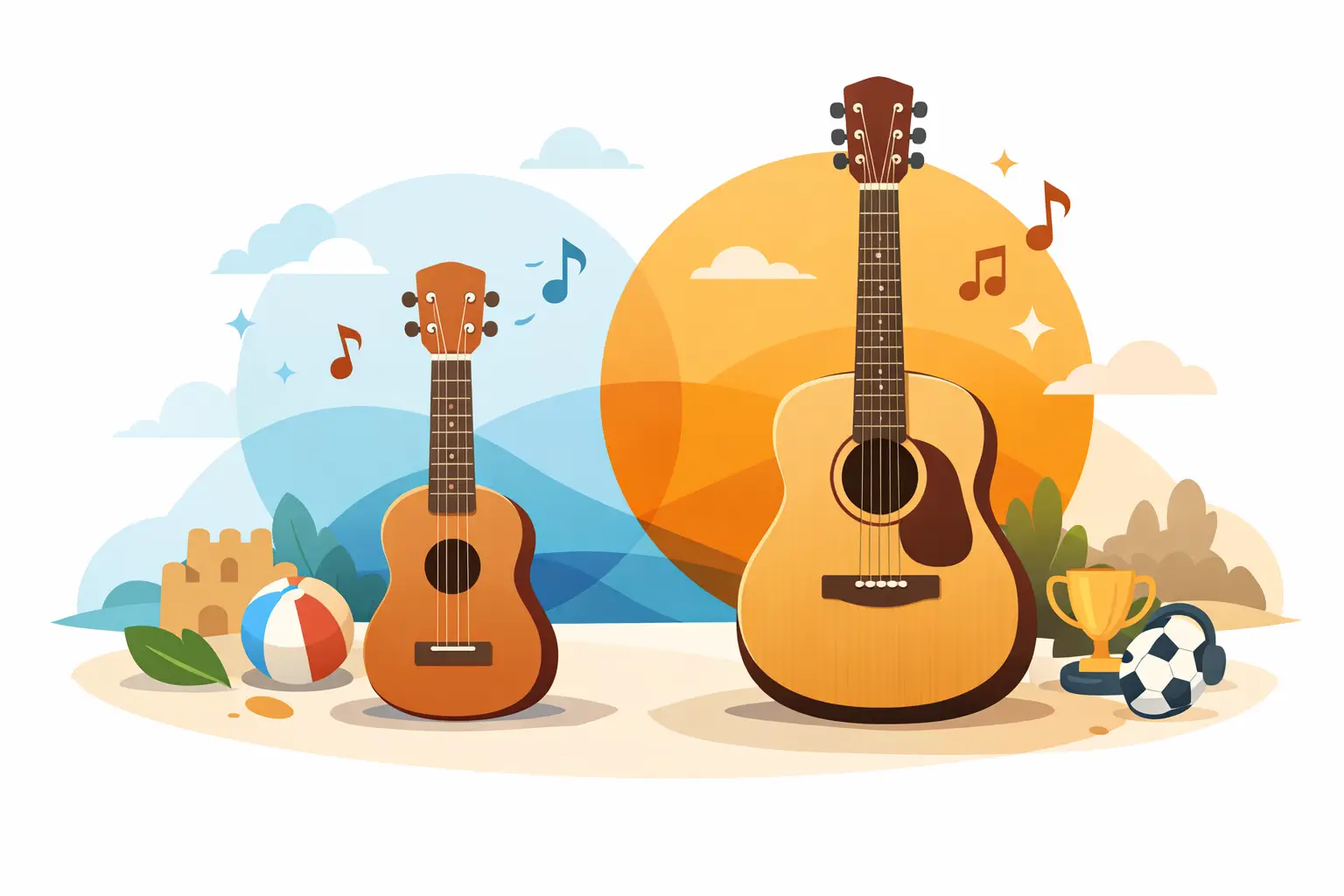
A lot of parents ask the same question right after their child shows interest in music: should we start with a ukulele or a guitar? If you are weighing ukulele or guitar for kids, the good news is that there is no wrong answer. Both can build confidence, creativity, and real musical skill. The better question is which instrument will help your child feel successful early and stay excited to keep going.
That early excitement matters more than most parents realize. Kids usually do not quit because they "aren't musical." They quit because the instrument feels uncomfortable, the songs feel too hard, or progress feels too slow. The right first instrument can turn those first few weeks into a win instead of a struggle.
Ukulele or guitar for kids: what changes the decision?
The biggest difference is not just sound. It is feel. A ukulele is smaller, lighter, and usually easier for young beginners to hold. A guitar gives kids a wider musical range and can grow with them for many years, but it can also feel bigger and more demanding at the beginning.
That means age matters, but so does personality. A child with tiny hands and a short attention span may connect faster with ukulele. A child who is already obsessed with guitar songs, rock bands, or singer-songwriter music may be more motivated to work through the early learning curve on guitar.
Motivation is a huge part of success. If your child lights up every time they hear acoustic guitar, choosing ukulele just because it looks easier may backfire. On the other hand, if they simply want to make music and have fun right away, ukulele often creates a smoother start.
Why many younger beginners do well on ukulele
For many children, ukulele feels friendlier from day one. The body is smaller, the neck is easier to wrap a hand around, and the strings are softer on the fingers. That can make a real difference for younger students who are still developing hand strength and coordination.
Ukulele also has four strings instead of six. That sounds like a small detail, but for a beginner it often means fewer things to manage at once. Simpler chord shapes can help kids start playing recognizable songs sooner. And when a child can play part of a song quickly, confidence goes up.
This is one reason ukulele is often a strong choice for elementary-age beginners. It gives them a chance to experience success early, which helps them build consistency. Once a child feels like, "I can do this," practice usually becomes much less of a battle at home.
That said, ukulele is not just a stepping stone. Some kids fall in love with its bright sound and want to keep playing it for years. It is a real instrument with real depth, not a lesser version of guitar.
When guitar may be the better first choice
Guitar asks a little more physically, but for some kids it is still the best place to begin. If your child has strong interest, enough hand size for a properly fitted instrument, and patience to work through the first few weeks, guitar can be incredibly rewarding.
A guitar opens the door to a broader range of styles, from pop and rock to country, folk, blues, and worship music. For kids who want to sing and play, join a band later, or eventually explore electric guitar, starting on guitar can make sense.
There is also a practical point here. Some children do better when they start directly on the instrument they truly want. They are more willing to push through sore fingertips and awkward chord changes if they feel connected to the goal. If they see themselves as a guitarist, that identity can become powerful fuel.
The key is proper sizing. A full-size guitar is too much for many children. A smaller student guitar can completely change the experience, making it more comfortable and much less frustrating.
Age and size matter, but they are not the whole story
Parents often want a simple age rule, but there really is not one. A seven-year-old with good coordination and strong interest might do great on guitar. A ten-year-old with small hands might feel much more comfortable on ukulele. Physical comfort and emotional readiness matter just as much as age.
As a general pattern, ukulele often works beautifully for younger children because it is easier to manage physically. Guitar often becomes a stronger fit as kids grow, especially when they are ready for more hand strength, more note options, and a wider musical palette.
Still, the child in front of you matters more than the chart in your head. Are they cautious or determined? Do they want instant wins or are they okay with a challenge? Do they love singing simple songs, or are they talking nonstop about guitar riffs and bands? Those clues are usually more helpful than a strict age cutoff.
Cost, convenience, and what parents should know
If budget is part of the decision, ukulele is often the more affordable entry point. Good beginner ukuleles are usually less expensive than good beginner guitars. They are also easy to carry, easy to store, and less intimidating to bring to lessons or family gatherings.
Guitar can still be a smart investment, especially if your child is committed to it. But quality matters. A cheap, poorly made instrument can make learning harder because it will not stay in tune well and may be physically uncomfortable to play. That is true for both instruments, but it can be especially discouraging with guitar.
Parents also need to think beyond the instrument itself. The best first instrument is the one your child will actually pick up regularly. If it feels easy to grab, fun to play, and tied to songs they enjoy, you are already moving in the right direction.
What about switching later?
This is one of the most reassuring parts of the decision. Starting on ukulele does not trap a child there, and starting on guitar does not close any doors. Skills transfer. Rhythm, chord awareness, strumming patterns, ear training, and musical confidence all carry forward.
In fact, some students benefit from starting on ukulele and moving to guitar later. They build coordination, timing, and comfort with fretted instruments first. Then when they are physically bigger or more focused, guitar feels less overwhelming.
Other students start on guitar and stay there happily for years. There is no prize for choosing the "perfect" instrument on the first try. The real win is getting your child engaged in music and keeping that momentum going.
How lessons make the choice easier
A good teacher can spot things quickly that are hard for parents to judge at home. How does the child hold the instrument? Can they press the strings without strain? Do they stay focused longer with one instrument than the other? Are they energized by the sound they are making?
That is why personalized instruction matters so much, especially in the beginning. One child may need a few quick wins to build belief. Another may thrive with a little challenge and a clear long-term goal. When lessons are tailored to the student, the instrument choice becomes much less stressful.
At a student-centered studio like Matt Burk Music Studio, the goal is not just teaching notes and chords. It is helping kids enjoy music, feel proud of their progress, and grow into confident performers at their own pace. That kind of support can make either instrument the right one.
So, should your child start with ukulele or guitar?
If your child is younger, smaller, or needs fast early success, ukulele is often the easier and more encouraging first step. If your child is strongly drawn to guitar music, has the focus to stick with it, and can use a correctly sized instrument, guitar may absolutely be the better choice.
If you are torn, think about comfort, motivation, and momentum. Which instrument fits their body? Which sound excites them? Which one makes it more likely they will smile after practice instead of shutting down?
That is usually your answer.
Music lessons should feel like growth, not pressure. Whether your child starts on ukulele or guitar, the best beginning is one that helps them feel capable, supported, and excited to come back next week.