
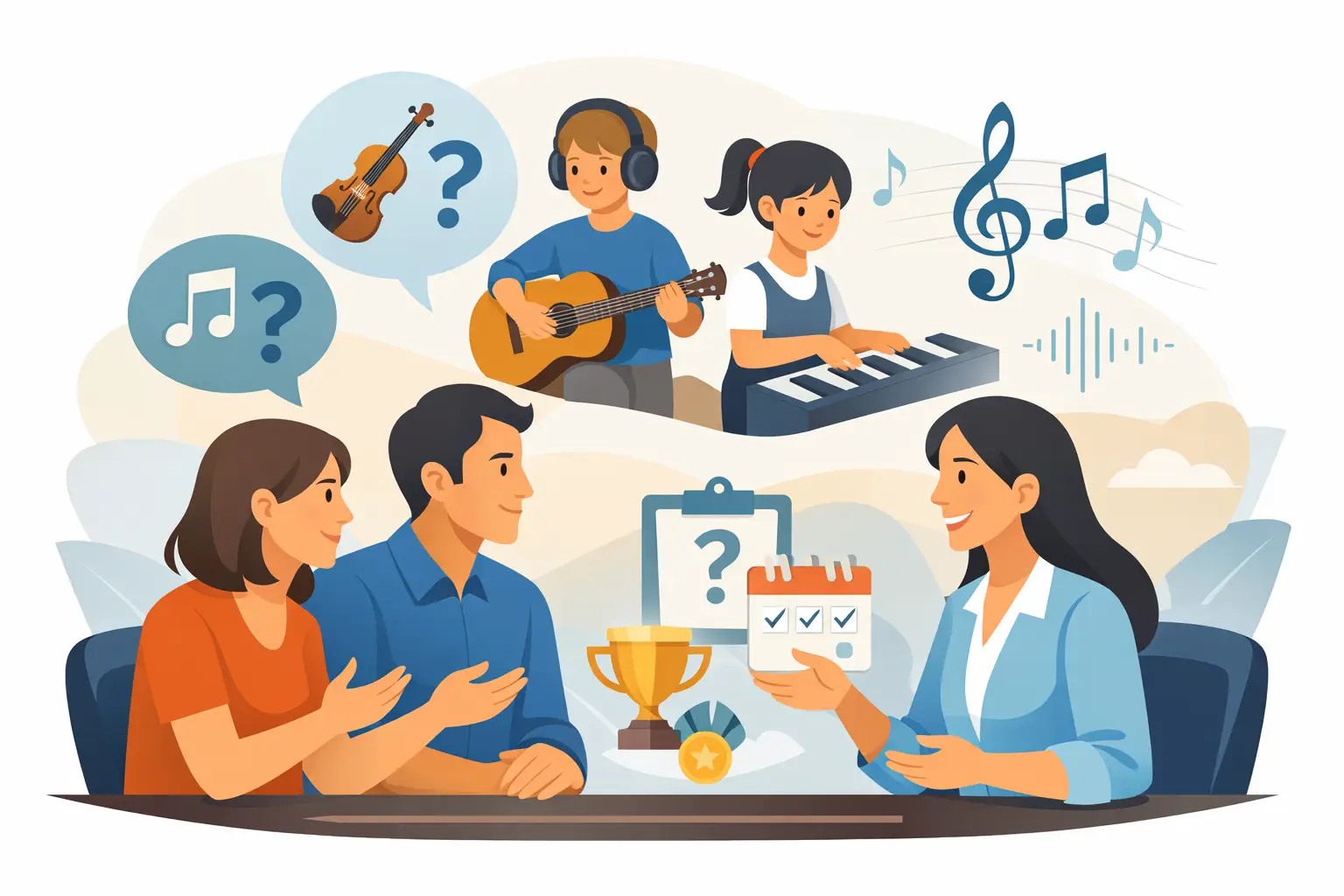
If you’re a parent staring at a lesson schedule, wondering whether now is the right time to start, you’re not alone. Some of the most common parent questions about music lessons have nothing to do with talent and everything to do with real life - attention spans, busy calendars, motivation, cost, and whether lessons will actually help a child grow.
Those are smart questions. Music lessons are an investment of time, energy, and trust. Parents want to know if their child is ready, if progress will be worth it, and if the experience will build confidence instead of frustration. The good news is that with the right teacher and the right environment, lessons can become one of the most rewarding parts of a student’s week.
Parent Questions About Music Lessons That Matter Most
Many families begin with one big question: is my child too young, too busy, or too inexperienced to start? Usually, the better question is whether your child is curious and open to learning. A student does not need to show early genius to benefit from lessons. They just need a starting point.
Readiness looks different from child to child. One student is eager at six. Another connects better at nine. Teens often do surprisingly well because they can set clearer goals and stick with them. Adults can thrive too, especially when lessons are personalized and low-pressure. Age matters less than finding a teacher who can match the student’s pace, personality, and interests.
Parents also ask whether lessons should begin with piano before another instrument. Sometimes piano is a great foundation because it makes musical patterns easy to see. But that does not mean every child should start there. If your child lights up around drums, guitar, or voice, that excitement matters. Motivation is one of the biggest predictors of follow-through.
How do you know if lessons are working?
This is one of the most honest parent questions about music lessons, because progress in music is not always linear. In the beginning, improvements can be subtle. A child may sit with better focus, clap rhythms more accurately, or become more willing to try hard things without giving up. Those are real wins.
Of course, parents also want visible progress. You want to hear fuller songs, stronger timing, better tone, and more confidence. A strong lesson program should give students both kinds of growth - technical skill and personal growth. If lessons are well matched to the student, you should see steady development over time, even if some weeks feel slower than others.
It helps to think in seasons, not snapshots. One rough practice week does not mean a child is failing. One exciting breakthrough does not mean every week will feel easy. Progress usually comes from consistency, encouragement, and smart teaching that adjusts as the student grows.
What if my child doesn’t want to practice?
Almost every parent asks this eventually, and the answer is rarely “make them practice longer.” More often, the real issue is that practice feels confusing, lonely, or too big. Kids avoid what feels overwhelming.
A better approach is to make practice simple and doable. Ten focused minutes can be more effective than thirty distracted ones. Younger students often do best with a parent nearby, not as a drill sergeant, but as a calm support system. Older students may need structure more than reminders - a set time, a clear goal, and music they actually enjoy playing.
This is where customized lessons make a huge difference. When students work on songs they recognize, celebrate small milestones, and feel successful in the room, they’re much more likely to practice at home. Fun is not a distraction from progress. For many students, fun is what keeps progress alive.
Should parents sit in on lessons?
It depends on the student’s age and personality. Younger beginners often benefit when a parent observes, especially in the early weeks. That gives you a clear picture of what to help with at home and helps your child feel secure.
As students get older, some do better with a little independence. They may focus more, take ownership, and build confidence when they have space to work directly with the teacher. Neither approach is automatically better. The goal is to create an environment where the student feels supported and engaged.
A good studio will guide families on what makes sense, rather than forcing one rigid policy for everyone.
Are recitals necessary?
For some parents, performance sounds exciting. For others, it sounds terrifying. The truth is that performance can be one of the most valuable parts of music education when it’s handled with care.
Students grow differently when they have a real reason to prepare. They learn how to stay calm under pressure, recover from mistakes, and share their work with others. Those experiences build more than musical skill. They build poise, resilience, and confidence that shows up in school, sports, and everyday life.
That said, performance should feel like a supported challenge, not a harsh test. Some students are ready quickly. Others need time. The best programs create opportunities that help students stretch without feeling thrown into the deep end. Community events, jam sessions, open mics, and student showcases can make performing feel exciting and achievable.
How long should we commit before deciding?
Parents understandably want to know when they’ll have enough information to tell if lessons are a good fit. In most cases, one lesson can tell you whether the teacher is welcoming and whether your child feels comfortable. But it usually takes a little longer to judge true progress.
A fair trial period is often a few months. That gives the student time to settle in, learn routines, and work through the awkward beginner stage. Many children need that window before confidence starts to show.
If your child still seems consistently stressed, disconnected, or uninterested after a reasonable adjustment period, it may not mean music is the problem. It could mean the instrument, teaching style, or lesson format is not the right match. Sometimes a switch from private lessons to a band setting, or from one instrument to another, changes everything.
What should parents look for in a music program?
The best fit is not always the strictest program or the one with the flashiest promises. Parents should look for a place where students are known, encouraged, and taught as individuals. That means clear goals, experienced instructors, and an atmosphere that makes kids want to come back.
Convenience matters too. If scheduling is a constant battle, even great lessons become hard to sustain. Families do better when the process is easy to manage and flexible enough for real life. No-contract options, rescheduling support, and responsive communication can make a bigger difference than parents expect.
It also helps to choose a program that offers more than weekly instruction. Students often stay motivated longer when they feel part of a musical community. Performance opportunities, group experiences, and special events can turn lessons from another activity on the calendar into something your child genuinely looks forward to. That’s one reason many families in Allen and Frisco are drawn to Matt Burk Music Studio.
Will music lessons help outside of music?
Yes, but not in a magic-bullet way. Music lessons are not a shortcut to perfect grades or instant discipline. What they can do is teach habits that transfer. Students learn how to listen closely, break big goals into smaller pieces, accept feedback, and keep going when improvement takes time.
For many kids, the biggest change is confidence. A shy student finds their voice. A perfectionist learns that mistakes are part of learning. A student who usually quits hard things starts to realize they can stick with something and succeed. Those moments matter.
Parents often come in hoping their child will learn an instrument. They stay because they see their child growing into someone more expressive, more resilient, and more sure of themselves.
If you’re weighing your options, give yourself permission to ask every question you have. The right music lessons should feel encouraging from the start, clear in their goals, and fun enough that your child wants to keep going. When that fit is there, music becomes more than a skill - it becomes a place where students can grow, belong, and surprise themselves in the best way.