
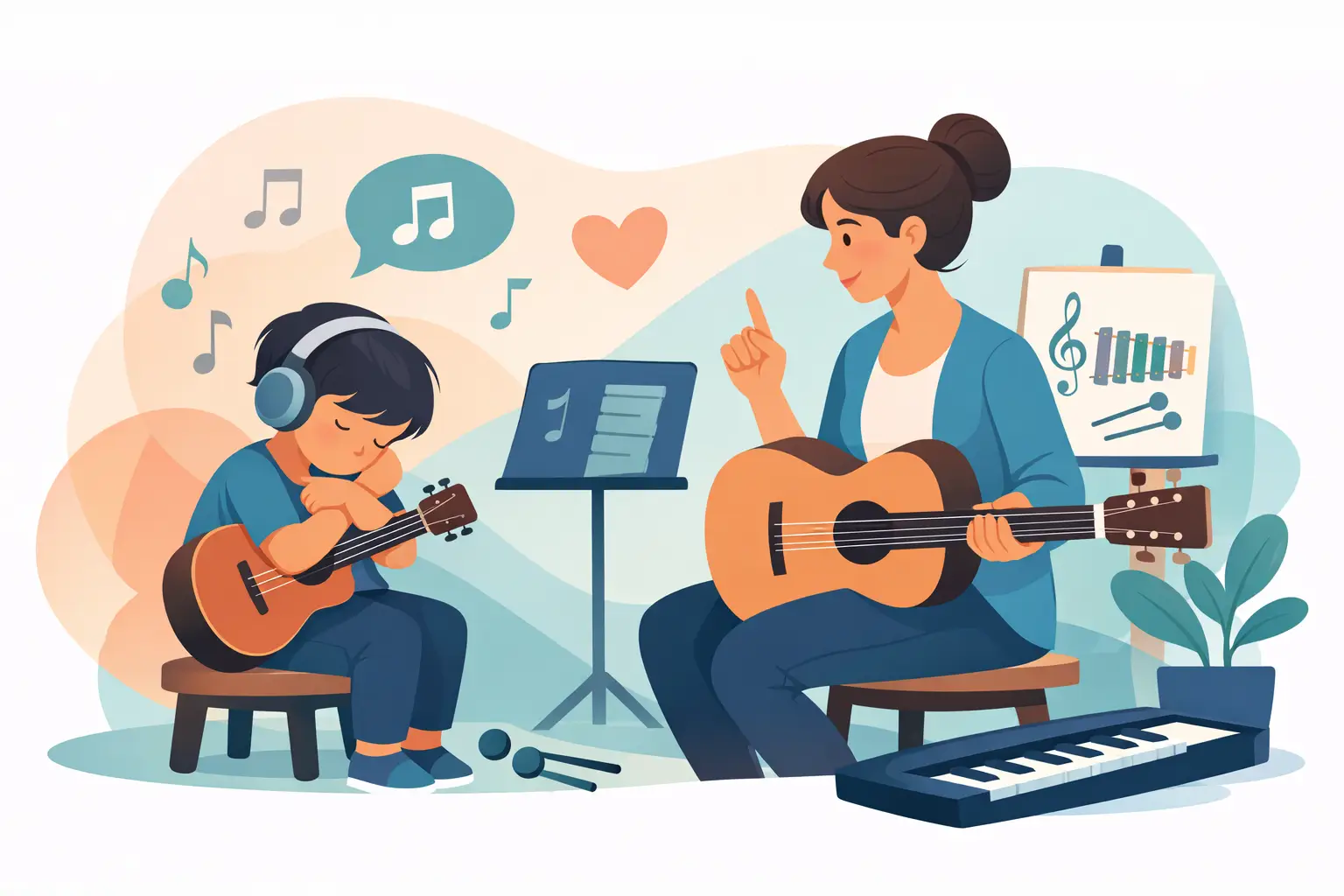
Some kids will sing nonstop at home, then go completely quiet the second a teacher says hello. Others want to learn an instrument but freeze when they think they might be watched, corrected, or asked to perform. That is exactly why music instruction for shy children has to be handled with care. The right lesson environment does not push a child to become someone else. It helps them feel safe enough to grow into themselves.
Shyness is not a problem to fix. In many children, it simply means they warm up slowly, notice everything, and need trust before they fully participate. Those qualities can actually support strong musical growth. Shy students often listen closely, pay attention to detail, and respond well to one-on-one encouragement. The key is giving them instruction that builds confidence and skill at the same time.
Why music instruction for shy children works so well
Music gives children a voice before they are ready to use words. A child who does not want to speak much in a group may still feel comfortable tapping a drum pattern, finding a melody on the piano, or strumming a few chords on guitar. That matters. It creates an early win, and early wins change how a child sees themselves.
When lessons are personalized, shy students can progress without the pressure that often comes with sports teams, large classes, or highly competitive environments. They get space to learn at their own pace. They also get a caring instructor who can celebrate small breakthroughs that might go unnoticed elsewhere, like making eye contact, answering a question more confidently, or volunteering to play a line twice.
There is also a deeper benefit. Music teaches children how to tolerate being heard. That may sound simple, but for a shy child, it is a big step. Each lesson becomes a chance to try, make a mistake, adjust, and keep going in a supportive setting. Over time, that process builds resilience along with musicianship.
What shy children need from music lessons
Not every music program is a great fit for a reserved child. Some students thrive in high-energy group settings right away. Others need a gentler on-ramp. It depends on the child’s temperament, age, and past experiences.
A shy child usually responds best when lessons feel predictable, personal, and encouraging. Predictability lowers anxiety. Personalization helps them feel seen. Encouragement gives them permission to participate without fear of getting it wrong.
That does not mean lessons should be overly cautious or lacking in challenge. Growth still matters. The difference is in how the challenge is introduced. A strong instructor knows how to stretch a student without overwhelming them. Instead of saying, “Play this in front of everyone,” they might start with, “Let’s try this together,” then move to, “Play it for me once,” and eventually, “Would you like to share this at a small studio event?”
That gradual build is where confidence happens.
The teacher-student relationship matters more than parents often realize
For shy kids, trust is everything. Before they can focus fully on rhythm, notes, posture, or technique, they need to feel comfortable with the person guiding them. A warm, patient instructor can make all the difference.
Children tend to open up when they sense that lessons are not a test. They need to know they are allowed to be beginners. They need to feel that their instructor notices effort, not just results. When a child feels respected instead of judged, they are much more likely to participate, ask questions, and stay engaged.
This is one reason private lessons are often such a strong choice for shy students. One-on-one attention removes a lot of social pressure. It also allows the teacher to adapt in real time. If a child comes in quiet and hesitant, the lesson can begin with something familiar and low-pressure. If they come in energized and ready, the instructor can build on that momentum.
Best instruments for shy children
There is no single best instrument for every shy child, but some are easier entry points depending on personality and comfort level.
Piano is often a great starting choice because it is visual, straightforward, and easy to explore without needing to produce sound in a highly exposed way. A student can play one note, then a few more, and quickly hear success.
Guitar and ukulele can also work well, especially for children who connect with songs and like the idea of accompanying themselves. Voice lessons can be wonderful too, but they are often more emotionally vulnerable at first. Some shy children love singing once they feel safe. Others may prefer starting with an instrument and adding voice later.
Drums can be excellent for kids who express themselves physically and need an outlet for nervous energy. Bass is another underrated option for reserved students. It offers a strong role in music without always putting the student in the spotlight.
The better question is not, “What instrument should a shy child play?” It is, “What instrument makes this child curious enough to try?” Interest creates momentum. Momentum creates confidence.
How performance should be introduced
Parents sometimes worry that a shy child should avoid performance entirely. Others believe performance is exactly what the child needs right away. Usually, the best answer is somewhere in the middle.
Performance can be incredibly powerful for confidence, but only when it is introduced thoughtfully. A child who is pushed too fast may shut down. A child who is never given the chance to share may miss out on one of music’s biggest confidence-building benefits.
A gradual path works best. First, the student plays for their teacher. Then maybe for a parent at the end of a lesson. Later, they might join a small group class, jam session, or open mic in a setting that feels welcoming and low pressure. Eventually, bigger performance opportunities can become exciting rather than scary.
That step-by-step process teaches a valuable lesson: nerves are normal, and they do not have to stop you.
Small wins count more than big speeches
Shy children do not usually transform because someone told them to “be confident.” They grow because they experience success in manageable pieces. One clean chord change. One short song memorized. One performance where they were nervous but still followed through.
Those moments stack up. Over time, a child begins to think, “I can do hard things.” That belief reaches far beyond music lessons.
What parents can do at home
Parents play an important role, but not by turning home into a second lesson. The most helpful thing you can do is create a calm, positive atmosphere around practice.
Try not to pressure your child to perform for relatives or explain their progress on demand. Many shy kids feel put on the spot very quickly. Instead, let them choose when they want to share. Celebrate consistency more than perfection. A relaxed ten minutes of practice can be more valuable than a tense half hour.
It also helps to speak about music lessons as a place where growth happens, not a place where children prove themselves. If your child seems quiet after a lesson, that does not mean it went badly. Some students process internally. Confidence often builds quietly before it shows outwardly.
Choosing the right lesson environment
If you are looking for music lessons for a shy child, pay attention to more than the curriculum. Look at the full experience. Does the program feel warm and welcoming? Are instructors patient and encouraging? Can lessons be customized to the child’s pace and goals? Are there opportunities to grow from private learning into community experiences when the student is ready?
That combination matters. A child may begin in private lessons, then later enjoy semi-private sessions, band classes, or performance events once their confidence grows. A supportive studio can meet them where they are now while also giving them a path forward.
At Matt Burk Music Studio, that student-first approach is a big part of what helps hesitant students settle in. Personalized lessons, caring instructors, and gradual performance opportunities can help children move from nervous beginners to proud musicians in a way that feels exciting instead of overwhelming.
Shy children do not need less opportunity. They need the right kind of support. With patient instruction, real encouragement, and a safe place to try, music can become one of the best confidence-building experiences in a child’s life. Sometimes the quietest kid in the room is simply waiting for the right place to be heard.