
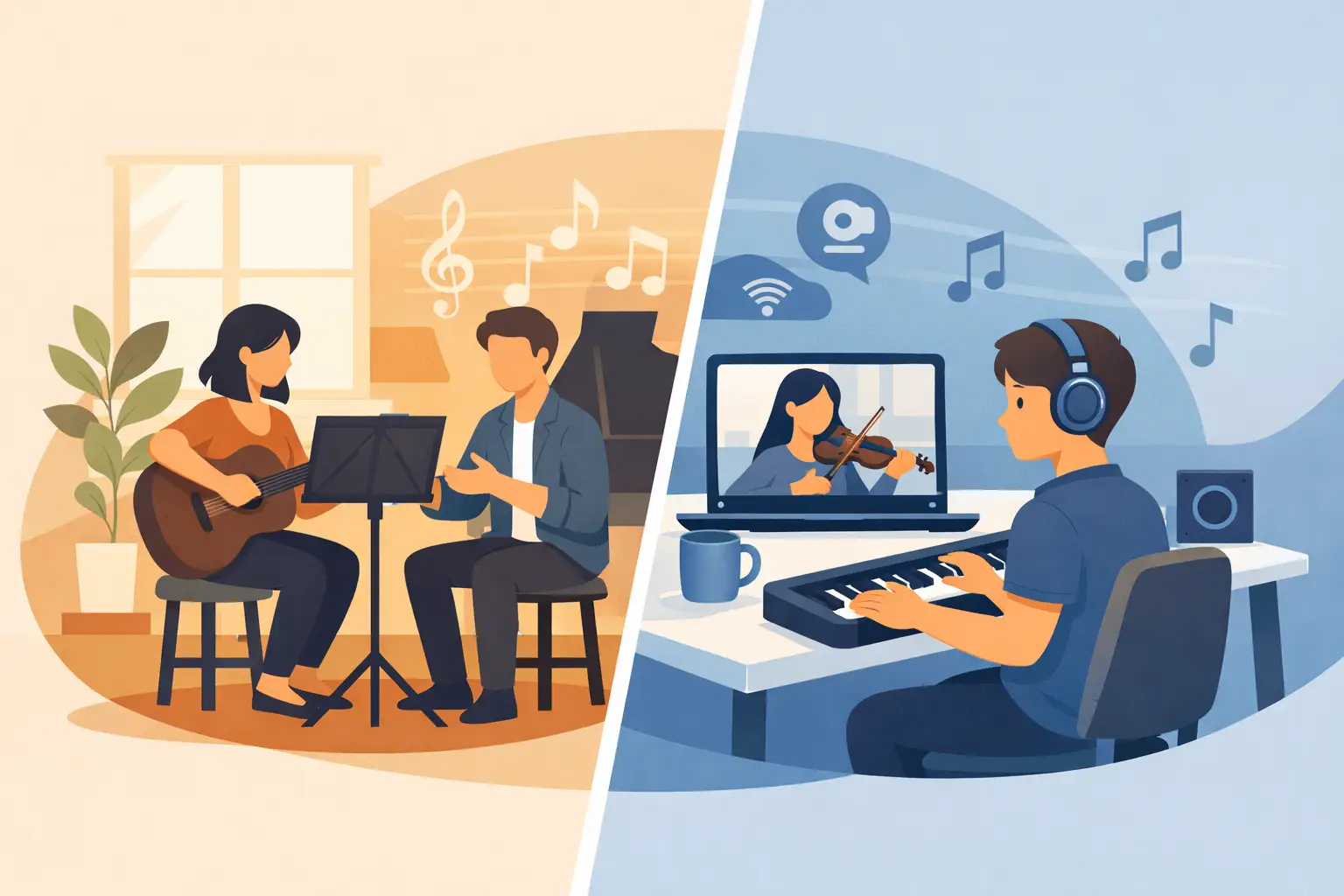
A child can learn the notes to a favorite song through a screen. They can also learn them sitting across from a teacher who notices the tight shoulders, celebrates the first clean chord change, and helps turn a shaky attempt into a confident performance. That difference is at the heart of in person vs online music lessons.
Both formats can help students grow. The better choice depends on the student, the instrument, the family schedule, and what “success” looks like in your home. If the goal is simply to explore music from a convenient location, online lessons may be a great fit. If the goal includes confidence, accountability, hands-on guidance, friendships, and eventually stepping onto a real stage, in-person instruction often creates a fuller experience.
In Person vs Online Music Lessons: The Real Difference
The biggest difference is not whether a teacher can explain a scale or assign a song. Great teachers can do that in either format. The difference is how easily the teacher can observe, respond, and build momentum with the student.
In an in-person lesson, an instructor sees the whole musician. They can spot a piano bench that is too low, a guitar wrist that is bending awkwardly, drumsticks being held too tightly, or a singer who needs room to breathe. Small adjustments made early can prevent frustration and make playing feel more natural.
Online lessons require the student and teacher to work around camera angles, audio delays, screen distractions, and equipment limitations. That does not make them ineffective. A focused teen with a reliable setup, for example, may make excellent progress online. But for many beginners, especially younger children, the added barriers can make it harder to stay engaged and understand what the teacher is demonstrating.
Feedback You Can Feel and See
Music is physical. Students use posture, timing, touch, breath, coordination, and listening all at once. In person, a teacher can demonstrate a movement from the exact angle a student needs to see, then immediately check whether it feels comfortable.
This matters on every instrument. A beginning guitarist may need help placing fingers close to the frets. A piano student may need to understand the difference between pressing a key and shaping a musical phrase. A vocalist may benefit from a teacher modeling healthy breathing and helping them hear when pitch is settling into place. Drummers need clear guidance on setup, stick control, and coordination.
Online teachers can still offer thoughtful feedback, particularly with multiple camera angles and good sound. Yet a slight lag can make playing together difficult, and a poor microphone may hide details in tone or rhythm. For students who learn best by watching closely and receiving immediate coaching, in-person lessons usually have the edge.
Convenience Is a Real Advantage of Online Lessons
Families in Allen and Frisco know how quickly a weekday can fill up. School, homework, sports, work, dinner, and traffic all compete for time. Online music lessons remove the drive and can make it possible for a busy student to keep a consistent weekly lesson.
That convenience is valuable. An adult learner who travels for work may prefer logging in from home. A student recovering from a minor illness may be able to continue a lesson without sharing germs. Some highly self-motivated students also enjoy learning in the same room where they practice every day.
Still, convenience only helps if the lesson actually happens with focus. At home, students may be tempted by siblings, pets, phones, gaming systems, or the urge to wander away from the instrument. A younger child may need a parent nearby to troubleshoot technology and help them stay on task.
Going to a music studio creates a helpful routine: this is my time to make music. That change of setting can be powerful. Students arrive, greet their teacher, put their attention on the instrument, and leave with a clear next step for the week. For many families, that dedicated hour is worth the trip.
Which Format Builds Confidence Faster?
Confidence grows when students experience progress they can recognize. Learning a difficult measure, playing with a steady beat, singing in front of someone else, or finishing a song all count. Both online and in-person students can have those wins.
But music confidence is also social confidence. It comes from being seen, encouraged, and gradually challenged in a supportive environment. In-person lessons make those moments easier to create. A teacher can respond to body language, calm nerves before a first performance, and celebrate progress with energy that feels personal and immediate.
For children and teens, being around other musicians can be especially motivating. They begin to understand that mistakes are normal, practice pays off, and everyone starts somewhere. They see possibilities beyond their own weekly lesson.
At Matt Burk Music Studio, students can build toward more than playing alone in a bedroom. Jam sessions, band experiences, open mic nights, masterclasses, and performance opportunities give students a reason to practice and a place to share their gifts. That pathway from first note to live performance is much harder to recreate through a weekly video call alone.
Community and Performance Change the Learning Experience
A private lesson is personal by design, but musicians are rarely meant to stay isolated. Playing with others teaches timing, listening, flexibility, and courage. It also makes music more fun.
Online instruction can offer virtual recitals or group sessions, and those may work well for some students. However, technology makes real-time group playing difficult because even a tiny delay throws off rhythm. A band cannot truly lock into a groove when each musician hears everyone else a fraction of a second late.
In-person programs give students the chance to rehearse together, make eye contact, adjust to each other, and feel the excitement of a song coming alive in the room. For a child who is quiet at school, joining a band can become a confidence-building breakthrough. For an adult returning to music, playing with others can turn a personal hobby into a meaningful community.
If your student dreams of performing at a local venue, singing with a band, or simply playing a song confidently for family, choose a learning environment that gives them safe, encouraging chances to practice those skills before the big moment.
When Online Music Lessons Make Sense
Online lessons are not a lesser option. They can be the right choice when circumstances support them. They often work best for students who already have basic technique, can focus independently, and have a reliable internet connection with a quiet place to learn.
They can also be a practical solution for adults with unpredictable schedules, students who live far from a quality teacher, or families who need occasional flexibility. A strong online lesson still includes clear goals, demonstrations, practice guidance, and encouragement. The student should leave knowing exactly what to work on and why it matters.
For online learning to go well, set up the instrument before the lesson begins, use headphones when helpful, position the camera so the teacher can see hands and posture, and remove nearby distractions. Those simple habits make a major difference.
When In-Person Lessons Are the Better Fit
In-person instruction is often the stronger choice for beginners, younger students, and anyone who wants a hands-on, socially connected experience. It is particularly helpful when a student is learning an instrument with detailed physical technique, such as piano, guitar, drums, bass, or voice.
Choose in-person lessons if your student needs more accountability, learns through demonstration, gets distracted easily at home, or wants regular performance opportunities. It is also a wonderful fit for families who want music to build communication skills, resilience, creativity, and confidence alongside musical ability.
Parents do not need to wait until a child is “serious enough” to begin. A caring teacher can meet a beginner where they are, whether they are excited to play pop songs, curious about drums, or nervous to sing out loud. The right environment makes trying feel safe.
Let the First Lesson Answer the Question
There is no prize for choosing the format that looks best on paper. The goal is to choose the setting where your student will show up, enjoy learning, and keep growing.
If you are deciding for your child, pay attention to how they respond after a lesson. Do they feel proud? Do they talk about what they learned? Are they excited to practice a little more? For adults, ask a different but equally important question: does this format make music feel like a rewarding part of your week instead of another obligation?
A free trial lesson is a simple way to find out. Let your student meet a kind instructor, sit at the instrument, ask questions, and experience what personalized guidance feels like. The best choice is the one that helps them keep making music - with more skill, more confidence, and more joy each week.