
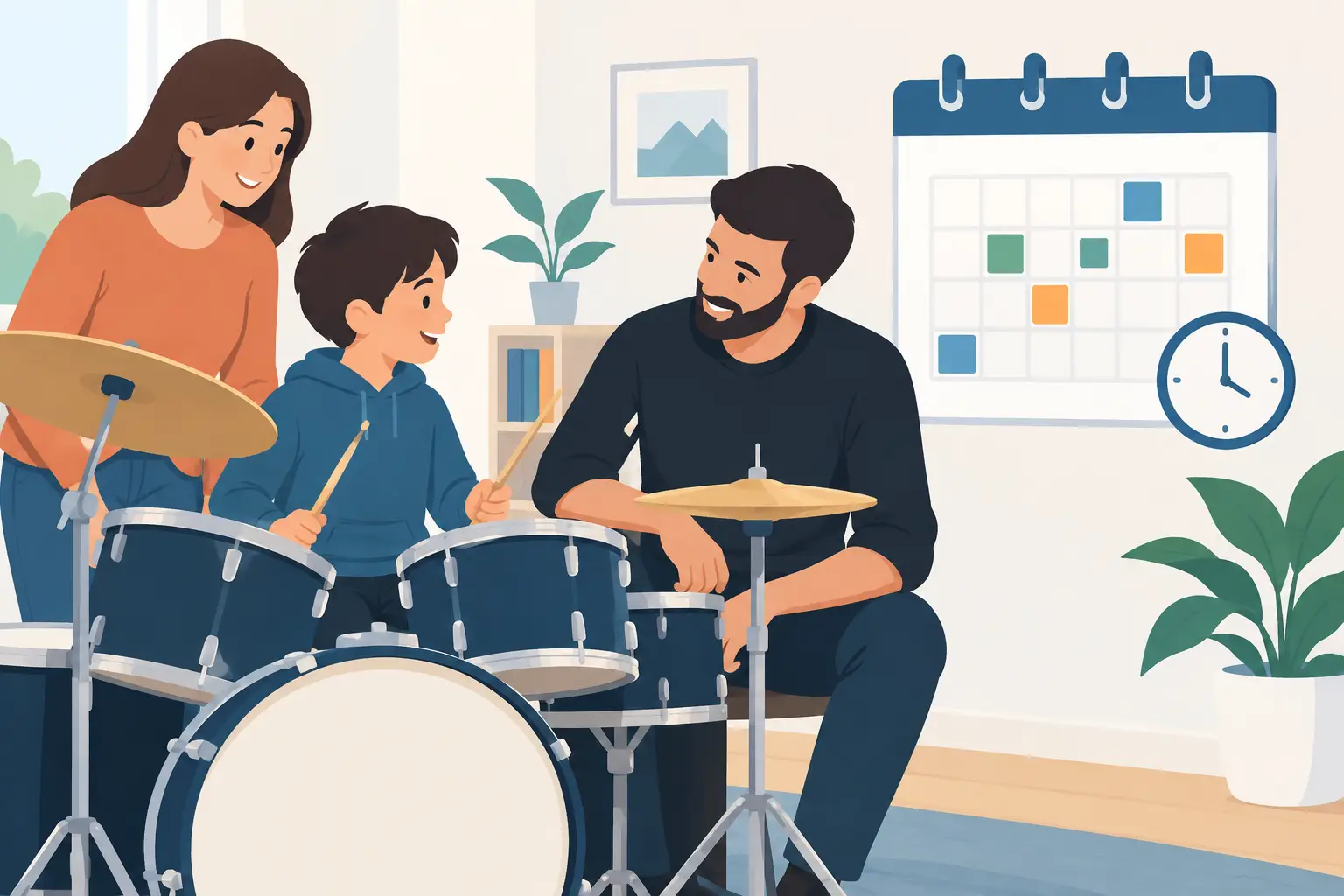
A drum kit can turn a quiet kid into the one counting down the days until lesson day. The right drum lesson scheduling plan protects that excitement. When lessons happen often enough to build momentum, but flexibly enough to work around school, sports, work, and family life, students have a much better chance of sticking with music and enjoying the progress they make.
For families in Allen and Frisco, the goal is not to cram one more activity into an already packed calendar. It is to create a dependable rhythm that helps a student grow in confidence, develop real skills, and have fun making music.
Why a Consistent Weekly Drum Lesson Matters
Drums are physical. Students are learning coordination, timing, listening, posture, stick control, and the confidence to keep playing when a beat feels challenging. Those skills improve through frequent, focused repetition.
A weekly lesson gives students a regular checkpoint with an instructor who knows their goals. One week, that may mean cleaning up a basic rock beat. The next, it may mean adding fills, playing along with a favorite song, or preparing to join a band class or perform at an event. Small wins build on each other quickly when there is a steady routine.
Long gaps can make a beginner feel like they are starting over. That does not mean a missed lesson ruins progress - real family life happens. It simply means consistency should be the default, with enough flexibility to handle the exceptions.
For younger students especially, a predictable lesson time helps music become part of the week rather than another task to negotiate. Adults benefit, too. A reserved time on the calendar can be the difference between saying, “I really want to learn drums someday,” and actually playing songs a few months from now.
Choose a Lesson Time You Can Protect
The best time is not always the first opening available. It is the time your family can realistically maintain most weeks without creating unnecessary stress.
After-school lessons can work beautifully for students who still have energy after the school day and need a creative outlet before homework. Others do better with an early evening slot, after they have had time to eat and reset. Weekend lessons can be ideal for busy teens, working adults, and families with demanding weekday schedules.
Before choosing a time, think beyond transportation. Ask a few practical questions: Will your child be hungry, tired, or rushed? Does this conflict with a seasonal sport? Is there enough time to get home, settle in, and practice during the week? For adult students, does this time come after a demanding workday, or would a morning or weekend lesson make practice easier?
There is no single right answer. A first grader and a high school drummer may need completely different schedules. The best plan reflects the student’s energy, responsibilities, and goals.
Build Drum Lesson Scheduling Around Real Life
Families do not need perfect calendars to make music lessons work. They need a plan that expects life to get busy sometimes.
School breaks, family trips, games, rehearsals, testing weeks, holidays, and work travel all happen. A studio with flexible scheduling and unlimited reschedules gives families room to keep music in their lives without feeling punished for having a full calendar. That flexibility is especially valuable when students are balancing multiple activities or when adults are returning to music after years away.
Still, rescheduling works best as a backup plan rather than the normal routine. If a lesson moves every week, it can be harder for a student to build habits and harder for parents to remember practice expectations. Whenever possible, keep one recurring weekly time as the anchor. Then use reschedules to navigate the occasional conflict.
At Matt Burk Music Studio, students can begin with a free trial lesson before committing to a regular schedule. That first visit is a great opportunity to talk honestly about availability, learning goals, and the kind of experience that will help the student succeed.
Match the Schedule to the Student’s Goals
A student who wants to play a few favorite songs for fun may need a different rhythm than a teen preparing to perform with a band. Both goals matter. The lesson schedule should support what success looks like for that individual student.
Beginners often thrive with one private lesson each week and short practice sessions between lessons. The instructor can introduce a manageable new skill, help the student correct technique early, and keep the material exciting. As the student gains confidence, they may want to add band classes, jam sessions, open mic nights, or performance opportunities.
Students preparing for a show may benefit from a little more structure during the weeks leading up to it. A regular lesson becomes a place to work through difficult transitions, strengthen timing with other musicians, and practice performing without stopping. The goal is not pressure. It is preparation that helps students walk onstage feeling ready to share what they have learned.
Adult students may have highly specific goals: playing with friends, learning classic rock grooves, building coordination, recording at home, or finally returning to an instrument they loved years ago. A personalized schedule and lesson plan make those goals feel achievable rather than intimidating.
Leave Room for Practice Without Overloading the Week
A great lesson creates motivation. Practice turns that motivation into progress.
Students do not need marathon practice sessions to improve. In fact, short, regular sessions are often more effective, especially for beginners. Ten focused minutes several days a week can reinforce a new beat far better than one long, frustrated session the night before a lesson.
When planning drum lesson scheduling, look for natural practice windows. Maybe it is 15 minutes after homework, a quick session before dinner, or a weekend morning. Put it on the calendar if that helps, but keep the expectation realistic. A student who feels successful practicing for 10 minutes is far more likely to return to the kit tomorrow.
Not every home has space for a full acoustic drum set, and that is okay. Practice pads, electronic kits, and simple stick-control exercises can all support progress. An experienced instructor can help families choose practice strategies that fit their home, budget, noise level, and student’s current stage.
Communicate Early When the Calendar Changes
The simplest way to keep lessons enjoyable is to communicate as soon as a conflict appears. If a game gets moved, a work trip comes up, or a school event lands on lesson day, reach out early. More notice creates more options for finding a new time that keeps the student moving forward.
It also helps to revisit the schedule when a new season begins. Fall sports, spring activities, summer camps, and changing work hours can all affect what is sustainable. A lesson time that was perfect in September may become difficult in January. Adjusting early is a sign that your family is committed to making music work, not that you have fallen behind.
Students should be part of these conversations when possible. Asking, “When do you feel most ready to play?” gives them ownership. That ownership matters. Music becomes more meaningful when students see it as something they are choosing and building for themselves.
Make Lesson Day Something to Look Forward To
The best music education does more than teach notes and rhythms. It gives students a place where they feel encouraged, challenged, and proud of what they can do. A consistent lesson time creates that space every week.
Keep lesson day simple. Bring sticks, review the current assignment, and arrive with one question or one song idea. Parents can ask younger students what they enjoyed or what they want to work on next. Adults can take a minute after each lesson to notice one improvement, even if it is as basic as holding a steady beat for longer than last week.
Progress on drums is not always loud or dramatic. Sometimes it is cleaner timing, a stronger grip, or the courage to try a fill without stopping. Those are the moments that lead to bigger ones: playing with a band, stepping onto a local stage, and realizing you have something worth sharing.
A schedule is only a calendar choice, but it can become the steady beat behind a student’s musical growth. Choose a time that feels doable, protect it when you can, and let each lesson be one more chance to make music with confidence and joy.