
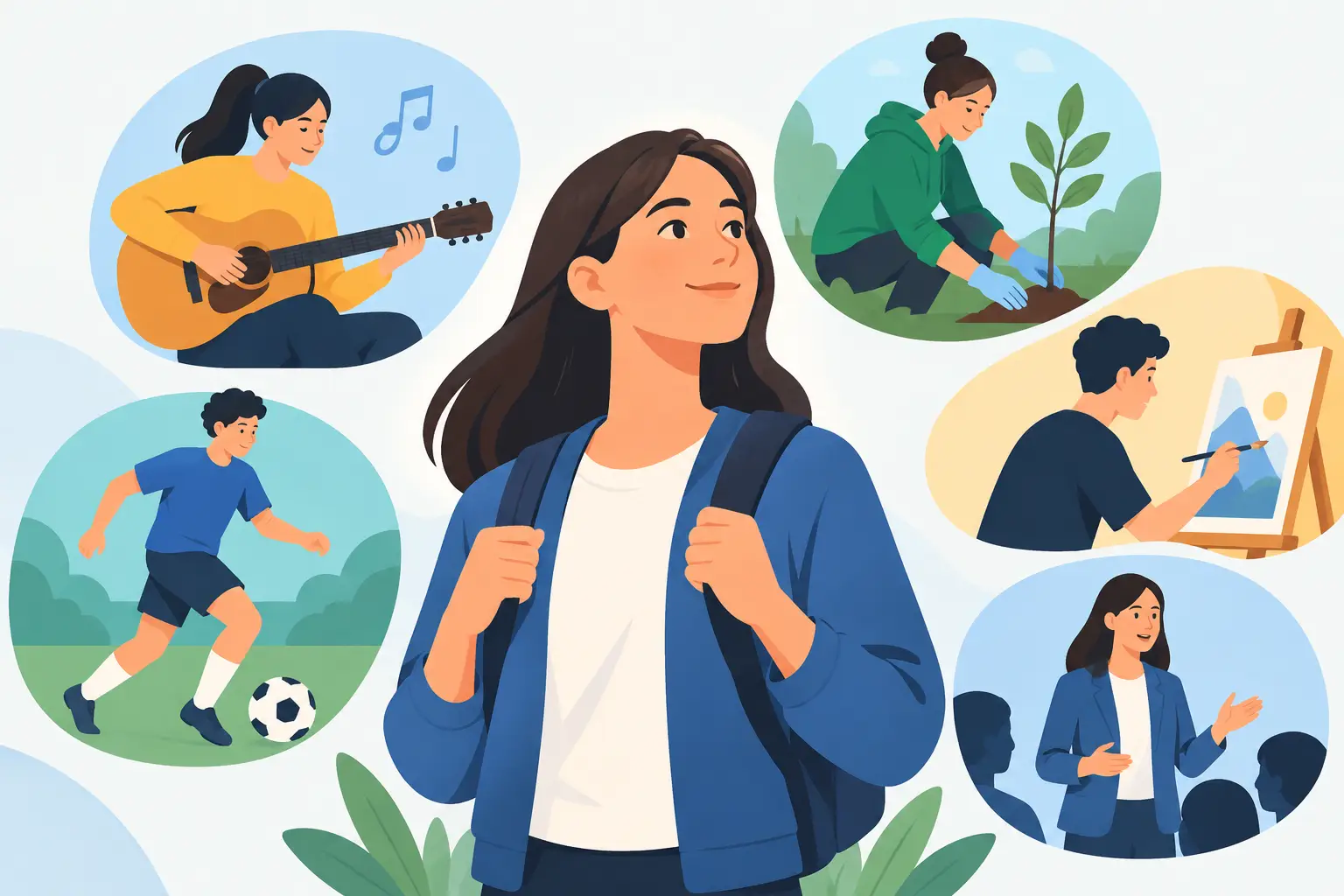
A child does not usually wake up one morning feeling confident. Confidence is built in smaller moments: raising a hand, trying something unfamiliar, recovering after a mistake, and realizing, “I can do hard things.” The best extracurriculars for confidence building give students repeated chances to experience those moments in a setting where effort is celebrated, guidance is available, and progress feels real.
For parents, the goal is not to pack every afternoon with activities. It is to help a child find an experience that makes them feel capable, connected, and proud of who they are becoming. For adults, the same idea applies. A welcoming activity can be the place where you finally stop saying, “I’m not talented,” and start saying, “I’m learning.”
What Actually Builds Confidence?
Confidence is not the same as being outgoing. A quiet child can be deeply confident, while a talkative child may still be afraid of failure. Real confidence grows when someone practices a skill, receives helpful feedback, faces a manageable challenge, and sees evidence that they are improving.
That is why the strongest extracurriculars have a few things in common. They offer clear milestones, caring instruction, opportunities to contribute, and room to make mistakes without embarrassment. A child who learns a difficult drum beat, scores a goal after weeks of practice, or speaks one line clearly in a play is collecting proof that effort can lead somewhere.
The right choice depends on your child’s personality, interests, schedule, and comfort level. An activity that energizes one student may overwhelm another. The best fit is not always the most competitive program or the one their friends chose. It is the one that gives them a reason to keep showing up.
Best Extracurriculars for Confidence Building in Kids
Music lessons and live performance
Music is one of the most personal ways to build confidence because progress is easy to hear and feel. A beginner may start by learning a few notes, a simple rhythm, or the chorus of a favorite song. Before long, they can play something recognizable for a parent, a friend, or an audience.
Private music lessons are especially helpful for students who need a pace that feels encouraging instead of intimidating. A great instructor meets a student where they are, whether they are excited to sing, curious about guitar, determined to play piano, or nervous about their first drum lesson. They set goals that are challenging but achievable, then celebrate every step forward.
Performance adds another powerful layer. Playing at a recital, open mic, jam session, or community venue asks students to manage nerves and share their work anyway. That first performance may come with shaky hands. The next one usually feels a little easier. Over time, students learn that nervousness is not a stop sign. It can be part of doing something meaningful.
At Matt Burk Music Studio, students can grow from their first lesson into band experiences, jam sessions, and live performances that give their hard work a real stage. That combination of personal coaching and supportive community helps students build skills they can carry into school, friendships, interviews, and everyday life.
Team sports
Sports can teach a different kind of confidence: the confidence to participate, communicate, and recover quickly. A player may miss a shot, strike out, or lose a game, but they still have teammates counting on them at the next practice. That teaches resilience in a very practical way.
Team sports can be a wonderful fit for kids who enjoy movement, friendly competition, and shared goals. Soccer, basketball, volleyball, baseball, martial arts teams, and swim teams all create chances to improve through repetition. A child does not have to be the star player to gain confidence. Showing up, learning the rules, encouraging a teammate, and noticing personal progress matter just as much.
The trade-off is that highly competitive programs can sometimes place too much emphasis on winning. If your child is new to sports or sensitive to pressure, look for a coach and league that value development, teamwork, and effort. A positive coach can make all the difference.
Theater, improv, and public speaking
Theater is a natural confidence builder because it asks students to be seen. They learn lines, make choices, use their voice, and work with a cast toward a shared performance. Even students who are not interested in being the lead can find a meaningful role on stage or behind the scenes.
Improv can be particularly helpful for students who overthink their answers or worry about saying the wrong thing. It teaches them to listen, respond, and trust their instincts. Public speaking clubs and debate programs develop similar skills, helping students organize ideas and communicate under pressure.
These activities are not only for future actors or lawyers. Students often discover that once they have spoken in front of a room or performed under bright lights, classroom presentations feel much less scary.
Visual arts and creative clubs
Drawing, painting, photography, ceramics, design, and creative writing may feel quieter than sports or theater, but they can create deep confidence. Creative work gives students a chance to make choices, solve problems, and develop a point of view. There is no single correct way to paint a picture or write a story.
For children who need time to warm up socially, an art class can be a comfortable entry point. They can build confidence in their abilities while connecting with others around a shared interest. Exhibits, showcases, and small group critiques also help students practice sharing their work without feeling like every moment is a competition.
Volunteer programs and service projects
Few experiences build self-belief as quickly as realizing you can make someone else’s day better. Volunteer opportunities help kids and teens see that their time, skills, and kindness have value. They may organize supplies, help younger children, support an animal shelter, participate in a neighborhood cleanup, or assist at a community event.
Service can be an especially good fit for students who do not love the spotlight. Confidence does not always come from applause. Sometimes it grows from responsibility and the quiet pride of being dependable.
Martial arts
Martial arts gives students a clear path of progress. They learn techniques, practice discipline, work toward belt levels, and gain a stronger sense of body awareness. For many kids, that structure feels reassuring. They know what they are working on and can see how consistent practice pays off.
The best programs emphasize respect, focus, and self-control rather than aggression. Students learn how to stand tall, follow through, and stay calm when something is difficult. Those lessons can be especially valuable for children who struggle with frustration or give up quickly.
How to Choose the Right Activity
Start with curiosity, not pressure. Ask your child what they enjoy, what they wish they could do, and what feels a little exciting or a little scary. You may hear an immediate answer, or you may need to offer a few low-pressure chances to try something new.
Pay attention to the environment as much as the activity itself. Is the instructor patient? Are beginners welcomed? Do students receive specific encouragement? Is there a reasonable balance between challenge and fun? A child can love music but dislike a rigid lesson environment, or enjoy soccer but need a less intense league.
It also helps to set a realistic commitment. Confidence needs consistency, but an overloaded schedule can turn a joyful activity into another source of stress. One activity practiced regularly often has more impact than four activities rushed through each week.
Let Progress Be the Win
Parents naturally want to see results, but confidence grows fastest when children feel ownership over the process. Instead of asking only, “Did you win?” or “Were you the best?” try asking, “What felt easier today?” “What did you work hard on?” or “What would you like to try next time?”
Those questions teach children to notice progress. They also make room for honest answers when an activity feels hard. Not every extracurricular will be the right long-term match, and that is okay. Trying, learning, and choosing again are confidence-building skills too.
The best activity is the one that gives your child a place to practice courage, make friends, and feel proud of earned progress. Offer them a supportive first step, then let them discover what they are capable of sharing with the world.