
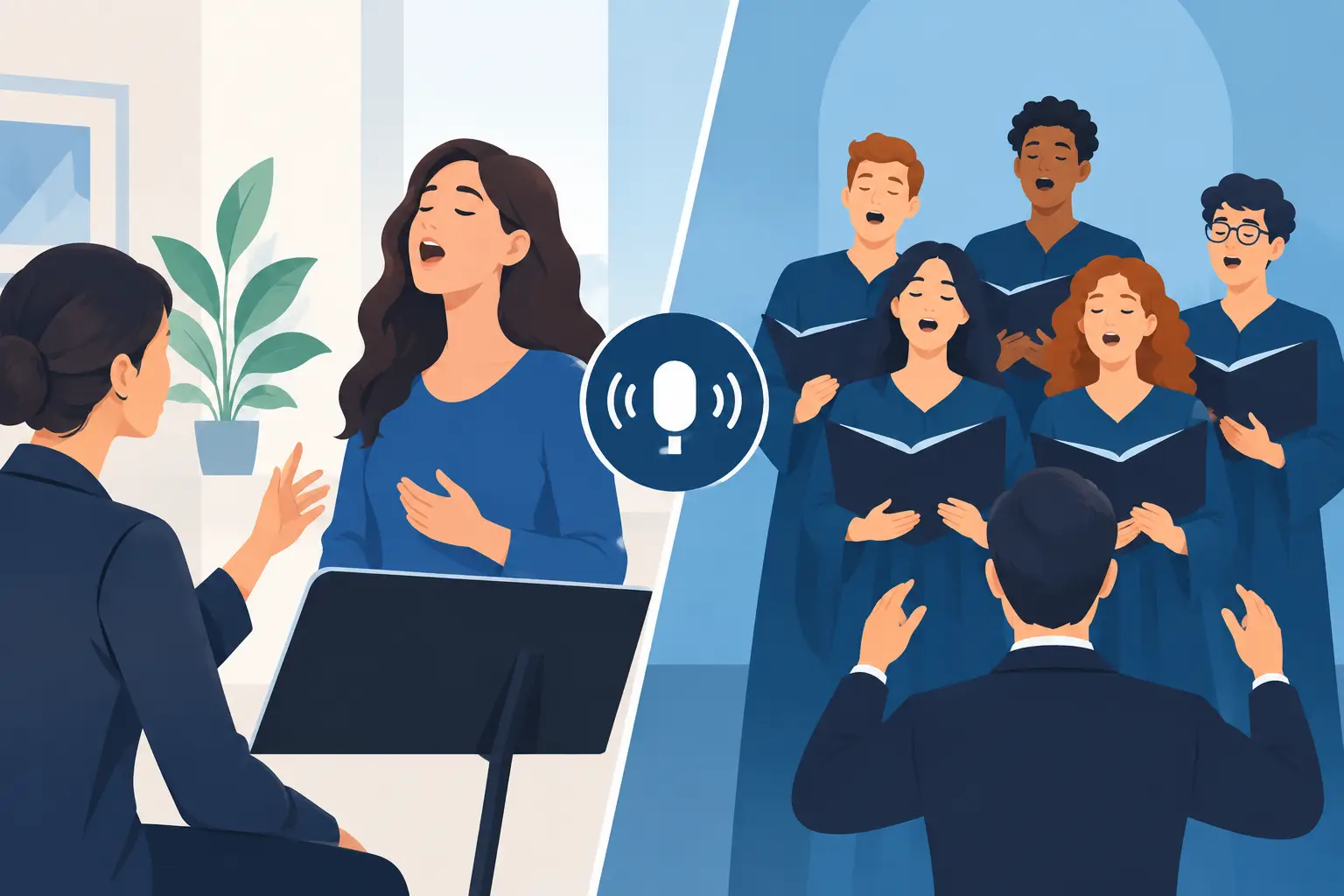
A child who sings every word in the car may light up in a choir. An adult who has always wanted to sing but feels nervous about being heard may need a different starting point. When families compare voice lessons vs choir, the best choice is not about which option is better overall. It is about where the singer is now, what they want to do next, and what will keep them excited to keep growing.
Both options can build musical skill, confidence, and a love for singing. They simply build those things in different ways. For many singers, the strongest path includes both at different points in their musical journey.
Voice Lessons vs Choir: The Biggest Difference
Private voice lessons focus on the individual singer. The instructor can hear the details of one voice, identify habits that may be holding it back, and choose exercises and songs that fit that student's goals. A student might work on breathing, pitch, vocal tone, range, diction, stage presence, and how to sing a favorite song with more confidence.
Choir focuses on making music as a group. Singers learn to blend, follow a conductor, read or memorize parts, listen across sections, and contribute to a shared sound. The goal is not for one singer to stand out. The goal is for everyone to create something bigger together.
That difference matters. If a singer wants personal feedback and a plan built around their own voice, lessons are usually the better fit. If they love the energy of rehearsing and performing with friends, choir may be exactly what keeps them motivated.
What Private Voice Lessons Can Do
A private lesson gives a singer something difficult to find in a large group: focused attention. In choir, a director has a room full of voices to guide. In a voice lesson, every exercise, correction, and song choice can be tailored to one person.
This is especially helpful for beginners who are unsure whether they are singing on pitch or using healthy technique. It also helps singers who feel stuck. Maybe they can sing quietly at home but freeze when asked to sing alone. Maybe high notes feel strained, their voice gets tired quickly, or they cannot seem to make a song sound the way they hear it in their head. A kind, experienced teacher can break those challenges into manageable steps.
Private lessons are also a great fit for singers with specific goals. A student preparing for a school audition, musical theater role, talent show, worship team, open mic, or solo performance needs guidance that is much more detailed than most choir rehearsals can provide. They may need help choosing material, practicing effectively, performing with a microphone, or connecting with an audience.
For adults, private lessons can be wonderfully low-pressure. You do not need to arrive already knowing music theory or feeling ready to perform. You can start with the music you enjoy and build at a pace that works with your schedule. Progress can be practical and personal, whether your goal is singing confidently at karaoke or stepping onto a real stage.
The Trade-Off With Lessons
Lessons ask students to be more visible. Even with an encouraging teacher, singing alone can feel vulnerable at first. They also require consistent practice between sessions, because the fastest growth happens when a singer uses what they learned during the week.
That is not a reason to avoid lessons. It is often the reason they are so confidence-building. A supportive instructor helps students take small wins seriously until singing in front of others feels possible, then enjoyable.
What Choir Can Do for a Singer
Choir is one of the best places to experience the joy of making music with other people. A singer who may be hesitant to perform alone can still feel the excitement of rehearsals, concerts, uniforms, lights, applause, and being part of a team.
Choir teaches skills that matter far beyond the choir room. Students learn to listen closely, enter at the right time, match vowel sounds, maintain their part while another section sings something different, and respond to a conductor. Those are real musicianship skills, and they can make students more prepared for bands, theater, church music, and collaborative performances later on.
The social side is valuable, too. For many children and teens, choir creates friendships around a shared interest. It gives them a place to belong at school and a reason to show up ready to contribute. For a singer who thrives on group energy, that sense of community can be a powerful motivator.
Choir can also introduce singers to styles of music they might never choose on their own. They may discover harmonies, classical pieces, jazz arrangements, or show tunes that broaden their musical taste and their ear.
The Trade-Off With Choir
A choir director may offer excellent instruction, but time is divided among everyone in the ensemble. A singer with a breathy tone, pitch issue, limited range, or a desire to develop a solo voice may not receive much one-on-one feedback during rehearsal.
Choir repertoire is also chosen for the group. That can be exciting, but it may not match the songs a student is most eager to sing. A singer who dreams of pop, rock, country, musical theater, or singer-songwriter performance may want individual coaching alongside choir.
Is Voice Lessons or Choir Better for Beginners?
For a brand-new singer, either can work. The right answer depends on personality and comfort level.
A confident child who loves group activities may enjoy choir as a friendly first step. They can learn musical routines without feeling like every note is under a spotlight. A shy student may also prefer this approach, especially if joining with a friend makes it easier.
But some beginners gain confidence faster in private lessons because they do not have to compare themselves to other singers. They can ask questions freely, sing songs they recognize, and receive immediate encouragement. A teacher can also help establish healthy vocal habits from the beginning instead of letting a student guess what to do.
If your child says, “I want to sing, but not in front of everyone,” that is a strong sign that private lessons may be the more comfortable place to start. If they say, “I want to sing with my friends,” choir may be a natural fit. Neither answer limits what they can do later.
Why Many Singers Benefit From Both
The choice does not always need to be voice lessons versus choir. Lessons and choir can complement each other beautifully.
Private lessons can help a choir singer learn their notes more quickly, hear pitch with greater accuracy, and sing with better breath support. When concert day arrives, they often feel more prepared because they understand what their voice is doing. They may also feel ready when a solo opportunity comes along.
At the same time, choir gives private lesson students regular experience working with others. It teaches them that great singing is not only about a strong solo sound. It is also about listening, blending, showing up prepared, and helping a group succeed.
This combination is especially helpful for students who want more performance experience. At Matt Burk Music Studio, singers can develop their individual voice while finding opportunities to share their progress through supportive events and live performance experiences. The goal is not to rush anyone onto a stage. It is to help each student build the skills and courage to share their gifts when they are ready.
How to Choose the Right Next Step
Start with the singer's goal, not the label of the program. A student who wants to audition for a lead role, improve a solo, or sing contemporary music will likely benefit from voice lessons. A student who wants friendship, ensemble music, and school performance opportunities may be happiest in choir.
Then consider schedule and energy. Choir often has fixed rehearsal times and a concert calendar. Private lessons can offer more flexibility and can be shaped around a busy family routine. For adults returning to music, that flexibility can make the difference between wishing they could sing and actually building a consistent habit.
Finally, pay attention to what makes the singer come alive. The best musical environment is one where they feel challenged without feeling judged. They should leave rehearsals or lessons more excited to sing again, not worried that they are behind.
A free trial voice lesson can be a simple, no-pressure way to see what personalized coaching feels like. Whether choir is already part of the plan or still a possibility, giving a singer one encouraging place to explore their voice can be the beginning of a confidence they carry far beyond music.