
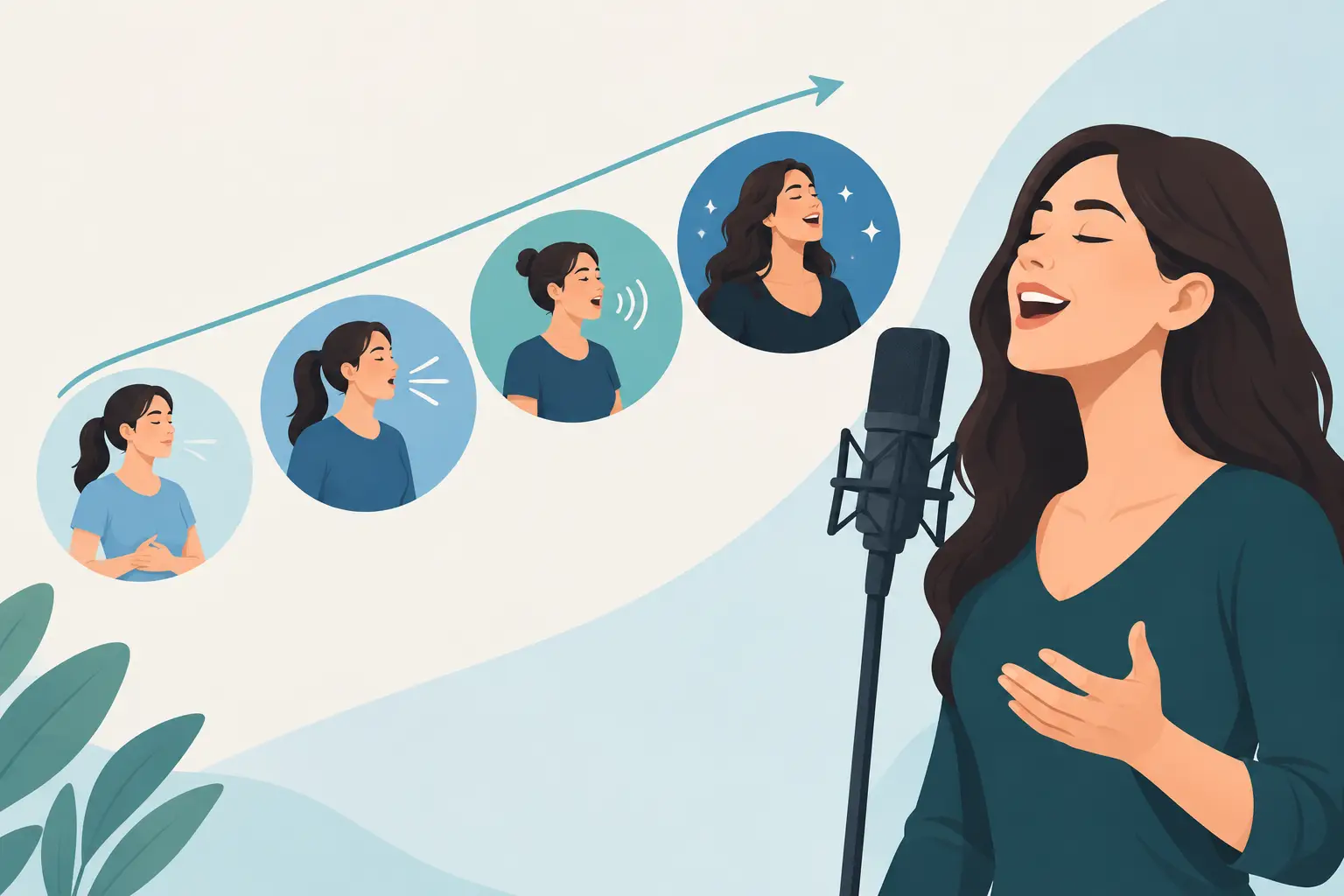
A great first voice lesson is not about hitting the highest note in the room. It is about discovering that your voice is worth hearing. This voice lesson progression guide shows what students can expect as weekly coaching turns curiosity into stronger technique, real confidence, and music they are excited to share.
Every singer starts somewhere different. A child may love singing along to the radio but feel shy in front of others. A teen may want help preparing for an audition. An adult may have spent years saying, I cannot sing, and finally be ready to find out what their voice can do. The best progress follows the student, not a rigid one-size-fits-all timeline.
What Progress in Voice Lessons Really Looks Like
Voice growth is not always a straight line. Some weeks, a student makes a big breakthrough with pitch matching. Other weeks, the win is learning to relax their jaw, remember lyrics, or sing a verse without stopping. Those smaller victories matter because singing requires the body, ear, mind, and emotions to work together.
A thoughtful instructor builds lessons around clear goals while keeping the experience encouraging and fun. Students learn healthy habits before trying to force big sounds. They explore songs they enjoy instead of feeling trapped in exercises that have no connection to the music they want to sing. Over time, exercises become tools that make favorite songs feel easier and more expressive.
For parents, progress may first show up outside the lesson room. You might hear your child singing more freely at home, standing taller, or volunteering for a school performance. Adult students often notice that they are less self-conscious and more willing to sing around family and friends. These are meaningful signs that confidence is growing alongside skill.
Voice Lesson Progression Guide: The Early Stages
Stage 1: Finding Your Starting Point
The first few lessons create a comfortable foundation. An instructor gets to know the student’s musical interests, experience level, goals, and natural voice. There is no pressure to arrive with perfect pitch, performance experience, or music-reading skills.
Beginning singers typically work on matching simple pitches, recognizing high and low sounds, and singing with a clear, relaxed tone. They also learn basic breathing awareness. Healthy singing is not about taking the largest breath possible. It is about using air steadily and efficiently, without raising the shoulders or tightening the throat.
This stage is also where a student begins building trust. Singing can feel personal, especially for someone who has been told they are tone-deaf or who worries about being judged. Kind, specific coaching helps replace that fear with a practical plan.
Stage 2: Building Healthy Vocal Habits
Once a singer is comfortable producing sound, lessons focus more closely on consistency. Students learn warmups that improve coordination, flexibility, and vocal control. They begin noticing how posture, breath, vowel shapes, and tension affect the sound they make.
This is where many singers experience their first exciting changes. Notes that once felt shaky begin to settle. A student who ran out of breath at the end of every line learns how to pace a phrase. Someone who sang quietly may discover a fuller sound without pushing or yelling.
Healthy technique should feel useful, not confusing. A good instructor explains what an exercise is helping and then connects it to a song. If a student loves pop, country, musical theater, rock, or worship music, their lessons can use that style as motivation while still protecting the voice.
Stage 3: Learning Songs With Purpose
Songs become the classroom in this stage. Students learn how to keep a steady beat, follow a melody, remember lyrics, and communicate the feeling behind a song. They may work with a backing track, piano accompaniment, or recordings so they can hear how their voice fits with music.
Repertoire should stretch a student without overwhelming them. A brand-new singer may begin with a shorter song that sits comfortably in their range. As control improves, they can take on more challenging melodies, longer phrases, bigger emotional moments, or songs that require a different vocal style.
The right song choice is a bigger deal than many people realize. A song that is too high can create strain. A song that is too easy may not teach anything new. A song a student dislikes can drain motivation, even if it is technically appropriate. The goal is a smart balance: music the student genuinely enjoys, paired with a challenge they can reach through guided practice.
When Technique Starts Becoming Expression
As singers gain control, lessons move beyond simply singing the right notes. Students learn to shape phrases, use dynamics, pronounce lyrics clearly, and make choices that help listeners understand the story of the song.
This is often the stage when a singer begins to sound like themselves. They are no longer just copying the original artist. They can use their own tone, personality, and emotional connection. That does not mean every student needs a huge or flashy voice. A compelling singer may be soft, powerful, bright, warm, playful, or deeply expressive. The goal is an authentic voice that is healthy and dependable.
Students may also begin basic musicianship training, including rhythm, ear training, harmony, and understanding song structure. These skills help singers learn music faster and collaborate with other musicians more confidently. For a student interested in songwriting, recording, or joining a band, they create an especially valuable foundation.
Performance Is a Skill, Not a Personality Trait
Many people assume confident performers are born that way. In reality, performance confidence is usually built through repeated, supportive experiences. A student does not need to feel fearless before singing for others. They need opportunities to practice being brave in manageable steps.
A progression might begin with singing for an instructor, then for a parent or sibling, then in a small studio setting. From there, a student may join an open mic, jam session, band class, recital, or community event. Each experience teaches something different: how to recover after a missed lyric, how to use a microphone, how to wait for a musical cue, and how to keep going when nerves appear.
At Matt Burk Music Studio, students can grow toward live performance opportunities at respected local venues, which gives lessons a meaningful destination. The spotlight is not the only measure of success, but it can be a powerful confidence-builder when students are prepared and supported.
Parents should not worry if their child is not ready to perform right away. Pushing too soon can make singing feel stressful. On the other hand, waiting forever can keep a student from discovering how capable they are. An experienced instructor can help find the next right step.
How to Help Voice Students Progress Between Lessons
Consistent practice matters, but it does not have to mean an hour of drilling every day. For younger students, a few focused practice sessions each week can be far more effective than one long, frustrating session. Adults with busy schedules often make excellent progress with short, regular practice blocks.
A helpful home routine includes warming up gently, reviewing the specific section assigned in the lesson, and ending with a song the student enjoys. Recording a practice run can also help singers hear improvement over time. The goal is not perfection. It is repetition with attention.
Parents can support progress by being curious rather than critical. Instead of asking, Did you practice? try asking, What song are you working on this week? Celebrate effort, courage, and improvement. When students feel safe to make mistakes, they are more likely to keep trying.
Students should also give their voices basic care. Hydration, sleep, and avoiding excessive yelling all make a difference. If singing causes pain, persistent hoarseness, or strain, it is time to stop and speak with an instructor and, when appropriate, a medical professional. Singing should feel energized, not painful.
Advanced Goals Look Different for Every Singer
For some students, the next level means preparing for a school musical, choir audition, talent show, or college program. For others, it means writing original music, recording vocals, learning harmonies, or becoming the singer in a band. An adult may simply want the confidence to sing karaoke, lead a group, or enjoy music with friends.
That is why a strong lesson plan keeps evolving. Advanced students need more than harder warmups. They need coaching that responds to their goals, vocal development, musical style, and performance opportunities. A singer preparing for an audition may need help with interpretation and nerves, while a singer in a band may need microphone technique, stamina, and collaboration skills.
The most rewarding voice journey is not a race to a certain note or a comparison with someone else. It is the steady realization that your voice can grow, your music can mean something, and you have a place to share it. Start with one song, one lesson, and one brave sound at a time.