
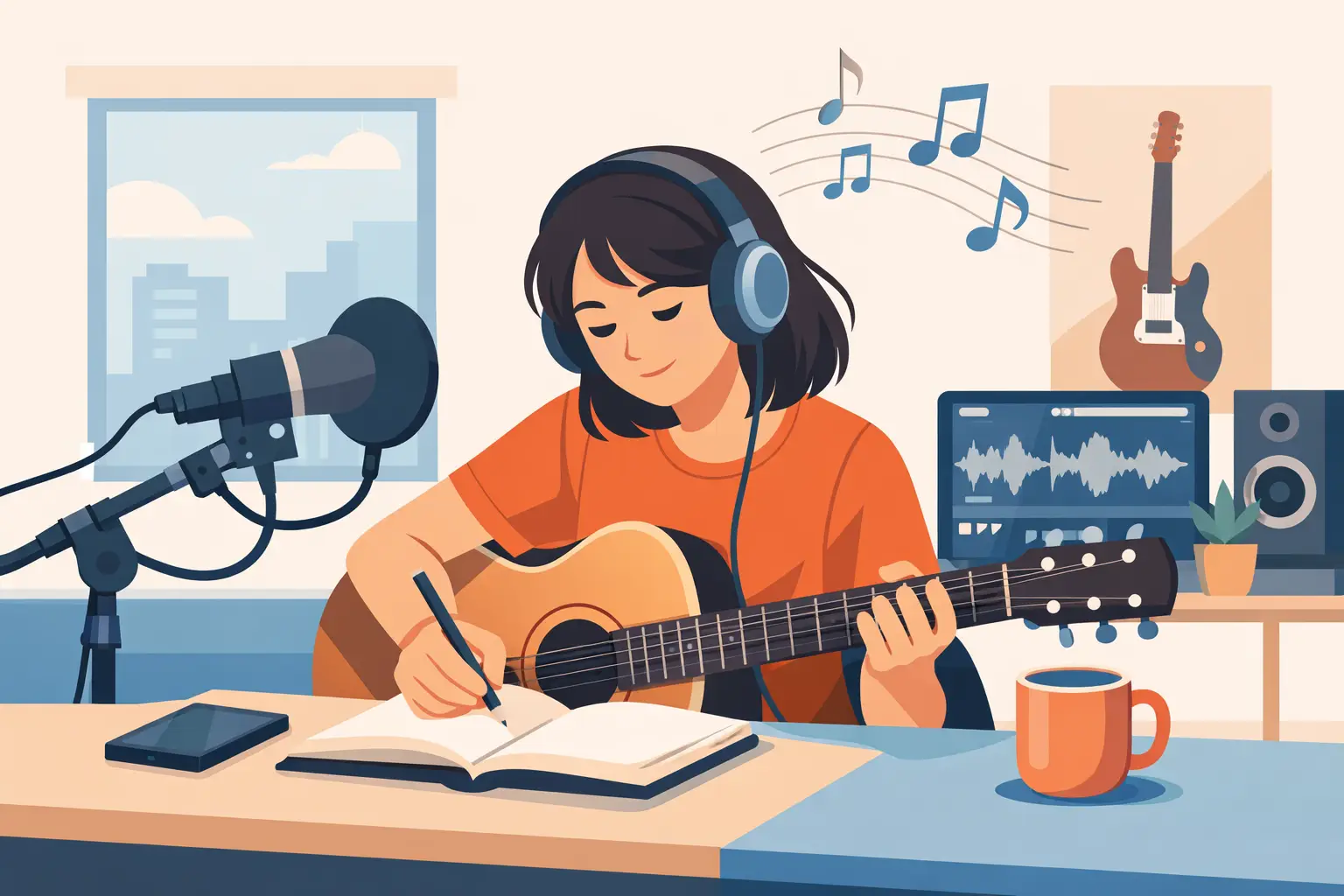
Some teens light up when they play a favorite song. Others want something more personal - they want to write one. That is where teen songwriting lessons Frisco families choose can make a real difference. A good lesson does more than teach chords and lyrics. It gives teens a place to turn ideas into songs, build confidence, and feel heard.
For many parents, songwriting can seem harder to evaluate than piano scales or guitar technique. You can hear whether a student played the right notes. Creativity feels less measurable. But in the right environment, songwriting lessons create very clear growth. Teens learn how to shape melodies, organize ideas, improve rhythm, strengthen their musical ear, and communicate emotion with purpose. Just as important, they start trusting their own voice.
Why teen songwriting lessons in Frisco matter
Teen years are full of emotion, identity, and change. Songwriting gives students a healthy and productive way to process what they are feeling while learning real musical skills. For some teens, that means writing piano ballads. For others, it looks like acoustic pop, indie rock, worship music, country, or beat-driven tracks built from a simple hook.
That flexibility matters. Not every student wants the same musical path. Some teens want to perform original songs on stage. Some want to become stronger singers or instrumentalists by understanding how songs are built. Some simply want a creative outlet that feels personal and fun. Strong teen songwriting lessons Frisco students benefit from should meet each of those goals without forcing every student into the same mold.
Parents often notice another benefit quickly - motivation. A teen who drifts through practice can become much more engaged when they are working on music they created themselves. Writing even a short chorus can make practice feel meaningful. Instead of repeating exercises with no emotional connection, students begin asking better questions. Why does this chord sound more dramatic? How can I make this lyric more honest? What melody fits this line best? That curiosity is where real growth starts.
What teens actually learn in songwriting lessons
Songwriting is creative, but it is not random. A thoughtful lesson gives students tools they can use again and again. Most teens begin by learning how songs are structured. Verses, choruses, bridges, hooks, intros, and outros stop feeling mysterious once a teacher breaks them down in a simple way.
From there, students usually work on melody, chord progressions, rhythm, lyric writing, and phrasing. Depending on the student, lessons may also include ear training, basic music theory, improvisation, and arranging. If a teen sings, vocal coaching can help them write lines that fit their range and sound natural. If they play guitar or piano, they can learn how to support a lyric with stronger harmony and groove.
There is no single right starting point. Some students begin with lyrics because words come naturally. Others start with a chord loop or melody idea recorded on their phone. Some need a lot of prompting at first, while others arrive with notebooks full of half-finished lines. A student-centered teacher knows how to work with all of those starting places.
That is one reason personalized instruction matters so much. Songwriting can feel vulnerable, especially for teens. A student is not just playing a correct answer. They are sharing taste, feelings, and imagination. Encouraging guidance helps them take creative risks without feeling judged.
The best teen songwriting lessons Frisco students take feel personal
Cookie-cutter lessons rarely produce strong writers. Teens grow fastest when the lesson matches their interests, skill level, and personality. A beginner may need help writing a simple chorus with a few chords. A more advanced student may be ready to revise lyrics, explore rhyme schemes, tighten melodic phrasing, or create songs with stronger contrast between sections.
It also helps when lessons connect songwriting to the music teens already love. A student who listens to Olivia Rodrigo, Taylor Swift, Billie Eilish, Noah Kahan, or indie pop artists is hearing very different writing choices than a student who gravitates toward classic rock or worship music. Good teaching uses those influences as a bridge. The goal is not copying another artist. The goal is understanding why certain songs connect so powerfully and helping students apply those ideas in their own way.
This is where experienced instruction really shines. Some teens need more freedom. Others need more structure. Too much freedom can leave beginners stuck. Too much structure can make the process feel stiff. The right balance depends on the student.
Songwriting builds confidence that carries beyond music
One of the most exciting parts of songwriting instruction is how often the benefits show up outside the lesson room. Teens who write songs learn how to express themselves clearly. They practice revising ideas instead of giving up on a first draft. They become more comfortable sharing original work, receiving feedback, and improving over time.
That process builds resilience. Not every song will feel amazing on the first try, and that is actually a good thing. Students learn that creativity is a skill, not magic. They find out that strong songs are often rewritten, reshaped, and refined. That lesson carries into school, relationships, and other long-term goals.
Performance opportunities can deepen that confidence even more. When teens have the chance to share original music at open mic nights, jam sessions, or local venues, songwriting becomes more than a private hobby. It becomes something real and rewarding. Even students who are nervous at first often grow dramatically when they have supportive chances to perform.
What parents should look for in a songwriting program
If you are comparing options, look beyond whether a teacher can write songs themselves. Teaching songwriting to teens requires a different skill set. A strong program should combine creativity with practical instruction. Teens need encouragement, but they also need coaching that helps them improve.
Look for lessons that are personalized rather than one-size-fits-all. Ask whether students can bring in their own ideas and musical influences. Consider whether the environment feels welcoming and low-pressure, especially if your teen is shy or new to writing. Performance opportunities are also a major plus, because they give students a goal and help them grow into confident musicians.
Convenience matters too. Families are busy, and a program works better when scheduling is flexible and the path to getting started is simple. The best studios make it easy for students to begin, stay consistent, and feel supported from week to week.
At Matt Burk Music Studio, that student-first approach is a big part of what makes lessons effective. Teens are encouraged to develop their skills, have fun, and grow at a pace that feels challenging but achievable. When songwriting is paired with experienced coaching and a real music community, students do not just learn concepts - they start becoming artists.
When is a teen ready for songwriting lessons?
Earlier than most parents think. A teen does not need years of formal training before they can start writing songs. If they love music, have ideas, enjoy singing, play an instrument, or even just scribble lyric fragments in a notebook, they are ready to begin.
That said, the lesson plan should match their experience. A complete beginner may need support with basic rhythm, chord patterns, and melody. A student with strong instrumental skills may be ready for more advanced writing tools right away. It depends on the teen, and that is exactly why customized instruction works so well.
The key is not waiting for perfect readiness. Songwriting often helps create readiness by increasing excitement, consistency, and ownership. Teens are more likely to stick with music when they feel like they have a voice in it.
A creative outlet with real direction
There is something special about watching a teen realize, maybe for the first time, that they can make music instead of only consuming it. That shift changes how they listen, how they practice, and how they see themselves. They stop thinking of music as something other people create and start seeing it as something they can contribute to.
That is the real value of songwriting lessons. Yes, students learn structure, melody, lyrics, and performance skills. But they also learn that their ideas matter. In a supportive setting, that lesson can stay with them for years.
If your teen has songs in their head, notes in their phone, or a growing interest in writing music of their own, this is a great time to encourage it. The right lesson can turn that spark into progress, confidence, and a creative habit they genuinely love. Sometimes all a young songwriter needs is a place to begin.