
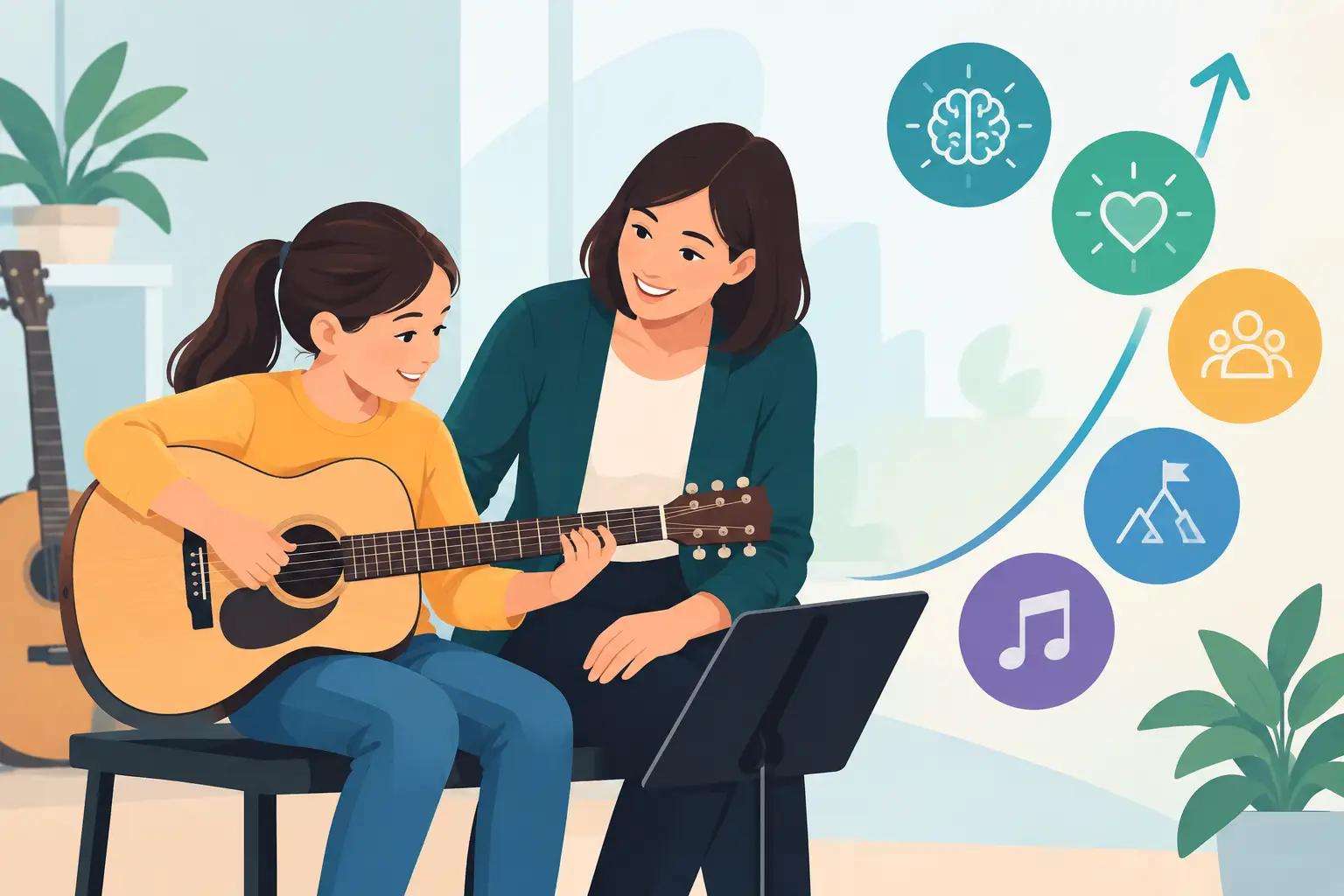
A child who can play one song after a few scattered lessons may feel excited. A child who keeps showing up each week can grow into someone who walks onstage, counts in a band, recovers from a missed note, and proudly shares music with a room full of people. That difference is where recurring music lesson benefits really shine. Consistent instruction gives students more than new songs to play. It gives them a reliable path toward skill, confidence, creativity, and connection.
For families in Allen and Frisco, weekly lessons can become a positive part of the routine rather than another activity to manage. For adults, they can be a protected hour to reconnect with a personal goal that has been waiting too long. The instrument may be piano, guitar, voice, drums, bass, or ukulele, but the steady rhythm of learning matters just as much as the subject.
Why Recurring Music Lessons Create Real Progress
Music is built through repetition, feedback, and small adjustments. A student learns a chord shape, rhythm pattern, vocal technique, or drum beat, then needs time to use it before moving on. When lessons happen regularly, the instructor can hear what is improving, catch habits before they become frustrating, and choose the next step based on the student’s actual progress.
That is very different from trying to squeeze in occasional lessons whenever life calms down. Long gaps can make students forget what they practiced, lose confidence, or feel as if every lesson starts over. A recurring weekly time gives learning momentum. Even when a student has a busy week and barely practices, the lesson keeps the musical relationship moving forward.
Consistency does not mean every student progresses at the same speed. A beginner may spend several weeks getting comfortable with hand position or keeping a steady beat. An advanced student may focus on phrasing, songwriting, improvisation, or preparing for a performance. The value of recurring lessons is not rushing through a checklist. It is having an experienced teacher who can adapt the plan while keeping the student encouraged and accountable.
Practice Becomes Less Mysterious
Many students do not quit because they lack talent. They quit because they are unsure what to do between lessons. A regular instructor turns “practice more” into a clear, manageable plan: play these four measures slowly, repeat this rhythm with a metronome, listen for this vowel sound, or memorize one section before next week.
That clarity is especially helpful for busy families. Instead of wondering whether practice is working, parents can see specific goals and celebrate small wins. Adult students benefit too. A focused 15-minute practice session several times a week often produces more growth than waiting for a free afternoon that never arrives.
The Confidence Benefits Go Beyond the Lesson Room
Learning music asks students to try, listen, adjust, and try again. Those are powerful life skills. In a supportive lesson, mistakes are not proof that someone is bad at music. They are useful information. A missed chord tells a guitarist where to slow down. A shaky lyric gives a singer a chance to work on breath support. A rushed beat helps a drummer hear what needs attention.
Over time, students begin to trust their ability to work through challenges. That confidence can show up at school, in social settings, and in other activities. A quiet student may become more comfortable speaking up after sharing a song at an open mic. A teenager who is nervous about being judged may find belonging in a band class or jam session. An adult who has always said, “I’m not musical,” may finally replace that old story with a new one.
Public performance is not required for every musician, but it can be a meaningful goal when students are ready. Regular lessons make performance preparation far less intimidating because it is not a last-minute scramble. Students have time to learn the music, practice starting and stopping, work through nerves, and gain experience in front of supportive audiences.
Recurring Music Lesson Benefits for Kids, Teens, and Adults
The structure of weekly lessons serves different ages in different ways. Young children thrive on familiar routines, positive reinforcement, and lessons that make music feel playful. They build coordination, listening skills, and patience while discovering that effort can lead to something they can hear and share.
Teens often need music to feel personal. Recurring lessons give them a consistent mentor who can connect technique to the songs, styles, bands, and creative goals that matter to them. Whether they want to sing with confidence, write songs, play in a band, or improve for an audition, regular coaching helps turn enthusiasm into a plan.
Adults usually bring a different challenge: time. Work, family, and responsibilities can push personal interests to the bottom of the list. A recurring lesson is a practical commitment to something enjoyable and meaningful. It creates a reason to put the guitar in hand, sit at the piano, or finally use that voice that has been waiting to come out.
There is no need to be perfect, young, or naturally fearless to benefit. Students only need a goal, a willingness to show up, and guidance that meets them where they are.
Community Makes Students Want to Keep Going
Private lessons are personal, but music is also meant to be shared. Students tend to stay motivated when they can see where their learning can lead. Jam sessions, band experiences, masterclasses, open mic nights, and live performances give students reasons to keep practicing that go beyond checking off an assignment.
These experiences also make growth visible. A student who once needed help playing a simple progression may later perform it with a group. Someone who was afraid to sing alone may step up to a microphone at a respected local venue. Those moments do not happen because every lesson is easy. They happen because a student has received steady support through the awkward, exciting, and rewarding parts of learning.
At Matt Burk Music Studio, lessons are designed to support that bigger journey. Students can build their individual skills while becoming part of a welcoming musical community. The goal is not to create pressure. It is to help each student find the joy of sharing what they are learning.
Flexibility Keeps Consistency Realistic
A recurring lesson schedule should support real life, not make it harder. Families get sick, school events pop up, work trips happen, and schedules change. That is why flexibility matters. The best long-term music plan is one that makes it easy to return after an interruption instead of making students feel behind.
Weekly enrollment also does not need to feel like a rigid, long-term promise. A no-contract approach lets families and adult learners commit to progress without feeling trapped. Flexible scheduling and rescheduling options reduce the friction that often causes good intentions to fade away.
Still, flexibility works best when it protects the routine rather than replaces it. If a lesson needs to move, getting it back on the calendar helps preserve momentum. Think of recurring lessons like a standing appointment with a future version of yourself or your child - the musician who is more capable, expressive, and confident than they are today.
How to Get More From a Weekly Lesson
Students do not need marathon practice sessions to make their lessons count. What helps most is staying connected to the goal from one week to the next. Keep the instrument accessible, review the teacher’s notes, and make room for short practice sessions that feel achievable.
Parents can help by focusing on encouragement instead of perfection. Ask what song your child is working on. Notice when they remember a new rhythm or play a section more smoothly. Let them know that progress is worth celebrating, even before the whole song is finished.
Adults can protect their momentum by choosing music they genuinely want to play. Technical exercises matter, but motivation grows when students can hear themselves getting closer to a favorite song, a personal creative project, or a performance goal.
The best time to start recurring lessons is rarely when life becomes completely quiet. It is when music matters enough to make a little room for it. With patient instruction, a welcoming community, and one consistent lesson at a time, students can build skills they will be proud to share for years.