
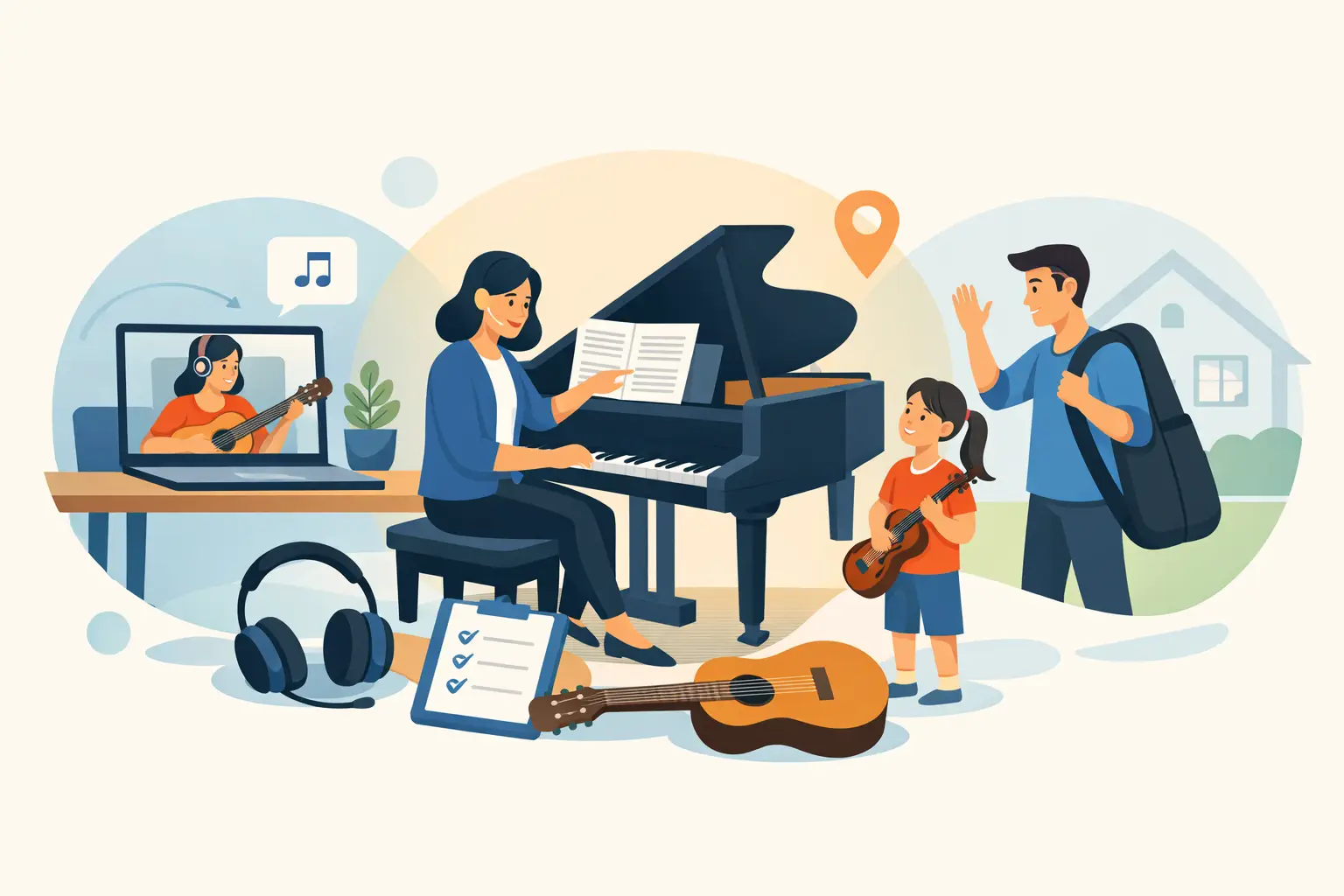
A great private music lessons comparison is not really about finding the lowest weekly price or the closest open time slot. It is about finding a place where your child, teen, or you can keep showing up, enjoy the process, make real progress, and feel proud enough to share music with other people. The right lesson experience can build skills, confidence, creativity, and a lasting connection to music.
For families in Allen and Frisco, the choices can look similar at first. Many teachers offer piano, guitar, voice, drums, or another instrument. But the experience behind those lessons can be very different. Before you commit, look beyond the instrument and ask what kind of musical journey is actually being offered.
What to Look for in a Private Music Lessons Comparison
Start with the student's goal. A first grader who wants to play favorite songs needs a different approach than a high school vocalist preparing for auditions. An adult returning to piano after 20 years may need flexibility, encouragement, and a plan that makes practice feel refreshing rather than like another obligation.
The best private lessons meet students where they are and give them a clear next step. That means lessons should be adjusted for experience level, musical taste, learning style, and personal goals. Students should not feel like they are trying to keep up with a one-size-fits-all curriculum that has little connection to the music they love.
A strong teacher still provides structure. Fun matters, but so do foundations: rhythm, technique, ear training, reading or chord knowledge when appropriate, and healthy practice habits. The difference is how those skills are taught. When students can hear their progress in songs they recognize, they are far more likely to stay motivated.
The Teacher Relationship Matters More Than a Checklist
Credentials and experience are valuable, but they are only part of the picture. The best instructor for a student is someone who can explain ideas clearly, celebrate effort, set achievable challenges, and make mistakes feel normal. Especially for beginners, the first months of lessons often determine whether music becomes a lifelong joy or something they quietly quit.
Parents should look for teachers who communicate about progress and goals. Adult students should look for someone who listens to why they came back to music in the first place. If a student loves movie themes, worship music, classic rock, pop, jazz, or songwriting, a thoughtful teacher can use those interests to make core skills meaningful.
A trial lesson is one of the simplest ways to assess fit. Notice whether the student leaves encouraged. Did the teacher ask questions? Was there a balance of learning and playing? Could you picture this relationship helping the student through the inevitable days when practice feels hard?
Compare Lesson Formats, Not Just Instruments
Private, semi-private, and group experiences each offer something different. None is automatically better. The best format depends on personality, goals, budget, and how a student stays motivated.
One-on-one private lessons offer the most individualized attention. They are especially helpful for students building fundamentals, preparing for an audition, working through a technical challenge, or pursuing a specific style. The teacher can adjust the pace from week to week and devote the full lesson to the student's needs.
Semi-private lessons can be a great choice for siblings, friends, or students who enjoy learning alongside someone else. They can create accountability and make lessons feel more social, though each student receives less individual time than in a fully private session. This format works best when students have compatible ages, goals, and skill levels.
Band classes and group programs offer something private lessons alone cannot fully replicate: the experience of listening, adapting, and contributing to a shared sound. A guitarist learns to leave room for a vocalist. A drummer learns to support the song. A singer learns how to enter with confidence when the band is ready. For students who dream of playing with others, group performance experience is not an extra. It is part of becoming a musician.
Music production instruction can also be a smart addition for students drawn to songwriting, recording, beat-making, and technology. A student may begin with piano or voice and discover that creating tracks is what keeps them excited to learn. The ideal program leaves room for that discovery.
Look at the Path Beyond the Weekly Lesson
A weekly lesson is the foundation, but students often grow faster when they have real reasons to use what they are learning. Ask whether a studio creates low-pressure opportunities to perform, collaborate, and celebrate progress.
Performance can sound intimidating, especially for a child who is shy or an adult who has never played in front of anyone. But confidence does not appear all at once on a big stage. It is built in small, supported moments: playing a song for a teacher, sharing at an open mic, joining a jam session, or performing with a band that has rehearsed together.
Studios that offer recitals, masterclasses, open mic nights, bands, and community events give students visible milestones. They also teach valuable skills that cannot be learned from practice alone, including preparation, recovery after a missed note, stage presence, and the joy of connecting with an audience.
At Matt Burk Music Studio, students can grow from their first notes into live performance experiences at respected local venues, including House of Blues and Hard Rock Cafe. For many students, having a real stage goal changes the way they approach lessons. Practice becomes preparation for a moment they are excited to own.
Compare Convenience Without Settling for Less
The practical details matter because consistency is where progress happens. A perfect teacher with a schedule that constantly conflicts with school, work, sports, or family life may not be the right long-term fit.
As you compare options, consider lesson times, location, make-up policies, communication, and whether there is a long-term contract. Families need a studio that understands life gets busy. Adults need an option that does not make returning to music feel like a high-pressure commitment.
Flexible scheduling and generous rescheduling policies can make a major difference over a full year of lessons. They help students stay connected to their goals even when vacations, school events, illness, and work deadlines show up. That said, flexibility should support consistency, not replace it. The most successful students still protect their lesson time and create a realistic practice routine at home.
Price deserves an honest comparison too. Instead of looking only at the monthly number, consider what is included. Is the student getting personalized instruction, helpful support between lessons, opportunities to perform, a welcoming community, and a clear plan for growth? A lower-cost option can be a good fit if it meets the student's needs. But it may not be the best value if it leaves families to solve scheduling issues, motivation, and performance opportunities on their own.
Choose the Experience That Helps Students Stay With Music
The biggest question is not, “Which studio promises the fastest results?” Musical growth has its own rhythm. Students improve quickly in some seasons, then need patience as a new technique or confidence challenge settles in. The better question is, “Where will this student feel supported enough to keep going?”
For a young beginner, that may mean kind instruction, favorite songs, and a first recital that feels exciting instead of scary. For a teen, it may mean band friends, coaching, and a place to develop an artistic voice. For an adult, it may mean a judgment-free teacher, flexible lessons, and the satisfaction of finally playing the songs they have always loved.
When you find a program that balances expert guidance with fun, accountability with encouragement, and individual goals with community, music becomes more than another activity on the calendar. Book a free trial lesson, ask the questions that matter to your family, and give yourself or your child the chance to discover what they can do with steady support and a little courage.