
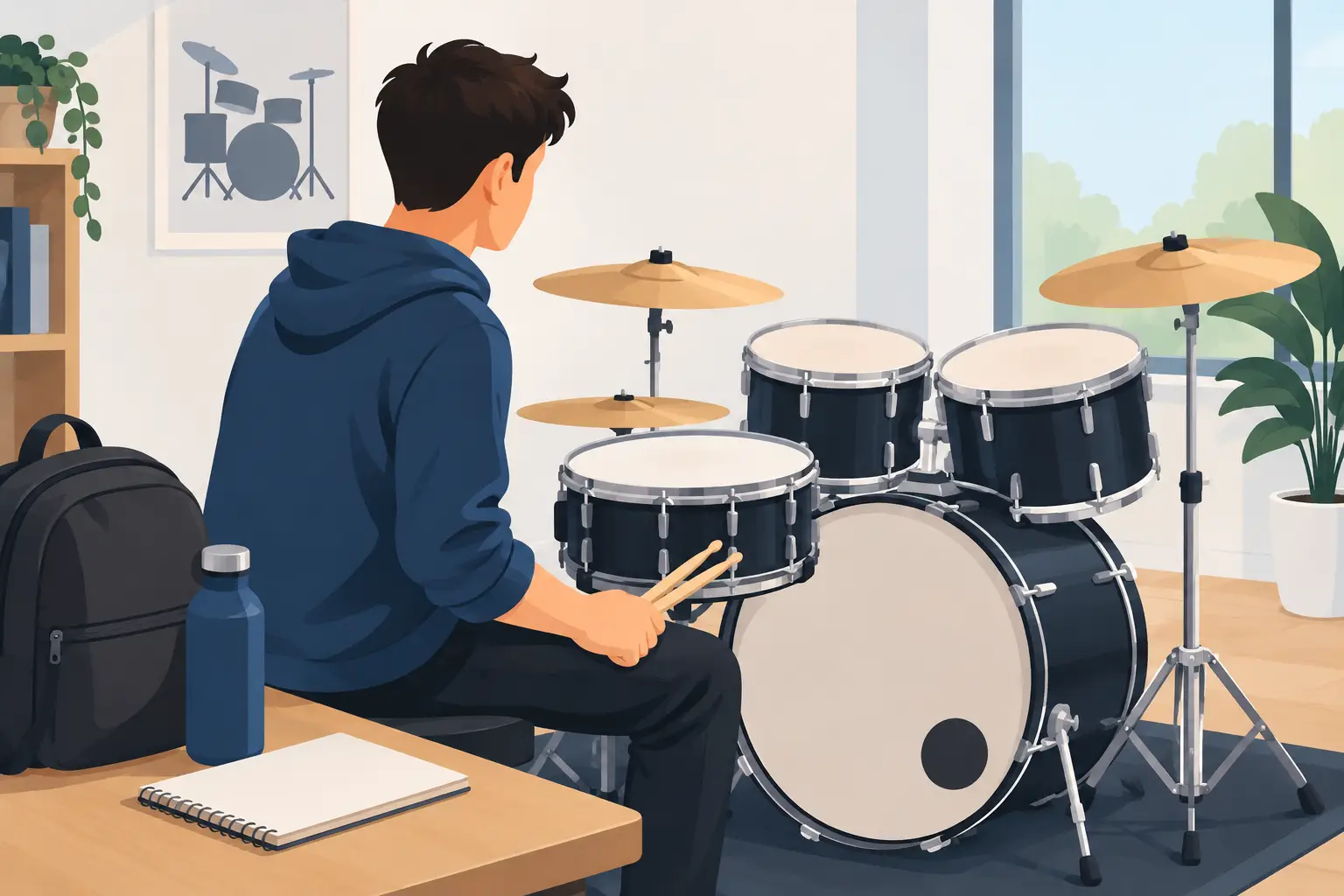
That first moment behind a drum kit can feel exciting, loud, and a little intimidating. You might be wondering where your hands go, whether you need to read music, or what happens if you cannot keep a beat yet. The good news is that you do not need to arrive as a drummer to prepare for your first drum lesson. You simply need curiosity, a willingness to try, and an instructor who knows how to meet you where you are.
At a great first lesson, the goal is not to test you. It is to help you feel comfortable, discover what you enjoy, and leave with a real sense that, yes, you can do this.
How to Prepare for Your First Drum Lesson
The best preparation is simple: come ready to talk about the music you love. Your favorite songs give your instructor valuable clues about the sounds, grooves, and goals that will keep you motivated. Maybe you want to play rock fills, learn worship music, join a school band, create beats for your own songs, or finally pick up an instrument you have admired for years. All of those are great reasons to start.
You do not need to memorize drum terms or watch hours of online tutorials before your lesson. In fact, trying to teach yourself too many techniques at once can make your first experience more stressful than it needs to be. A teacher can show you healthy hand positions, basic coordination, and timing in an order that makes sense for you.
If you are a parent preparing a child, let them know that they are not expected to be perfect. Tell them the lesson is a chance to make sounds, play rhythms, ask questions, and have fun. That small reassurance can turn nervous energy into excitement.
What to Bring to a Drum Lesson
For a first drum lesson, you usually do not need to bring a full set of gear. A studio should have a drum kit available for students to use during the lesson. Comfortable clothing and closed-toe shoes are a smart choice, especially for working with the bass drum pedal.
If you already own drumsticks, bring them along. Your instructor can make sure they are the right size and show you how to hold them comfortably. If you do not have sticks yet, that is completely fine. Waiting until after the lesson can be helpful because you will have guidance on what feels right in your hands.
It also helps to bring a short list of songs you enjoy. You do not need to know the titles perfectly. A few artists, genres, or even a description like “the song with the big drum part in the chorus” gives your teacher a starting point. For younger students, parents can share what the child listens to and any goals they have mentioned at home.
Finally, arrive a few minutes early if possible. A calm start gives you time to settle in, meet your instructor, and get comfortable in the space without feeling rushed.
What Happens During a First Drum Lesson?
Every student is different, so the lesson should feel personalized rather than scripted. Your instructor will likely begin with a conversation about your musical interests, experience, schedule, and goals. This matters because a student who wants to perform in a band may take a different path than someone learning drums as a relaxing after-work hobby.
Then comes the fun part: sitting at the kit. You may learn the names of a few essential pieces, such as the snare drum, hi-hat, bass drum, and cymbals. Your instructor can adjust the throne height and pedal placement so you are sitting safely and comfortably. Good setup is not a small detail. It helps beginning drummers build confidence and avoid unnecessary tension.
From there, you may try a basic beat, clap or count rhythms, play along with a song, or experiment with simple patterns on a practice pad. Some students pick up a steady groove right away. Others need a little time to coordinate hands and feet. Both experiences are normal. Drumming asks your brain and body to work together in a new way, and progress comes through patient repetition.
A strong first lesson also gives you a clear next step. You should leave knowing what to practice, how often to practice, and what you can look forward to learning next.
Do You Need to Read Music?
No. Reading music is a useful skill, but it is not an entry requirement for drum lessons. Many beginners start by listening, counting, copying simple rhythms, and feeling the pulse of a song. As you grow, drum notation can make learning new grooves and songs much easier.
The right approach depends on your goals. A student who hopes to audition for a school ensemble may want to build reading skills early. An adult learning favorite songs might begin with hands-on playing and add notation gradually. Either way, you can start making music on day one.
Set Up a Practice Space at Home
You do not need a full acoustic drum kit in the living room to make progress. A practice pad, a pair of sticks, and a quiet corner can be enough for building stick control, rhythm, and consistency. Many families choose an electronic drum kit because it can be played with headphones. Others begin with a pad and upgrade when their student is ready.
Your instructor can help you decide what makes sense for your home, budget, and goals. There is a trade-off: a full kit offers the most realistic feel, while a pad is affordable, portable, and neighbor-friendly. The best choice is the one you will actually use regularly.
Keep the practice setup easy to access. If the sticks are buried in a closet or the practice pad needs to be assembled every time, practice becomes a bigger task. A visible, ready-to-play space gives beginners more opportunities to sit down for five focused minutes - and those minutes add up.
Give Yourself a Realistic Practice Goal
New drummers do not need marathon practice sessions. Short, consistent practice is more valuable than one long session followed by a week away from the instrument. For a young beginner, five to ten minutes most days may be plenty. Teens and adults may enjoy longer sessions, but consistency still matters most.
At first, practice may include counting out loud, playing one hand at a time, or repeating a simple beat slowly. That can seem basic, but it is where steady timing and good technique begin. Speed comes later. Playing a clean groove at a comfortable tempo feels better and sounds better than rushing through a difficult pattern.
Parents can help by building practice into an existing routine, such as after homework or before screen time. Adults often do well by choosing a specific time of day rather than waiting for a free moment that may never arrive. Keep the tone encouraging. The goal is to build a relationship with music, not create another stressful item on the to-do list.
Let Go of These First-Lesson Worries
Many people delay starting because they believe they are “not naturally rhythmic.” Rhythm is a skill, and skills can be developed. Your instructor is there to break it into manageable pieces, celebrate the wins, and help you work through the parts that feel awkward.
You also do not have to be loud, outgoing, or interested in performing right away. Some students dream of playing onstage at a venue like House of Blues. Others want a creative hobby, a confidence boost, or a way to connect with friends through music. There is room for all of those goals.
Mistakes will happen in every lesson, including for experienced drummers. They are useful information, not proof that you are failing. Often, the moment you miss a beat is the moment your teacher can identify exactly what needs to be adjusted.
Make the First Lesson the Start of Something Bigger
A drum lesson can begin with one beat, but it can lead to much more: stronger focus, creative expression, friendships with other musicians, and the confidence to share your gifts with an audience. At Matt Burk Music Studio, students are encouraged to grow at their own pace while having opportunities to play, connect, and work toward meaningful performance goals.
Come as you are. Bring your favorite music, ask every question on your mind, and give yourself permission to be a beginner. The first beat is waiting for you - and it may be the start of a musical journey you will be proud to share.