
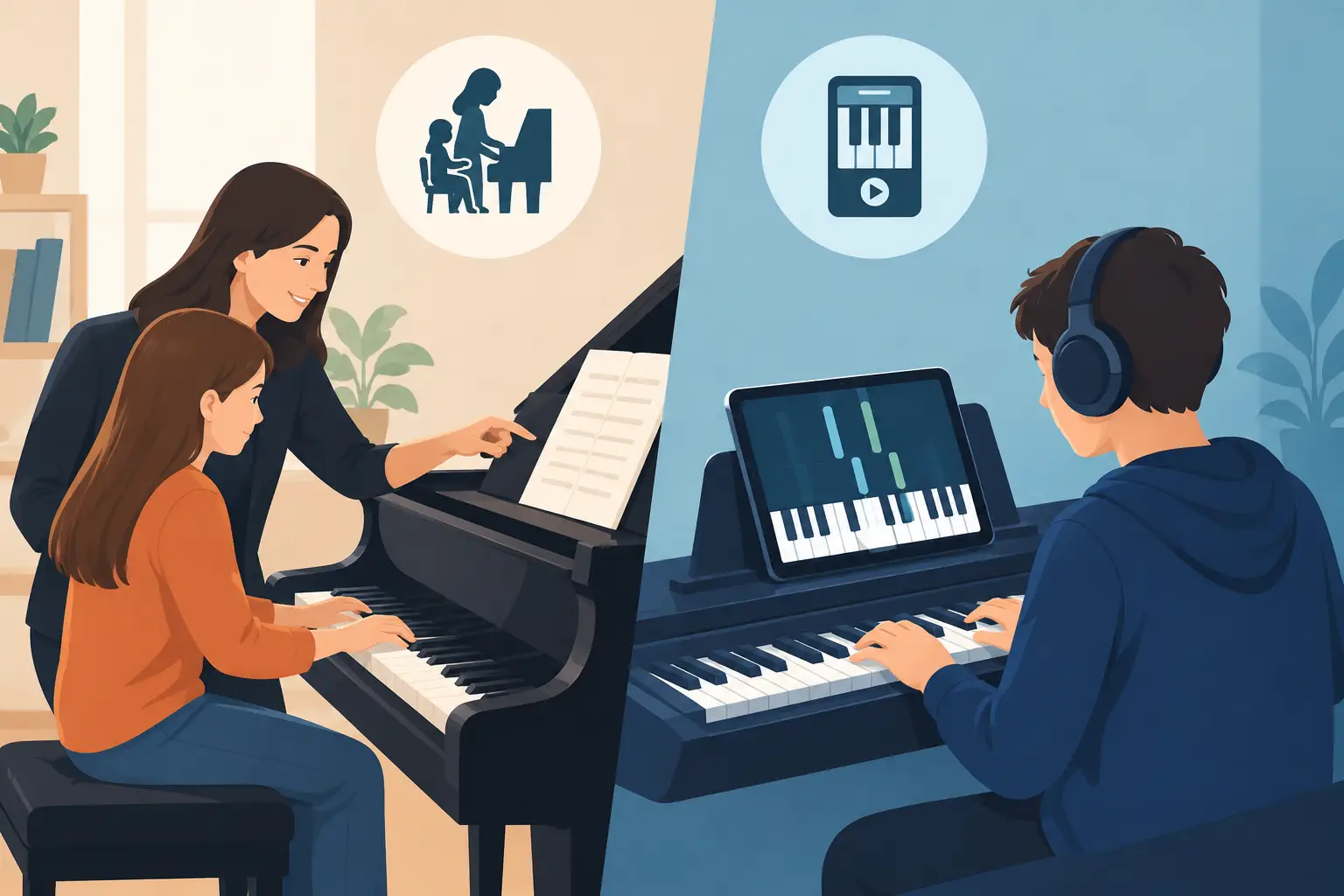
A piano app can make the first week feel exciting. Your child taps glowing keys, earns a streak, and may even recognize part of a favorite song by dinner. That is a real win. But when families compare piano lessons versus apps, the bigger question is not which option feels easiest on day one. It is which one helps a musician keep growing when the music gets harder, motivation dips, and confidence is on the line.
Apps can be useful practice tools. Private piano lessons offer something different: a caring teacher who sees the whole student, builds a plan around their goals, and helps them turn notes into music they are proud to share.
Piano Lessons Versus Apps: The Real Difference
The main difference is feedback. An app can often tell a player whether they pressed a key at the right time. It may track accuracy, tempo, and practice streaks. Those features can be motivating, especially for beginners who enjoy games and instant rewards.
A teacher notices what the screen cannot. They can hear when rhythm is rushing, see a tense wrist before it becomes a habit, and explain why a chord progression sounds the way it does. They can also tell the difference between a student who needs a new challenge and one who needs a smaller, more encouraging next step.
That human guidance matters because piano is not only about hitting correct notes. Students learn posture, hand shape, dynamics, listening skills, expression, reading, rhythm, and problem-solving. They also learn how to practice when a song does not come together immediately. Those skills build a foundation that lasts far beyond one app lesson.
Apps provide convenience and quick access
Apps are available whenever there is a piano or keyboard nearby. For busy adults, that flexibility can be a great starting point. For families, an app may be an easy way to find out whether a child is curious about piano before making a bigger commitment.
Many apps make practice feel like a game, which can help younger students get to the instrument more often. They usually cost less than weekly instruction, and there is no appointment to schedule. If the goal is casual exploration or learning a few recognizable melodies, an app may be enough for a while.
Still, convenience is not the same as a clear path forward. When an app lesson becomes confusing, repetitive, or too difficult, students are often left guessing. Some keep trying without fixing the issue. Others quietly stop practicing because they think they are not musical enough. Neither outcome is necessary.
Lessons create a plan built around the student
A great piano teacher does not use one approach for every learner. A seven-year-old who loves movie music needs a different lesson experience than a teenager preparing for an audition or an adult returning to piano after twenty years.
Private lessons make room for those goals. A student can learn favorite songs while developing the technique and musicianship that make future songs easier. A teacher can slow down, change strategies, celebrate a breakthrough, or add a challenge at exactly the right time.
This is especially valuable for parents. Instead of trying to interpret app scores or figure out why practice has stalled, you have an experienced guide who can communicate progress and keep the experience positive. The goal is not pressure. The goal is steady growth and a student who believes, “I can do this.”
Why Personalized Feedback Changes Progress
Beginning piano habits form quickly. If a student consistently uses awkward fingering, locks their wrists, or guesses at rhythms, they may still complete app levels. But those habits can make later music frustrating and limit what they can play comfortably.
In a lesson, feedback is immediate and specific. A teacher might help a student redistribute the weight in their hands, count a tricky rhythm out loud, or find a simpler way to practice two difficult measures. Small adjustments like these can save weeks of frustration.
Teachers also help students understand the music rather than memorize a sequence of lights or prompts. They learn patterns, scales, chords, and how to listen for what comes next. That knowledge helps a player become more independent. Eventually, they can sit down with a new song and have a real strategy for learning it.
For adults, personalized instruction can be a major confidence boost. Many adult beginners worry that they are too old, too busy, or too rusty to learn. A supportive teacher meets them where they are and creates practical goals that fit real life. Thirty focused minutes of practice can go much further when the student knows exactly what to work on.
Motivation Is More Than a Practice Streak
Practice streaks can be fun, but they do not always build lasting motivation. A student may open an app for five minutes to protect a streak without deeply engaging with the music. Progress comes from focused repetition, listening, and learning how to work through challenges.
A teacher provides accountability with encouragement. They know when to celebrate a student's effort and when to help them reset after a difficult week. They can connect practice to a meaningful goal: playing a favorite song for grandparents, joining a band, writing an original piece, or performing on stage.
That connection matters. Students are more likely to stay with music when it feels personal and social, not like another isolated task on a screen. For many young musicians, the moment they play with others or receive applause at a recital is the moment piano becomes part of who they are.
At Matt Burk Music Studio, piano students can grow beyond the lesson room through supportive community events, jam sessions, and performance opportunities. Learning to share music in a welcoming setting builds courage that reaches into school, friendships, and everyday life.
When an App Can Be a Smart Choice
Apps are not the enemy of good music education. They can be helpful when used for the right purpose. An app may work well for someone who wants to experiment before starting lessons, review a simple concept, or add a playful practice activity between sessions.
They can also be useful for experienced students who already understand technique and music reading. In that case, an app may offer extra repertoire ideas, ear-training games, or a convenient way to practice a particular skill.
The trade-off is that the student still needs enough awareness to judge their own playing. Beginners usually do not have that perspective yet. They may not realize that they are playing with poor posture, skipping counting, or relying on visual cues instead of understanding the music.
For this reason, many families find that the strongest choice is not lessons or apps. It is lessons first, with an app used as an optional practice supplement. The teacher remains the guide, while the app adds variety at home.
Choosing the Right Path for Your Family
Start by considering the goal. If your child simply wants to explore sounds on a keyboard for a few weeks, an app can be a low-pressure introduction. If they want to build skills, play favorite songs confidently, create music, or perform for others, personalized lessons will give them more support.
Also consider what happens when things get difficult. Every musician reaches a point where a song feels too hard or practice becomes less exciting. A screen can offer another level. A thoughtful teacher can offer a different explanation, a realistic plan, and the reassurance that progress is still happening.
The best musical journey is one a student wants to continue. Whether your family begins with an app, lessons, or both, choose an environment that makes piano feel achievable, enjoyable, and worth coming back to. A free trial lesson can give your child or you a chance to experience that kind of encouragement firsthand - and hear what is possible when someone is truly in your corner.