
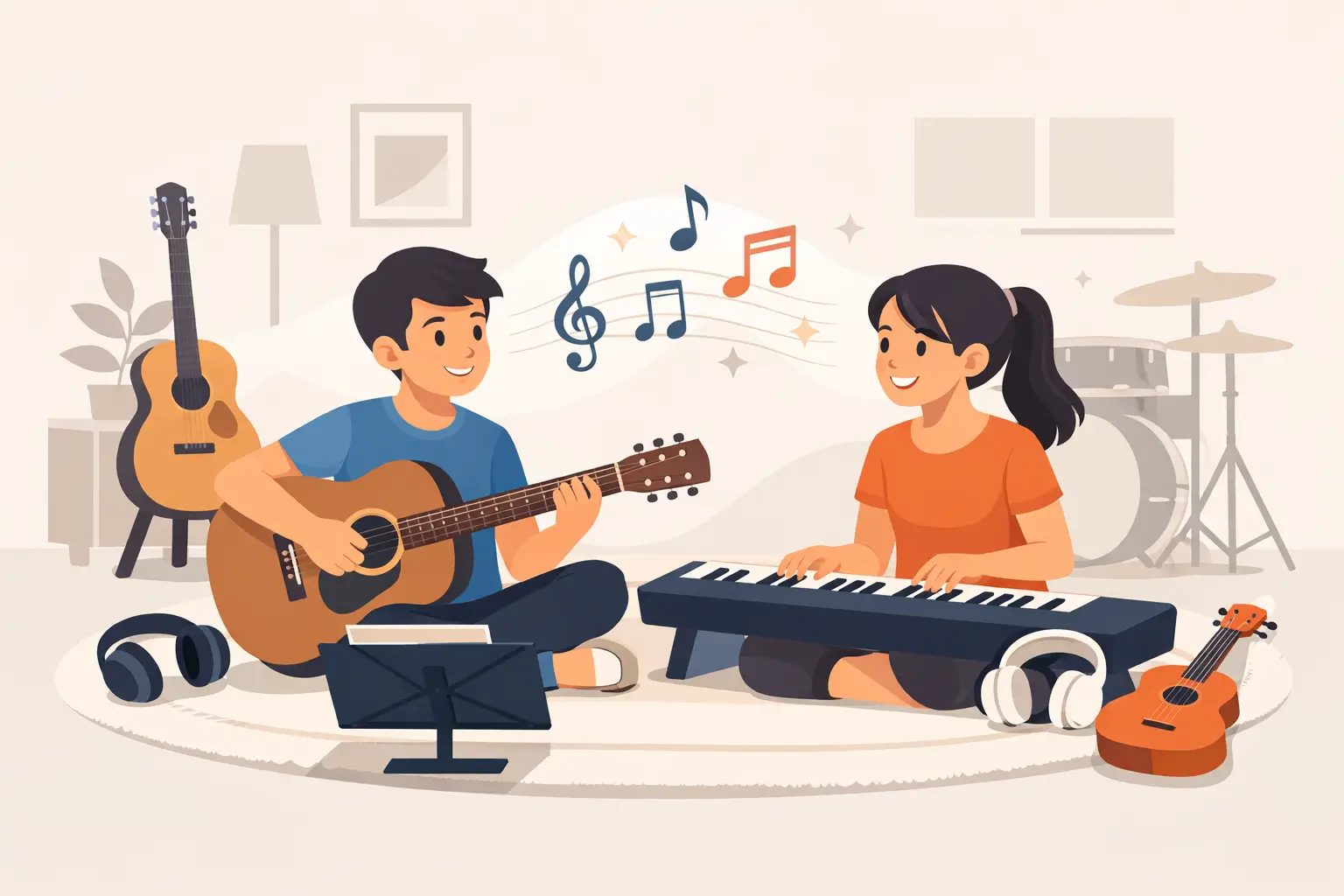
One child wants to sing everything at full volume. The other is quietly tapping rhythms on the kitchen counter and asking how drums work. For many families, music lessons for siblings sound like a smart idea right away - one stop, one shared activity, and a chance for both kids to grow. The real question is how to make it work in a way that helps each child feel seen, supported, and excited to keep going.
That matters because siblings rarely learn in exactly the same way. One may jump into performing without fear, while the other needs time to warm up. One may love structure, and the other may light up when lessons feel playful and creative. Great sibling music instruction does not force kids into the same mold. It gives each student a path that fits who they are while still making family life easier.
Why music lessons for siblings can be a great fit
When siblings learn music at the same studio, families often notice benefits beyond convenience. Scheduling is simpler, car rides are easier to manage, and parents can build one reliable routine instead of juggling unrelated activities across town. That practical side matters, especially for busy families in Allen and Frisco who are already balancing school, sports, and everything else on the calendar.
But the bigger value is often what happens between the siblings themselves. Music gives them a shared language. Even if they study different instruments, they start talking about rhythm, songs, performances, and goals. They cheer each other on. They become each other's first audience. That kind of support can be powerful, especially for younger students who gain confidence by seeing a sibling try, improve, and have fun.
There is also a momentum factor. Kids tend to stick with activities more consistently when they do not feel like they are doing it alone. If one child heads into lessons excited about a favorite song or an upcoming performance, that enthusiasm can spread. Practice at home can feel less like a chore and more like something the family does together.
The biggest question: shared lessons or separate lessons?
This is where a lot of parents get stuck, and the honest answer is that it depends.
Some siblings do very well in semi-private lessons. If they are close in age, similar in skill level, and both respond well to learning together, a shared format can be fun and motivating. They can play call-and-response games, learn ensemble skills, and enjoy a little healthy competition. For some kids, that shared energy makes lessons feel exciting from day one.
Other siblings grow more in separate private lessons. If one child is more advanced, more shy, or simply needs a different pace, separate instruction can prevent frustration on both sides. It also creates space for each student to develop an identity outside the sibling dynamic. That can be a big deal. Not every child wants to be compared, even in a positive way.
The best setup is usually the one that protects individual progress while keeping the family schedule manageable. Sometimes that means side-by-side semi-private lessons. Sometimes it means back-to-back private lessons with different teachers or instruments. Sometimes families start together and later shift to separate instruction as each child's goals become clearer.
How to know what will work for your kids
A good starting point is to look at personality before age. Parents often assume two siblings close in age should learn the same way, but temperament matters more. If one child loves attention and feedback while the other shuts down under pressure, they may need very different teaching approaches.
It also helps to think about goals. Is one child just getting started while the other already wants to perform on stage? Does one care most about playing favorite songs, while the other wants strong technical training? Neither goal is better. They just point toward different lesson experiences.
Attention span matters too. Younger siblings sometimes enjoy learning together for short stretches, but if one loses focus quickly, the other can end up affected by it. In that case, separate lesson time may actually feel smoother and more positive for everyone.
A student-first studio will help you sort this out instead of pushing a one-size-fits-all answer. That guidance can save families a lot of trial and error.
Different instruments can be the better choice
Parents sometimes ask whether siblings should play the same instrument. They can, but they do not have to.
In fact, different instruments often solve problems before they start. If one child is drawn to piano and the other is constantly air-drumming on the couch, letting them follow those interests usually creates stronger long-term motivation. Kids practice more when they feel ownership. They stay engaged when they can picture themselves becoming the kind of musician they admire.
Different instruments also reduce direct comparison. Instead of hearing who is "better," siblings can appreciate each other's strengths. One might develop strong rhythm on drums while the other builds melody skills on piano or voice. Later, those differences become a strength if they join a band class, play at a jam session, or perform together at an open mic event.
If siblings do choose the same instrument, the teaching still needs to be individualized. Same instrument does not mean same songs, same pace, or same expectations. The goal is progress, not matching.
What practice looks like at home
The home routine can make or break the experience with music lessons for siblings. The good news is that it does not have to be complicated.
Consistency beats marathon practice. Short, regular practice sessions usually work better than one long session that turns into a battle. Families see the best results when practice becomes part of the weekly rhythm, not a punishment or power struggle.
It also helps to give each child a little protected space. That may mean separate practice times, headphones for keyboard work, or simple ground rules about not interrupting each other. Even when siblings are encouraging, they still need room to make mistakes without commentary from the other side of the room.
At the same time, shared music moments are worth creating. Let one sibling show the other a song. Let them clap rhythms together. Let them perform a tiny living-room concert after dinner. Those moments build confidence and remind kids that music is something to enjoy, not just something to complete.
Parents do not need to be music experts to support this process. What helps most is encouragement, routine, and a teacher who gives clear next steps. When kids know what to practice and parents know how to support it, progress feels much more natural.
Performance opportunities matter even more for siblings
One of the best parts of music education is seeing kids realize they can actually do this. That moment often comes alive in performance.
For siblings, performance opportunities can be especially meaningful. Walking into a recital, open mic night, or student showcase with a brother or sister nearby can reduce nerves. They know someone else in the room understands exactly what they are feeling. That support can help reluctant performers take brave steps.
Performance also gives each sibling a chance to shine in their own way. One may love center stage. The other may prefer a smaller group setting at first. Both experiences count. What matters is helping students build real confidence through achievable wins.
At Matt Burk Music Studio, that performance path is part of what makes lessons feel bigger than a weekly appointment. Students do not just work through exercises and head home. They build skills, prepare songs, connect with other musicians, and grow toward moments they can be proud of.
What parents should look for in a sibling-friendly studio
The right studio makes family logistics easier, but it should also make each child feel known. Look for instructors who can adapt to different learning styles, not just different ages. Look for a place that welcomes beginners without talking down to them and challenges advancing students without making the process stressful.
Flexibility matters too. Family schedules change. Kids get sick. Life happens. A studio that offers flexible scheduling and reasonable rescheduling policies can make a huge difference in whether lessons stay enjoyable over time.
And do not overlook culture. Kids learn best where they feel safe, encouraged, and excited to return. A warm, community-centered environment can help siblings develop not only musical skill, but confidence, discipline, creativity, and connection.
If you are considering lessons for more than one child, you do not need to have every detail figured out in advance. Start with their interests. Start with their personalities. Start with a place that sees each student as an individual and helps your family create a plan that feels realistic and fun.
The right music experience can give siblings more than a shared activity. It can give them a new way to grow side by side, cheer each other on, and carry something joyful home every week.