
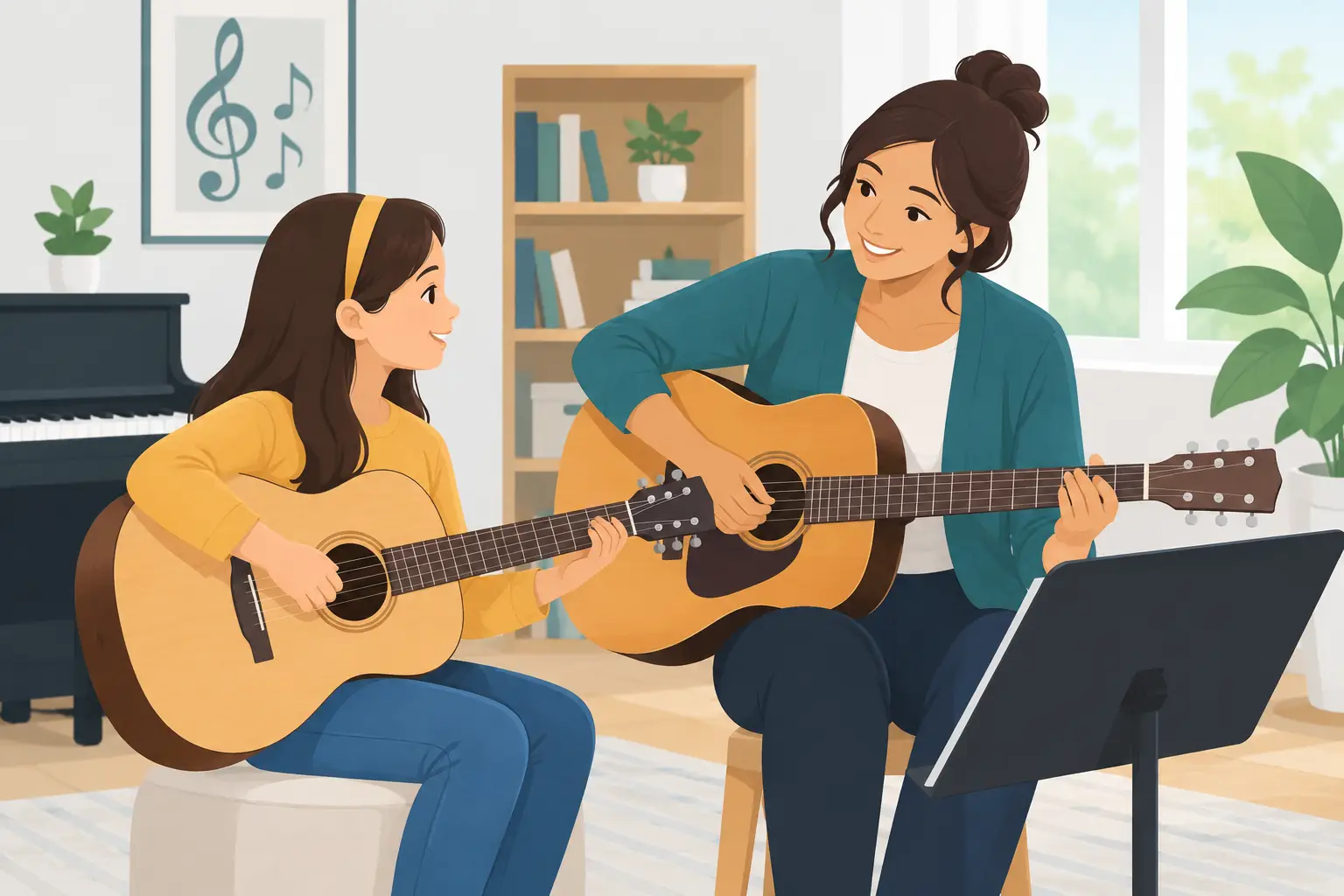
A homeschool schedule can make room for the subjects that help a child feel most like themselves. Music lessons for homeschoolers turn part of that flexibility into something meaningful: a weekly goal, a creative outlet, and a skill your child can proudly share. Whether they are drawn to piano, guitar, voice, drums, bass, or ukulele, lessons can bring welcome structure to the day without making learning feel like another worksheet.
For many families, the best part is not simply learning songs. It is watching a quiet child speak up at an open mic, seeing a teen stick with a challenging rhythm, or hearing a beginner play their first complete piece for grandparents. Music gives students a place to grow confidence while having fun.
Why Music Fits the Homeschool Day So Well
Homeschooling gives families the freedom to shape education around how a child learns best. That freedom is powerful, but it can also mean parents are carrying a lot of planning, teaching, and decision-making. A consistent music lesson adds an encouraging outside voice to the week while keeping the experience personal.
Private or semi-private instruction gives students focused attention from an experienced teacher. Instead of trying to follow a one-size-fits-all classroom pace, they can spend more time on the skills that need work and move ahead when they are ready. A child who learns quickly may be ready to write a song or join a band class. Another student may need patient repetition, simple practice goals, and a teacher who knows how to make the next step feel possible.
Music also supports skills that show up across the homeschool curriculum. Reading rhythms strengthens pattern recognition. Learning lyrics and songs supports memory and language. Practicing builds follow-through. Performing develops communication and poise. Those benefits are real, but students usually experience them in the best possible way: by playing music they genuinely enjoy.
What Great Music Lessons for Homeschoolers Include
The right lesson program should feel organized without feeling rigid. Families need clear progress, a dependable time on the calendar, and a teacher who can adapt when a student becomes fascinated by a new artist or hits a frustrating plateau.
A plan built around your child
A beginning pianist does not need the same approach as a teen guitarist who already knows a few riffs. Strong instruction starts with a student's goals, current level, favorite music, and learning style. Some students light up when they learn pop songs. Others want classical technique, songwriting, music production, jazz, or the chance to play in a group.
Personalized teaching does not mean skipping fundamentals. It means teaching rhythm, note reading, ear training, technique, and healthy habits in a way that connects to what motivates the student. When kids understand why a skill helps them play the music they love, practice becomes much easier to encourage.
A rhythm of accountability and encouragement
Homeschool students often have more daytime flexibility than traditionally schooled students, which can be a wonderful advantage for practice. The trade-off is that a flexible schedule can make it easy to keep moving practice to tomorrow. Weekly lessons create a natural checkpoint and give students a friendly reason to stay engaged.
The goal should not be perfection every week. A good teacher helps students set realistic assignments, celebrate progress, and adjust when family travel, a busy season, or a tough concept gets in the way. Small wins matter. A clean chord change, a steadier beat, or the courage to sing louder than last week are all signs of growth.
Chances to make music with other people
Music is often more exciting when it leaves the practice room. Solo lessons create a strong foundation, but jam sessions, band classes, open mic nights, and student events give young musicians a reason to use what they are learning.
Performance opportunities are especially valuable for homeschoolers who may be looking for additional social connection beyond their regular activities. They learn to listen to others, recover from mistakes, support bandmates, and contribute to a shared result. Those are musical skills, but they are also life skills.
Choosing the Right Instrument
There is no single best instrument for a homeschool student. The best starting point is usually the instrument they cannot stop talking about. Excitement carries a student through the early stage, when finger placement feels awkward and progress can seem slow.
Piano is a versatile choice for students who enjoy melody, chords, and visual patterns. It gives a clear view of how music is put together and can support future learning on many other instruments. Guitar and ukulele can be great for students who want to sing along, play current songs, or join friends around a campfire. Drums are ideal for kids with lots of energy and a strong sense of beat, while voice lessons help students develop confidence in an instrument they carry everywhere.
Bass can be a fantastic fit for students who enjoy rhythm, teamwork, and the foundation of a band. Music production may appeal to older students who love technology, songwriting, recording, or creating beats. The practical questions matter too: space at home, access to an instrument, sound level, and practice time. A trial lesson can help your child move beyond guessing and discover what feels right.
How to Make Practice Work at Home
Parents do not need to become music teachers for their child to succeed. Your role is more about helping create an environment where practice can happen consistently and without a daily battle.
Start with a specific practice window that fits your family's natural rhythm. Some students do their best work after breakfast, while others need a break after academics before sitting at the piano or picking up the guitar. Short, focused sessions are often more effective than one long session saved for the weekend. Ten to twenty minutes of intentional practice can create wonderful momentum for beginners.
Keep the instrument accessible whenever possible. A guitar stored in a hard-to-reach closet is less likely to be played than one safely placed on a stand. A piano bench with lesson books nearby makes it easier to sit down for five minutes between subjects. Ask the teacher what the weekly assignment should sound like so you can offer simple encouragement without feeling pressure to correct every detail.
It also helps to make room for play. Not every minute has to be assigned. Let your child experiment with sounds, repeat a favorite section, make up a short melody, or perform a song for the family. The balance of structure and freedom is where many students begin to feel ownership of their music.
Performance Builds the Confidence Practice Alone Cannot
A student can make real progress at home, but performance teaches a different kind of courage. Playing for others asks them to focus under pressure, keep going after a missed note, and let their effort be seen. Those moments can feel big at first, which is why supportive settings matter.
Start small. Playing one song for family, recording a short video, or sharing at a low-pressure studio event can be the first step. As confidence grows, students may be ready for an open mic, a band performance, or a respected local venue. The goal is never to force a child into the spotlight before they are ready. It is to help them realize that they can handle more than they thought.
At Matt Burk Music Studio, students in Allen and Frisco can build from personalized weekly instruction into jam sessions, band experiences, and live performance opportunities. That pathway gives homeschool families more than an elective. It gives students a community where their growth is noticed and their musical gifts have a place to be shared.
Give Your Student a Musical Milestone
The best music program for your homeschool family is one your child looks forward to attending. Look for kind instructors, clear goals, flexible scheduling, and chances to connect lessons to real music-making. A free trial lesson is a simple way to see how your student responds to the teacher, the instrument, and the environment before making a decision.
Your child does not have to be naturally fearless, perfectly disciplined, or already talented to begin. They only need a starting point, a little encouragement, and a place where progress is celebrated. One weekly lesson can become the part of their homeschool journey where they learn to trust their own voice.