
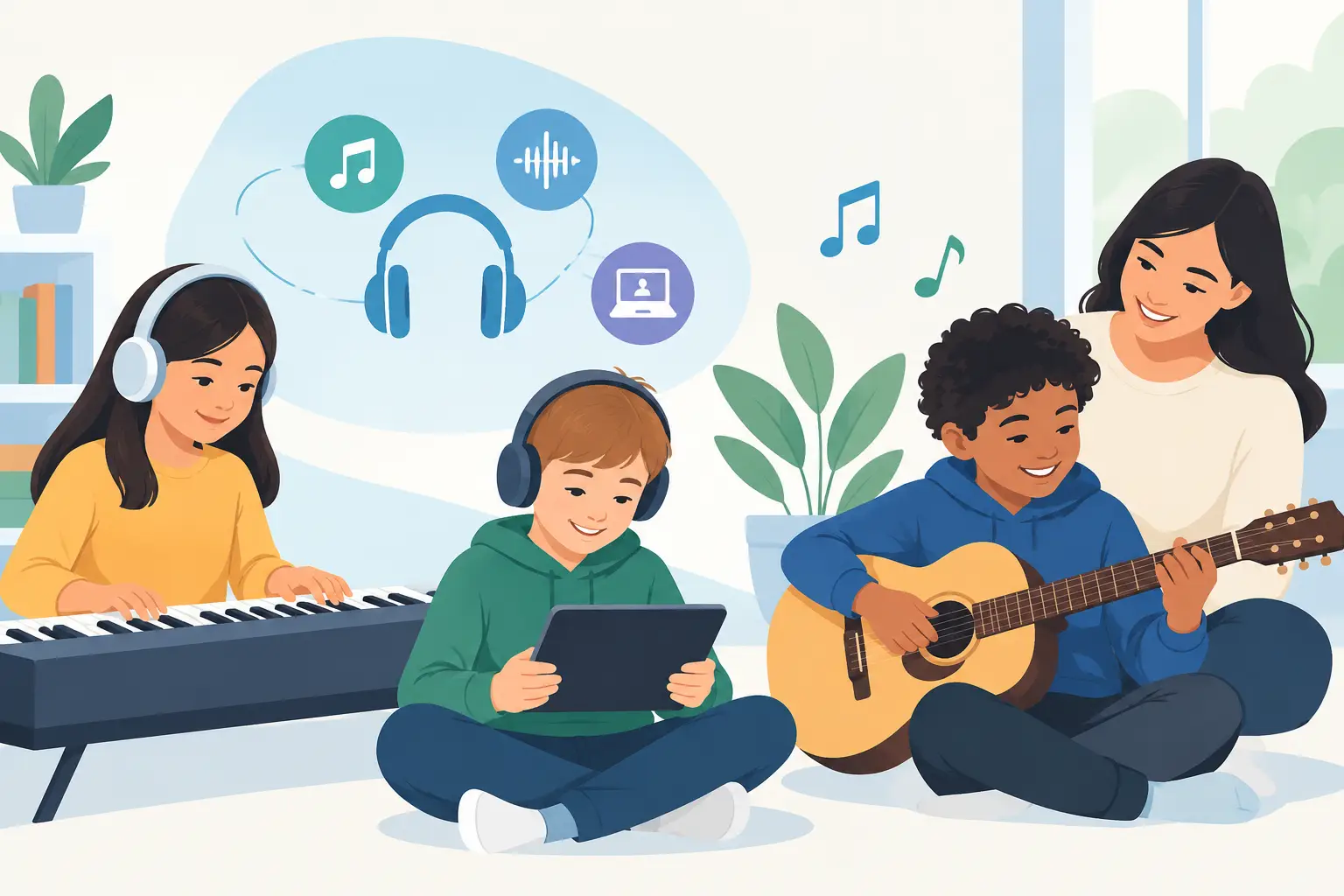
A child who can play three songs they love for grandparents, a teen who steps onstage with a band, and an adult who finally learns the piano part they have admired for years all have something in common: they need music lessons that feel personal, encouraging, and real. The most exciting music education trends 2026 are moving families away from one-size-fits-all instruction and toward learning experiences built around confidence, connection, and meaningful goals.
For parents in Allen and Frisco, this shift matters. Music can be a wonderful extracurricular activity, but it is also a long-term skill that grows through consistency, support, and the pride of seeing progress. For adults, the right lesson experience can turn a long-held “someday” goal into a favorite part of the week.
Music Education Trends 2026 Put Students First
The biggest trend is not a flashy new app or a complicated teaching method. It is personalized instruction. Students are arriving with different musical tastes, learning styles, schedules, and goals, and great teachers are adapting lessons accordingly.
One beginner may be motivated by movie themes on piano. Another may want to sing current pop songs, join a band, or learn the guitar riffs that made them pick up an instrument in the first place. A student preparing for an audition needs different coaching than an adult who wants a creative outlet after work. When lessons connect technique to what a student genuinely wants to do, practice has a purpose.
Personalization does not mean skipping fundamentals. Reading music, rhythm, ear training, healthy vocal technique, proper hand position, and musical vocabulary still matter. The difference is that these skills are taught as tools for making music the student cares about, not as obstacles to get through before the fun begins.
For families, look for a teacher who asks good questions early: What music does your child enjoy? What would success look like in six months? Do they thrive with structure, choice, encouragement, or a mix of all three? Those answers should shape the lesson plan.
Performance Is Becoming Part of the Lesson Plan
More students and parents are recognizing that playing an instrument privately is only one part of becoming a musician. Performance experience is becoming a central part of music education because it builds skills that weekly lessons alone cannot fully teach.
A recital, open mic, jam session, or band performance gives students a real reason to prepare. They learn how to start again after a missed note, listen to others, manage nerves, and keep going when the room is paying attention. Those are musical skills, but they are also life skills.
This does not mean every child needs to be pushed into a spotlight before they are ready. Performance should be paced thoughtfully. A shy beginner might first play for a parent, then a small group, then participate in a low-pressure studio event. A more outgoing student may be ready for a band or local venue much sooner. The goal is growth, not pressure.
At Matt Burk Music Studio, students can build toward live performance through supportive events, jam sessions, open mics, masterclasses, and band experiences. That pathway helps students see that lessons are not just about completing pages in a book. They are preparing to share something they have worked hard to create.
Why performance confidence lasts
When students perform more than once, their relationship with mistakes changes. Instead of viewing a wrong note as proof they are not talented, they learn that musicians recover, adapt, and continue. That resilience can carry into school presentations, team activities, auditions, and everyday confidence.
Parents often notice a change even before a big performance. A child may begin practicing without as many reminders because they have a clear event ahead. They may speak more proudly about their instrument or ask to play a song for family. Those small moments are worth celebrating.
Technology Is Useful, but It Is Not the Teacher
Technology will continue to shape music education in 2026. Backing tracks, slow-down tools, recording apps, digital sheet music, online theory games, and music production software can make practice more engaging and accessible. Students can hear their progress, experiment with arrangements, and explore how their favorite songs are built.
Music production is especially appealing to teens and adults who want to create rather than only reproduce music. Learning how to record vocals, program drums, shape a sound, or build a simple track can open another door into musicianship. It teaches listening, arranging, rhythm, and creative decision-making.
Still, technology works best as a supplement. An app can track whether a student played the right pitch, but it cannot always explain why a hand position feels tense, help a singer communicate the emotion of a lyric, or notice when a student is discouraged and needs a different approach. The human relationship remains the heart of effective teaching.
A good lesson plan uses technology when it helps a student practice, create, or understand something faster. It puts the device aside when a student needs direct coaching, musical conversation, or the energy of playing with other people.
Flexible Learning Matters More Than Ever
Busy families need music education that works with real life. School events, sports, work travel, and changing schedules can make a rigid program hard to maintain. One of the strongest music education trends 2026 is flexibility without lowering expectations.
For some students, weekly private lessons are the best fit because they offer focused attention and a consistent routine. Others benefit from semi-private lessons, where they can learn alongside a sibling or friend. Band classes are excellent for students who are energized by collaboration and want to learn how to lock into a groove with others.
The best format depends on the student. Private lessons can move at a highly individualized pace, while group settings offer teamwork, accountability, and social motivation. A student does not have to choose one forever. Their needs may change as their confidence and experience grow.
Flexible scheduling and reasonable rescheduling policies also help families stay connected to music through busy seasons. Progress does require commitment, but a missed week should not make a student feel like they have failed. The right studio helps students return to their goals with encouragement.
Students Want Music They Can Use and Share
The phrase “practical music education” can sound serious, but it simply means students are learning skills they can use outside the lesson room. They want to play songs, accompany themselves while singing, join friends for a casual jam, write music, record a cover, or perform for an audience.
That desire is changing repertoire choices. Classical training remains valuable and can develop technique, reading, discipline, and musical depth. But students also want pop, rock, country, jazz, worship music, film music, and the songs that fill their playlists. A balanced teacher can honor both the student’s interests and the skills that will help them grow.
For example, a piano student learning a favorite pop song can work on chords, rhythm, melody, form, and expressive dynamics. A guitar student can learn chord changes while preparing to play with a singer. A voice student can build breath support while finding a song that feels authentic to their voice. The music is enjoyable, but the learning is substantial.
Community Is a Powerful Practice Tool
Music is often taught one-on-one, yet it is naturally social. Students are more likely to stick with an instrument when they feel they belong to a community that notices their effort and celebrates their progress.
That can happen in a band class, a student showcase, a parent waiting room conversation, or an encouraging comment after a first open mic. It also happens when students see musicians at different stages. Beginners realize that advanced players started with simple songs. Advanced students remember how far they have come when they encourage someone newer.
Community does not replace individual practice. A student still needs a manageable home routine, clear goals, and a teacher who can identify what to work on next. But community makes the work feel less lonely. It gives students a reason to keep showing up.
What parents can do at home
Parents do not need a music degree to support progress. Create a predictable practice window, keep the instrument accessible, and focus praise on effort as much as results. Instead of asking, “Did you practice?” try asking, “What are you working on this week?” or “Can I hear your favorite part?”
A calm, curious response helps children see music as theirs. Practice will not be perfect every day, and that is normal. Consistency over time matters far more than one long, stressful session.
Choosing a Music Program for the Year Ahead
As you consider music lessons in 2026, think beyond the instrument. Ask whether your child or teen will be known as an individual, whether an adult beginner will feel comfortable starting from scratch, and whether there are clear milestones to look forward to. Find a program that combines skilled teaching with encouragement, performance opportunities, and room for students to enjoy the process.
The right first step does not have to feel intimidating. A trial lesson can reveal what makes a student light up, whether that is playing a first melody, discovering a singing voice, making a beat, or holding down a rhythm with a band. Give that curiosity a place to grow. With kind guidance and a goal worth reaching for, music can become a gift students carry confidently into the rest of their lives.