
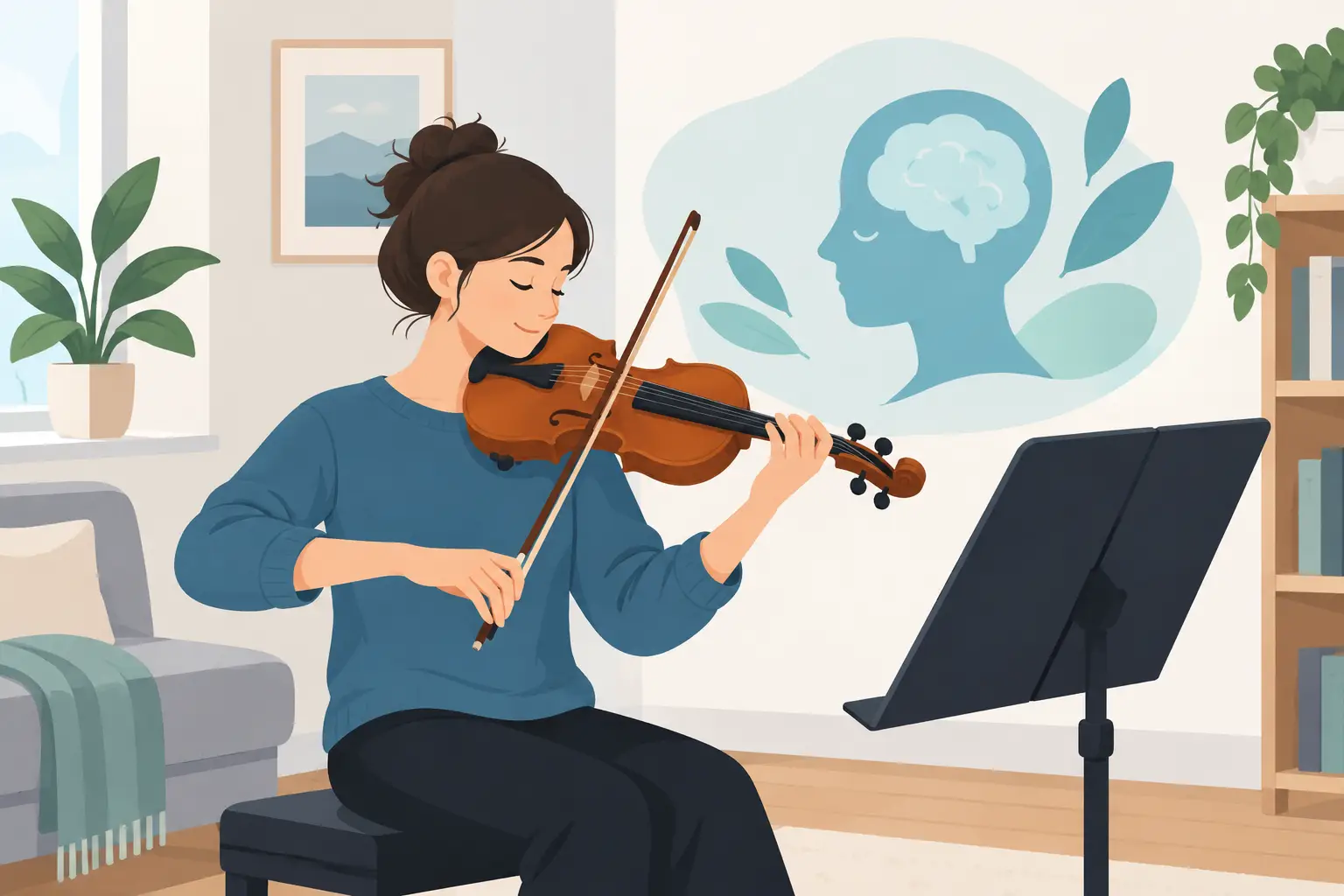
The piano bench feels unusually far away. Your child says they practiced when they did not. You keep putting off opening the guitar case because you are sure you have forgotten everything. These moments are more common than most musicians realize. Learning how to manage music practice anxiety can turn practice from a source of pressure into a place where skill, confidence, and enjoyment grow together.
Practice anxiety is not proof that someone is untalented or unmotivated. Often, it means they care deeply about doing well. The goal is not to force away every nervous feeling. It is to build a practice experience that feels safe enough to begin, clear enough to follow, and rewarding enough to repeat.
Why Music Practice Can Feel So Stressful
Music asks us to do something personal in a very visible way. A wrong note can feel like a mistake everyone can hear, even when no one else is in the room. Students may compare themselves to a friend, an older sibling, a favorite artist, or the version of themselves they think they should be by now.
For children, practice can also become tangled up with family dynamics. A parent may be trying to help, but reminders start to feel like criticism. A student who has had a busy school day may not have the energy to focus right after getting home. For adults, the pressure is often different: limited time, a demanding job, and the belief that progress should happen faster because they are paying for lessons.
A little challenge is healthy. It helps musicians stretch. Anxiety becomes a problem when it regularly causes avoidance, tears, tension, perfectionism, or a student who no longer feels excited about music. That is a cue to adjust the approach, not to push harder.
How to Manage Music Practice Anxiety Without Adding Pressure
The most helpful practice plans are small, specific, and realistic. A student does not need to conquer an entire song every day. They need a clear next step they can complete.
Make the starting line easy
Starting is often the hardest part. Instead of saying, “Go practice for 30 minutes,” try a first step: sit at the instrument, play the warm-up pattern once, or listen to the recording from the lesson. Once the student begins, continuing is usually less intimidating.
For younger musicians, a visual routine can help: instrument out, warm-up, one assigned skill, favorite song, done. For teens and adults, writing down the first task before leaving the lesson removes the daily question of what to work on.
If 20 minutes feels overwhelming, begin with five focused minutes. Five calm minutes practiced consistently will build more confidence than a long session filled with frustration. Practice time can grow as the routine becomes familiar.
Trade perfection for a specific goal
“Play it perfectly” is a recipe for anxiety because nobody knows exactly when they have achieved it. Give practice a finish line instead. A student might play four measures slowly with steady rhythm, sing one phrase while keeping relaxed breathing, or repeat a chord change five times without stopping.
This changes the conversation from “I am bad at this” to “This section needs another few repetitions.” That is a powerful shift. Music skills are built through repetition, feedback, and patience, not through instant perfection.
Parents can reinforce this by praising effort that is visible and specific. Try, “I noticed you went back and fixed that rhythm,” rather than simply, “Good job.” Students learn that improvement is something they can control.
Use slow practice as a confidence tool
Many anxious musicians play too fast because they want to get through the hard part quickly. Unfortunately, rushing usually creates more mistakes and confirms the fear that they cannot do it. Slowing down gives the brain time to organize movement, rhythm, notes, and sound.
Use a tempo where success is likely. For a piano student, that may mean hands separately before hands together. For a guitarist, it may mean changing between two chords at a relaxed pace. For a singer, it may mean speaking lyrics in rhythm before adding melody.
Slow practice is not a step backward. It is how musicians build reliable technique. Speed can come later, after the pattern feels comfortable.
End on something that feels good
A practice session should not always end with the hardest measure of the week. After focused work, let the student play a favorite song, improvise, jam with a backing track, or revisit a section they know well. Ending with success helps the brain remember practice as a positive experience.
This does not mean avoiding difficult material. It means balancing challenge with enjoyment. Students who enjoy their instrument are more likely to return to it tomorrow.
Create a Home Environment That Supports Progress
The way adults respond to practice matters. A supportive home does not require musical expertise. It requires calm expectations and encouragement.
Choose a predictable practice window when possible, but leave room for real life. Some students focus best before school; others need a break after homework or sports. Consistency helps, yet a rigid schedule can backfire during busy weeks. If the usual time is missed, a shorter session later is still a win.
Try to avoid turning every practice session into a performance for the family. Asking “Can you play your song for me?” can be encouraging for one student and stressful for another. A better question may be, “What are you working on today?” It gives the musician control over what they share.
For children, keep corrections limited. If a parent points out every missed note, practice can quickly feel like a test. Save technical feedback for the instructor when possible, and focus at home on showing up, following the plan, and celebrating small growth.
When Anxiety Shows Up Before a Lesson or Performance
Nerves before a lesson, recital, open mic, or band rehearsal are completely normal. The body is preparing for something that matters. The key is helping students direct that energy instead of fighting it.
A simple pre-performance routine can make a big difference. Take a slow breath, loosen the shoulders, identify one musical goal, and begin with the first note rather than trying to imagine the entire performance. Students can also practice performing in small steps: first for a parent, then for a sibling or friend, then in a casual studio setting.
Performance confidence does not appear all at once. It grows through positive repetitions. That is why opportunities like jam sessions, band classes, and low-pressure open mics can be so valuable. They allow students to learn that a missed note does not end the song and that audiences are usually rooting for them.
At Matt Burk Music Studio, students are encouraged to develop at their own pace while also gaining real performance experience in a welcoming community. A kind instructor can help identify whether anxiety is coming from unclear assignments, a skill gap, unrealistic expectations, or fear of being judged. Once the cause is clearer, the next step becomes easier to plan.
Know When to Ask for More Support
Some practice resistance is ordinary. Everyone has off days. But if anxiety is persistent, affects a student’s mood outside of music, or leads to panic, intense distress, or complete shutdown, talk with the instructor and consider additional support from a qualified mental health professional.
There is no shame in needing help. Music should be a meaningful part of a student’s life, not another weight they have to carry alone. The right support can protect both well-being and the long-term relationship with music.
The next practice session does not have to be impressive. It only has to begin. Put one hand on the keyboard, play one chord, sing one line, or tap one rhythm. Small, encouraging moments are where confident musicians are made.