
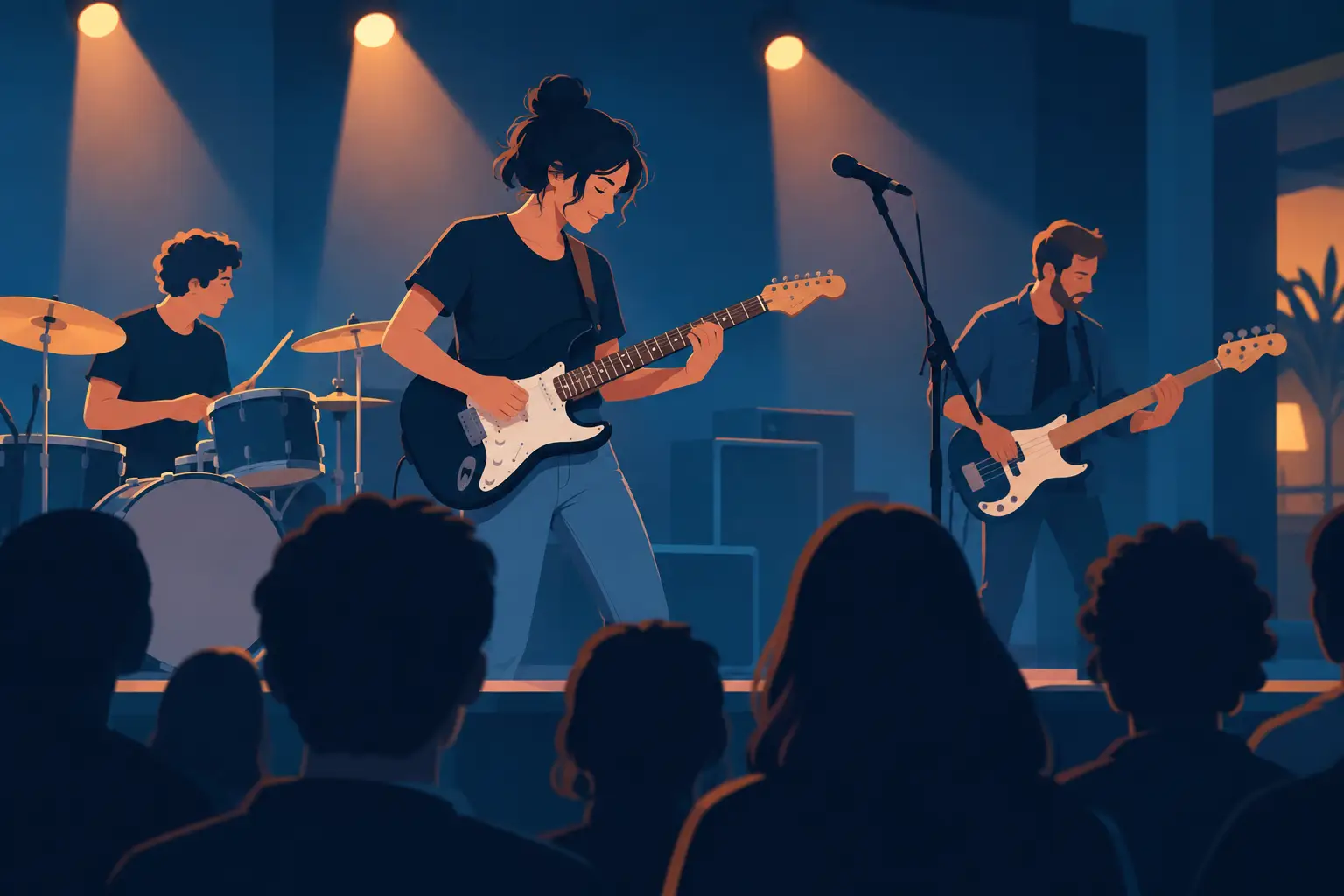
A student can play a song beautifully in a familiar lesson room and still feel their hands shake when it is time to perform for real people. That is not a failure. It is exactly why live venue learning matters. Performing at a respected local venue gives musicians a place to turn private progress into genuine confidence, one song, one set, and one brave moment at a time.
For children, teens, and adults, live performance is more than a fun reward after weeks of practice. It is a powerful part of learning music. Students gain focus, resilience, communication skills, and a deeper sense of pride in what they can do. They also discover that they do not need to be perfect to share their gifts with an audience.
What Is Live Venue Learning?
Live venue learning means building performance experiences into a student’s music education. Instead of treating a recital as a single high-pressure event at the end of the year, students have regular opportunities to prepare, perform, reflect, and grow in real musical settings.
That could mean playing a favorite piano piece at an open mic night, singing with a band, taking the stage at a local music venue, or performing alongside friends during a studio event. The venue matters because it changes the experience. A real stage, sound system, audience, lights, and fellow performers create a level of excitement that a practice room cannot completely replicate.
The goal is not to rush beginners onto a stage before they are ready. The goal is to create a supportive path from first notes to confident performance. A great instructor helps each student choose music that fits their current ability while still giving them something meaningful to work toward.
Why a Real Audience Helps Students Grow
Practice teaches the notes. Performance teaches what to do when the notes feel less certain.
When students prepare for a live audience, they learn how to keep going after a small mistake, restart with composure, listen closely to a drummer or backing track, and stay connected to the music even when nerves show up. Those are real musician skills. They are also life skills that carry into school presentations, team activities, job interviews, and everyday situations that require courage.
A live audience gives students immediate feedback in the most encouraging form: attention, applause, and shared energy. A child who has been quietly working on guitar chords may suddenly realize, “I can do this.” An adult who has put off singing for years may discover that performing one song feels less scary than expected and far more rewarding.
That pride can change how students approach their weekly lessons. Practice stops feeling like a chore assigned by an adult. It becomes preparation for a moment they can picture clearly.
Confidence Comes From Repetition, Not Pressure
Many parents worry that performances will create stress. They can, if the only message is that every note must be flawless. But a student-first performance program treats nerves as normal and gives students repeated, manageable chances to work through them.
Confidence is not the absence of butterflies. It is knowing what to do when butterflies arrive.
Some students are ready to perform a full song early in their musical journey. Others may start by joining a group number, playing a short section, helping with a band class, or attending an event as a listener before stepping onstage themselves. There is no single correct timeline. The best approach depends on the student’s age, personality, goals, and readiness.
Live Venue Learning Makes Practice More Purposeful
“Practice your instrument” can feel vague, especially for younger students. “Let’s get this chorus ready for your upcoming performance” gives the work a clear purpose.
As a performance approaches, instructors can help students break a song into achievable goals. Maybe this week is about learning the chord changes without stopping. Next week may focus on dynamics, stage entrances, microphone technique, or ending cleanly with the band. The student is not simply repeating material. They are building a performance.
This process teaches valuable habits:
- Setting small, realistic goals between lessons
- Practicing slowly before bringing a song up to tempo
- Recovering smoothly when a mistake happens
- Listening to other musicians and following a shared arrangement
- Showing up prepared and ready to contribute
Those habits are especially valuable for band students. Playing alone is important, but playing with others introduces timing, communication, and teamwork. Students learn that music is not only about being heard. It is also about listening well.
The Right Venue Experience Feels Big but Safe
A respected venue can make a performance feel special. Students get to experience the excitement of playing in spaces associated with real artists and live music. That sense of occasion helps them take ownership of their preparation.
At the same time, students need an environment where growth matters more than showing off. Families should look for performance opportunities led by instructors who know the students, understand their skill levels, and prepare them carefully. A supportive program does not throw musicians into the spotlight and hope for the best. It provides coaching before the event, encouragement on the day, and positive feedback afterward.
At Matt Burk Music Studio, students can develop toward performances at respected venues such as House of Blues and Hard Rock Cafe while receiving the personal guidance they need along the way. The focus stays on each student’s next step, whether that is a first open mic song, a confident band set, or a bigger musical goal.
What Students Learn Beyond Their Instrument
Parents often enroll children in music lessons because they want their child to gain a skill. That is a wonderful reason. Live performance adds another layer: students begin to see themselves as capable people who can prepare for something challenging and follow through.
For younger students, that may look like learning to stand tall, introduce themselves, and take a bow. For teens, it may mean finding their place in a band, taking creative risks, or building confidence in front of peers. For adults, it can be the joy of returning to a longtime dream without worrying that they are “too old” or “not good enough.”
Performance also builds community. Students who attend jam sessions, masterclasses, open mic nights, and band events get to meet other people who enjoy music. Seeing another beginner take the stage can be incredibly motivating. So can watching an advanced student perform a song that once seemed out of reach.
How Families Can Support a Young Performer
The most helpful thing a parent can say before a performance is not “Don’t mess up.” It is “I’m proud of you for doing this.” That message gives children room to be brave.
At home, keep practice encouraging and specific. Ask what part of the song feels strongest and which section needs a little more attention. Help create a consistent practice time, but avoid turning every session into a tense review. Students make more progress when they feel supported rather than judged.
On performance day, arrive with enough time to settle in. Let your child know that nerves are expected, even for experienced musicians. Afterward, celebrate the effort first. Ask what they enjoyed, what surprised them, and what they might want to try next time. A missed note is rarely what students remember. They remember the feeling of being onstage and having people cheer for them.
A More Meaningful Path From Lessons to the Stage
Private lessons remain the foundation. Students need personalized instruction to build technique, musical understanding, and healthy habits. But lessons become even more meaningful when students can use those skills in front of an audience.
Live venue learning gives musicians a reason to practice with purpose, a place to build courage, and a community that celebrates progress at every level. Whether your child dreams of joining a band, your teen wants a creative outlet, or you are an adult ready to sing or play again, the first performance does not have to be perfect. It just has to be yours.
The next song your family learns could be more than a lesson assignment. It could be the moment they discover how much they are capable of sharing.