
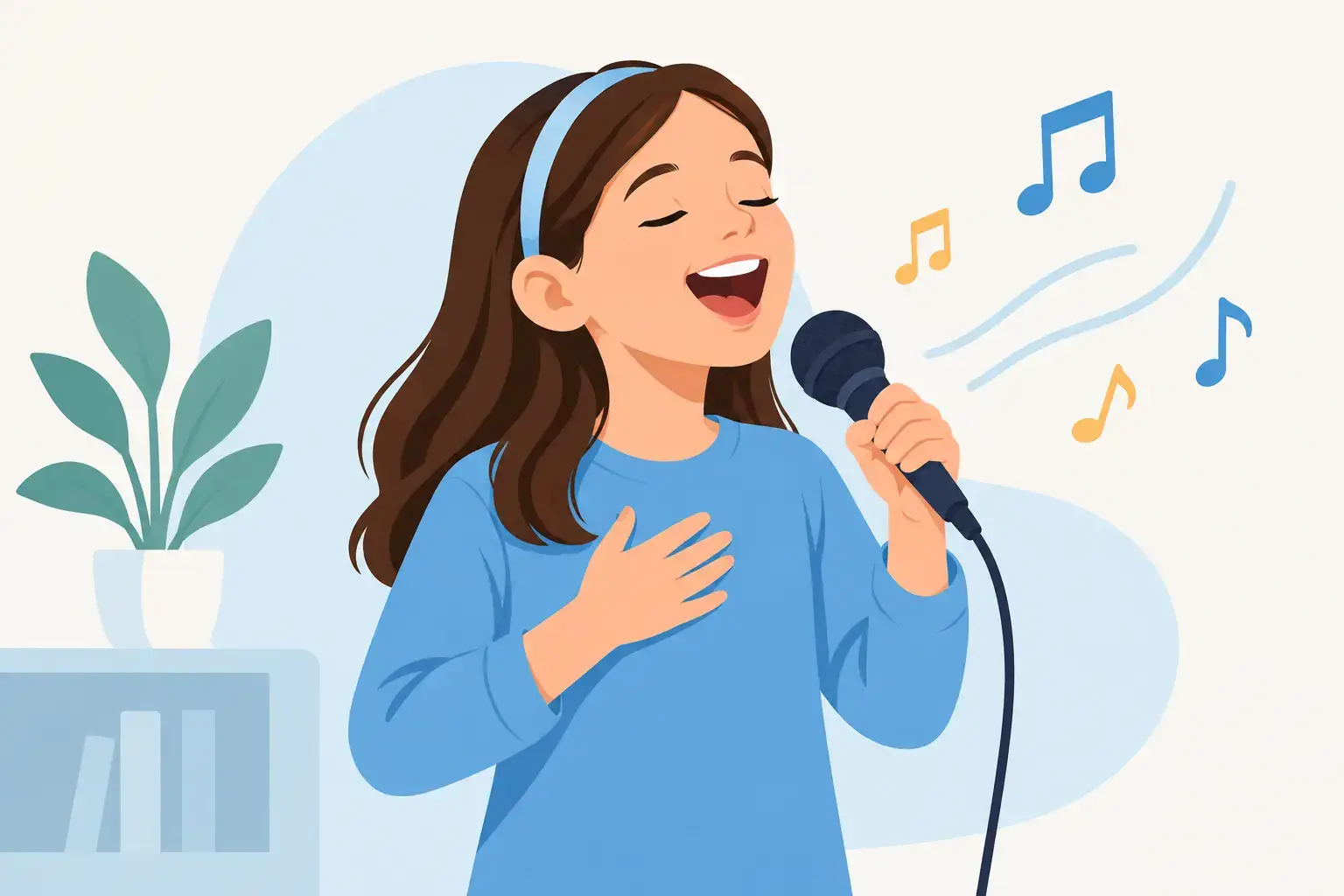
A child belting out the chorus of a favorite song in the car may be showing more than enthusiasm. They may be ready for a musical outlet that helps them use that excitement with confidence and care. This kids voice training guide is for parents who want to encourage a young singer without turning music into pressure, constant correction, or a contest.
Good vocal training gives kids a place to be heard. It can improve musical skills, certainly, but it also builds poise, communication, focus, and the courage to share something personal in front of other people. The right approach keeps singing joyful while teaching habits that support a growing voice.
What Voice Training Looks Like for Kids
Kids do not need to sing louder, higher, or longer than their voices are ready to handle. Their bodies and voices are still developing, which is why age-appropriate instruction looks different from adult vocal coaching. A great teacher helps a child explore their natural sound, hear pitch more clearly, develop rhythm, and sing songs in comfortable keys.
Rather than pushing for a huge sound, lessons should prioritize easy breathing, relaxed posture, clear words, and expressive singing. Kids often learn these skills through games, favorite songs, call-and-response exercises, movement, and short challenges that feel achievable. Fun is not separate from progress. For young singers, it is often how progress happens.
Every child arrives with different goals. One may want to sing in a school musical. Another may love pop music and want to perform for family. A quieter student may simply need a safe place to use their voice without worrying about being judged. Personalized lessons meet the student where they are and give them a next step they can feel proud of.
A Kids Voice Training Guide Starts With Healthy Habits
Healthy vocal habits are the foundation of confident singing. Parents do not need to become vocal coaches at home, but they can help kids understand a few simple ideas.
First, singing should not hurt. A little nervousness before performing is normal. Throat pain, persistent hoarseness, or a scratchy voice after singing is a sign to stop and rest. Children should never be encouraged to force high notes, yell over music, or copy an artist's sound if it feels strained. A skilled instructor can adjust the song, key, or technique so a child can succeed without pushing.
Hydration matters, especially in Texas heat, during sports seasons, and when allergies are acting up. Water supports comfortable vocal use, while plenty of rest helps the whole body recover. If a child has been cheering at a game, talking loudly at a party, or feeling under the weather, a lighter practice day may be the smart choice.
Posture and breath are also useful, but they do not need to feel overly technical. A child can stand tall with relaxed shoulders, keep their jaw loose, and take a calm, low breath before a phrase. The goal is not stiffness. It is freedom. When the body is tense, the voice usually feels tense too.
Build Skills One Small Win at a Time
Many kids want to jump straight to their biggest, most challenging song. That excitement is wonderful, but early wins are more valuable than early strain. A teacher can choose music that fits the student's current range and help them grow from there.
Pitch matching is often one of the first skills to develop. This means hearing a note and singing it back accurately. Some children pick it up quickly; others need more time and repetition. Neither path predicts how much they can enjoy or accomplish in music. Consistent, encouraging practice makes a real difference.
Rhythm is just as important. Clapping along to a beat, speaking lyrics in time, and singing with a backing track can help young vocalists feel steady in a song. Once the notes and rhythm are more secure, kids have more room to focus on storytelling. They can ask: What is this song saying? Which words matter most? How do I want the listener to feel?
That expressive work is where a song becomes a performance instead of a recitation. It also helps kids connect their singing to something meaningful, whether they are sharing a funny song, a powerful anthem, or a gentle ballad.
Practice Should Be Short, Specific, and Positive
Long practice sessions are rarely necessary for beginning singers. Ten focused minutes several days a week can be more effective than one frustrated hour. The best routine depends on a child's age, schedule, and attention span, but it helps to give each practice session a clear purpose.
A young singer might begin with a gentle warm-up, repeat a tricky line slowly, then sing one section of a song with the track. End on something they can do well. That final success matters because it helps them want to come back tomorrow.
Parents can support practice by creating a predictable time and a low-pressure space. Avoid stopping a child mid-song to point out every missed note. Save detailed corrections for the instructor whenever possible. At home, encouragement such as, “I can hear how much clearer those words were,” or, “You stayed with the beat that time,” helps a child notice progress without feeling picked apart.
Choosing Songs That Help Kids Grow
The right song can make a child eager to practice. The wrong song can leave them frustrated, especially if it sits too high, moves too quickly, or asks for emotional maturity they have not reached yet.
A good vocal teacher can adapt songs to fit a student's current voice. Changing the key is not cheating. It is smart musicianship. A younger singer may also do better with an edited version of a song, a shorter section, or lyrics that are appropriate for their age and family values.
Favorite artists can be a helpful starting point, but kids should not feel like they have to imitate them. Professional recordings often use studio effects, multiple takes, and vocal choices that are not a good fit for a developing voice. The goal is not to produce a tiny copy of someone else. It is to help a child discover a sound that feels natural, healthy, and uniquely their own.
Performance Builds Confidence Differently
Singing privately and singing for people are different skills. A child may know every word in the lesson room, then suddenly forget the opening line when an audience is watching. That does not mean they are not ready. It means they need supportive performance experience.
Start small. Singing for a parent, recording a short video, or sharing one song with a trusted group can help kids get used to being seen and heard. Over time, open mics, recitals, jam sessions, and group classes give students more chances to practice handling nerves.
The best performance opportunities are encouraging, organized, and appropriate for the student's experience level. Kids should feel challenged, but never thrown into the deep end without support. Learning how to take a breath, walk onstage, recover after a missed lyric, and accept applause can be just as valuable as singing every note perfectly.
At Matt Burk Music Studio, young singers can grow from private coaching into community-centered opportunities to perform, connect with other musicians, and celebrate the work they have put in. Those moments turn a lesson goal into a memory that lasts.
When to Consider Voice Lessons
A child does not have to be “naturally talented” or already outgoing to benefit from voice lessons. Lessons can be a great fit for kids who sing constantly, want help preparing for auditions, enjoy theater, or need a confidence boost. They can also help students who have trouble matching pitch, staying on beat, or projecting without yelling.
The most important factor is readiness to participate. Younger children may thrive with shorter, playful lessons, while older kids and teens may be ready for more focused technique and song coaching. A trial lesson is a useful way to see whether the teacher's style, schedule, and environment feel right for your child.
Give your young singer room to grow at their own pace. With patient guidance, healthy habits, and a few chances to share their music, the voice they are practicing today can become a source of confidence for years to come.