
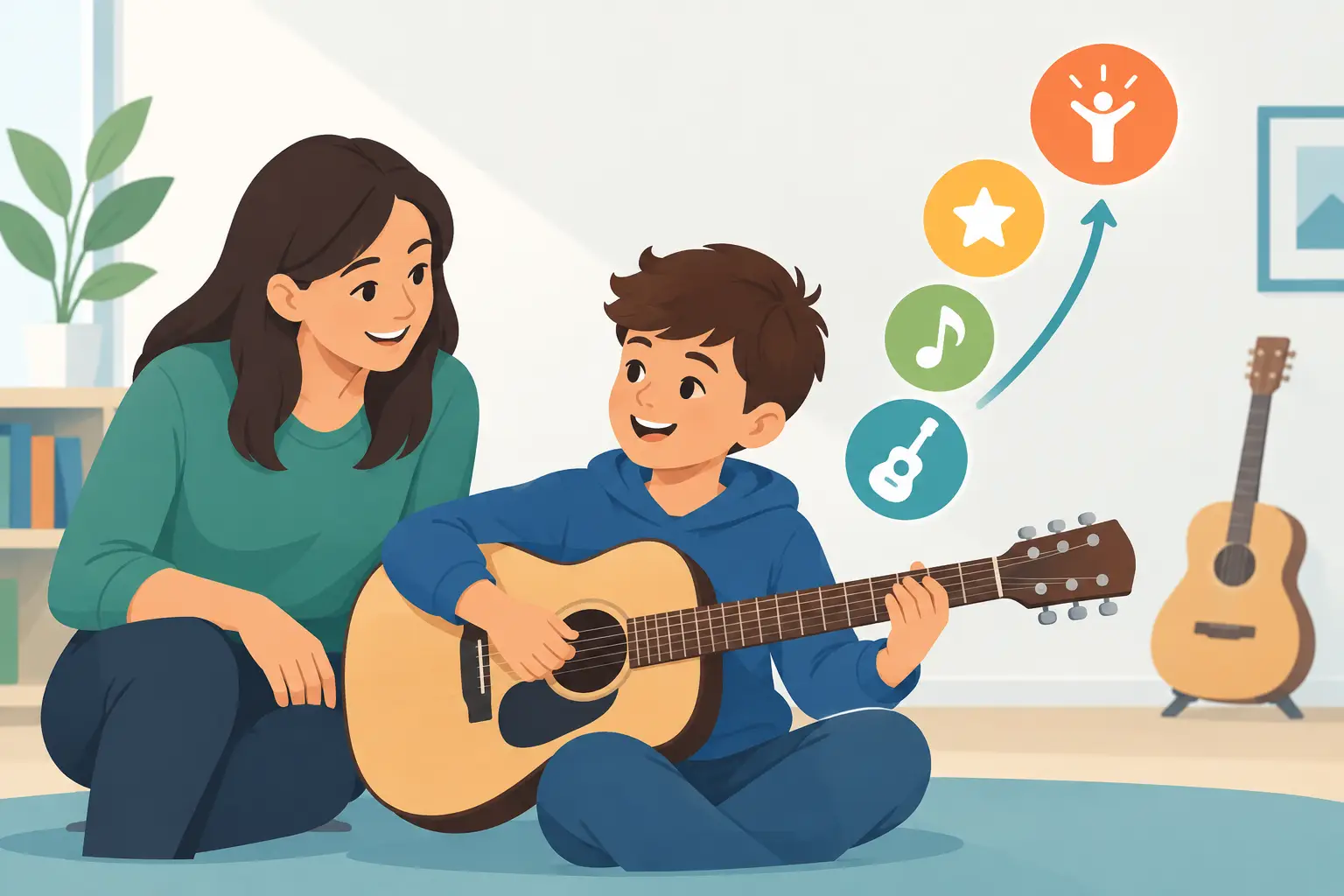
A child’s first guitar lesson can go one of two ways: they leave excited to show off a new sound, or they leave feeling like they have homework they do not understand. The right kids guitar lesson structure makes the difference. It gives young musicians enough routine to feel secure, enough variety to stay engaged, and clear wins they can feel proud of each week.
At Matt Burk Music Studio, we believe guitar lessons should help kids build real skills while having a great time doing it. A structured lesson is not a rigid lesson. It is a personalized path that meets a student where they are, keeps their favorite music in the picture, and gives them meaningful goals to reach.
Why Structure Matters for Young Guitarists
Guitar asks beginners to do several unfamiliar things at once. They need to hold the instrument comfortably, press strings with the right amount of pressure, use both hands independently, listen closely, and keep a steady beat. For a child, that can feel like a lot before they have even played their first recognizable song.
A thoughtful lesson structure breaks those challenges into manageable pieces. Instead of hearing, “Practice guitar for 30 minutes,” a student knows exactly what success looks like: play two clean notes, switch between two chords, strum along with a favorite song, or perform a short section for their family.
That clarity builds confidence. Kids are more likely to stick with an instrument when they can hear progress and when their instructor notices the effort behind it. The goal is not to rush them through a list of songs. The goal is to help them become comfortable, capable musicians who believe they can keep growing.
What a Kids Guitar Lesson Structure Should Include
Every student is different, so lesson time should never look identical from one child to the next. A brand-new seven-year-old may need more movement, games, and short activities than a focused teenager who wants to learn the opening riff from a favorite rock song. Still, strong lessons often include the same core ingredients.
A friendly check-in and a clear goal
The first few minutes set the tone. An encouraging instructor asks what the student listened to this week, how practice went, and what felt easy or tricky. This is more than small talk. It helps the teacher adjust the lesson in real time and reminds the student that their interests matter.
Then comes a simple goal for the day. It might be, “Today we will make your chord changes smoother,” or, “Today you will learn the first line of this song.” A clear target keeps the lesson focused without making it feel pressured.
Skill building in small, achievable steps
Technique matters, especially at the beginning. Good posture, relaxed hands, proper fretting, picking control, and rhythm habits prevent frustration later. But children do not need a long lecture about technique. They need short demonstrations, friendly corrections, and time to try the skill themselves.
For example, an instructor may turn finger strength into a quick challenge: Can the student make each note ring clearly three times in a row? If a chord is difficult, the teacher may simplify it, teach part of the shape first, or use an easier song that reinforces the same skill. Progress should feel like climbing a set of small stairs, not jumping over a wall.
Music the student wants to play
Exercises are useful, but songs give guitar a purpose. When kids recognize a melody, riff, or rhythm from music they enjoy, practice becomes much more motivating. That does not mean every request is instantly playable at the original level. A great teacher adapts music so it fits the student’s current ability while still sounding exciting.
A younger beginner might play a simplified one-string version of a tune. A more experienced player may work on chord progressions, lead lines, dynamics, or playing with a backing track. The song choice should stretch the student just enough to create a proud “I did it!” moment.
Rhythm and musicianship that feel practical
Kids do not need to become experts in music theory before they can enjoy guitar. They do benefit from learning rhythm, listening, and musical patterns from the start. Counting beats, clapping a rhythm, identifying high and low sounds, or following a chord chart all help students play with more confidence.
The best approach connects these ideas directly to the music in front of them. If a student is learning a song with four beats in each measure, they can feel that pulse while strumming. If they are learning a chord progression, they can begin to hear why the song sounds complete when it returns home. Theory becomes a tool, not a test.
A quick review and a practice plan
The last few minutes of a lesson are valuable. This is the time to celebrate what went well, replay the student’s best moment, and make sure they know what to practice at home. Young players do better with a short, specific plan than a vague reminder to practice more.
For many beginners, five to ten focused minutes on most days can be more productive than one long, stressful session. A practice plan may include one warm-up, one technique goal, and one song section. Parents can help by creating a predictable time and a low-pressure space, but they do not need to become the guitar teacher at home.
How Lessons Change as a Child Grows
A successful kids guitar lesson structure evolves with the student. Early lessons may focus heavily on comfort with the instrument, simple rhythms, and the joy of making sounds. As coordination improves, students can learn chords, scales, note reading or tab, songwriting, ear training, and more challenging songs.
Some students love performing and want a clear path to the stage. Others need time to build confidence before sharing music outside the lesson room. Both approaches are valid. The important thing is to provide opportunities without forcing a child into the spotlight before they are ready.
For students who are eager to play with others, band classes, jam sessions, and open mic events can be powerful next steps. Playing in a group teaches listening, timing, teamwork, and recovery when something does not go exactly as planned. Those are musical skills, but they are also life skills.
The Balance Between Fun and Progress
Parents sometimes worry that a fun lesson will not be serious enough. Others worry that too much structure will make their child quit. The best guitar instruction does not choose one over the other. It combines enjoyable music with purposeful teaching.
A lesson can include a game, a favorite song, and a few laughs while still making real progress on rhythm, technique, and reading music. It can also challenge a student without making every mistake feel like a failure. Children need to know that mistakes are normal evidence of learning, not proof that they are “bad at music.”
There is no single pace that works for every child. Some kids are ready to move quickly through new material. Others need extra repetition before a skill feels natural. Personalized instruction allows the teacher to honor that pace while keeping momentum strong.
Signs Your Child Is in the Right Guitar Lesson Environment
Look beyond whether your child can name a chord after a few weeks. Notice whether they are excited to show you something, whether they understand what to practice, and whether they feel safe asking questions. A good instructor encourages effort, gives clear feedback, and adjusts when a student is stuck.
It also helps when the studio creates a sense of community. Seeing other young musicians perform can make the next milestone feel possible. Events, masterclasses, group playing, and live performance opportunities give students a reason to keep preparing and a place to share the gifts they are working so hard to develop.
If your child is curious about guitar, a free trial lesson is a simple way to see what clicks. The right first experience can turn a passing interest into a skill they carry with confidence for years. Give them a guitar, a caring guide, and a goal they can reach this week - then enjoy watching what they are ready to create next.