
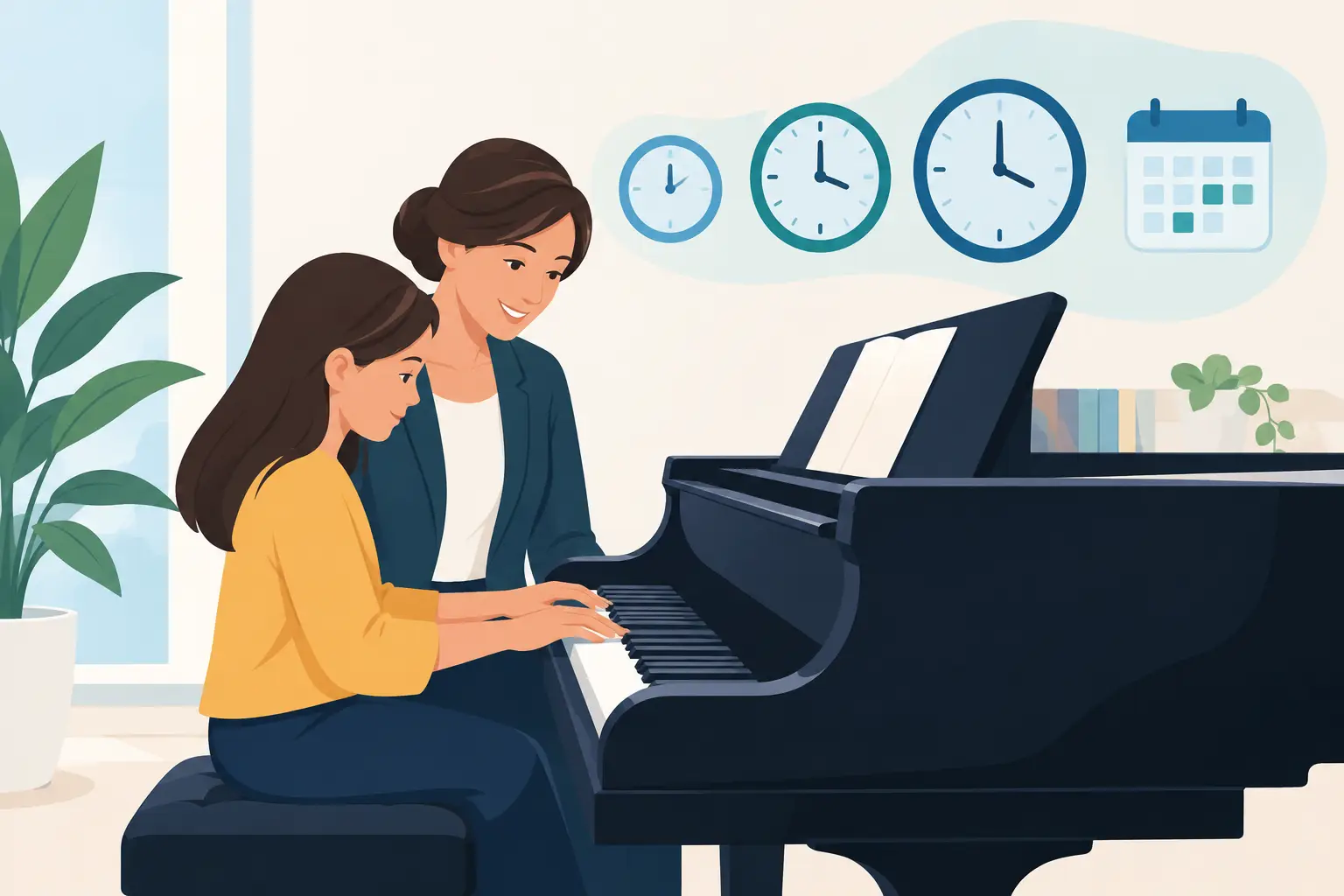
A 30-minute piano lesson can feel like the perfect first step for one student and barely enough time for another. So, how long are piano lessons supposed to be? The honest answer is that the best length depends on the student’s age, attention span, goals, practice habits, and the kind of musical experience they want to build.
At Matt Burk Music Studio, we believe lessons should fit the student, not force the student into a one-size-fits-all plan. A great piano lesson leaves a beginner feeling proud of what they learned, a busy adult feeling refreshed instead of overwhelmed, and an ambitious young musician excited to come back next week.
How Long Are Piano Lessons for Most Students?
Most private piano lessons are 30, 45, or 60 minutes long. Weekly lessons are the most common choice because they give students enough time to learn a new concept, practice it at home, and return with questions or a new win to celebrate.
For many beginners, 30 minutes per week is an excellent starting point. It is long enough to learn hand position, rhythm, note reading, songs, and basic technique without asking a new student to concentrate for too long. A shorter lesson can also make it easier for families to add music to a full school-week schedule.
As students gain experience, 45- or 60-minute lessons often become more valuable. Longer sessions create room for more than just learning notes. Students can work on technique, theory, ear training, songwriting, improvisation, performance coaching, and the musical details that help a song sound confident rather than merely correct.
The goal is not to choose the longest lesson possible. The goal is to choose enough focused time for steady progress while keeping music fun and sustainable.
The Right Piano Lesson Length by Age
Young beginners: usually 30 minutes
For many children ages five through eight, a 30-minute private lesson is a strong fit. Young beginners are learning several big skills at once: listening carefully, following directions, using both hands, counting rhythm, reading music, and building confidence at the keyboard.
A skilled teacher can keep that half hour active and encouraging by moving between games, songs, rhythm activities, and simple technique. The student gets meaningful instruction without reaching the point where focus fades.
That said, age is only one clue. Some younger students have a long attention span and cannot wait to learn more. Others may benefit from a shorter, highly focused approach at first. The best teacher watches the student, not just the clock.
School-age students and teens: 30 to 45 minutes
Students around ages nine through 13 often do well with 30- or 45-minute lessons. At this stage, they can usually stay engaged longer and begin taking more ownership of their practice. They may want to learn favorite songs, prepare for a recital, join a band, or build the skills to play for friends and family.
A 45-minute lesson gives more room to balance the essentials. A student can review the previous week, polish a current song, learn a new skill, and still have time to ask questions. This can be especially helpful when a student is preparing for a live performance or working through more challenging music.
Teenagers with serious musical goals often benefit from 45 or 60 minutes. They may be juggling advanced repertoire, auditions, songwriting, music production, or performance preparation. More time allows their instructor to coach the whole musician, not simply assign the next page of music.
Adults: 30 to 60 minutes
Adult piano students have wonderfully varied goals. One adult may want to play favorite songs after work. Another may be returning to piano after years away. Someone else may want to understand jazz chords, write music, or finally feel comfortable playing in front of people.
A 30-minute lesson works well for adults who want a clear, manageable weekly plan. It is efficient, focused, and easier to protect on a busy calendar. A 45- or 60-minute lesson may be better for adults who want deeper coaching, have ambitious goals, or enjoy exploring several areas of music during each session.
There is no prize for moving faster than your life allows. Consistent lessons and realistic practice nearly always beat an overly demanding plan that becomes stressful after a few weeks.
What Happens During a Piano Lesson?
Parents sometimes wonder whether a half-hour lesson offers enough value. When the lesson is personalized and well organized, it absolutely can. A good instructor uses that time with purpose.
A typical session includes a quick check-in, review of the previous assignment, help with tricky spots, new musical material, and a clear practice plan for the week ahead. Depending on the student’s goals, the lesson may also include sight-reading, rhythm work, music theory, ear training, improvisation, or learning a favorite song.
Longer lessons do not simply mean more songs. They offer more time to slow down and understand why something works. Students can explore posture and technique, correct recurring habits, develop expressive playing, and practice performing without rushing through every part of the process.
The best lessons also make space for encouragement. When students feel safe making mistakes, asking questions, and trying again, they grow faster. Confidence is not an extra benefit of music lessons. It is part of the learning process.
When Should You Choose a Longer Lesson?
Consider moving from 30 minutes to 45 or 60 minutes when a student regularly needs more time to cover their goals. This often happens when they are advancing quickly, learning more difficult repertoire, preparing for a recital or audition, or working on multiple interests such as piano, songwriting, and music production.
A longer lesson can also help a student who practices consistently but feels rushed every week. If review takes up most of the session, there may not be enough time to introduce new material or develop musical expression. More lesson time can turn that frustration into momentum.
Still, longer is not automatically better. A student who is exhausted after school, overwhelmed by a packed activity schedule, or not practicing between lessons may get more from a focused 30-minute session. The right schedule should support progress without turning music into another pressure point.
Lesson Length Matters, but Weekly Consistency Matters More
A student who takes a focused 30-minute lesson every week and practices a few times between sessions can make tremendous progress. Regular contact with an encouraging teacher helps students build habits, catch small problems early, and keep moving toward meaningful goals.
Think of each lesson as a coaching session. The instructor gives the student the next best steps, demonstrates how to approach a challenge, and celebrates what is improving. Practice is where the student turns those steps into their own musical ability.
For beginners, even 10 to 15 minutes of practice on several days each week can make a real difference. The key is consistency, not perfection. A child does not need a flawless practice streak to become a confident musician. They need a plan that feels doable and a teacher who knows how to keep them motivated.
Make the Lesson Fit the Musical Goal
Before choosing a lesson length, ask a few simple questions. Does the student want to play for personal enjoyment, prepare for performances, write songs, join a band, or pursue advanced study? How much time can they realistically practice? Do they leave lessons energized, or do they need a little more breathing room?
A trial lesson is a great chance to find those answers. It lets the instructor see how the student learns, hear what music they love, and recommend a format that supports both their goals and their schedule. Families should never have to guess whether their child is getting the right kind of support.
Piano lessons are not measured only in minutes. They are measured in the moment a student plays their first complete song, walks onstage with courage, or realizes, “I can do this.” Choose a lesson length that gives that growth room to happen, then give yourself permission to enjoy every note along the way.