
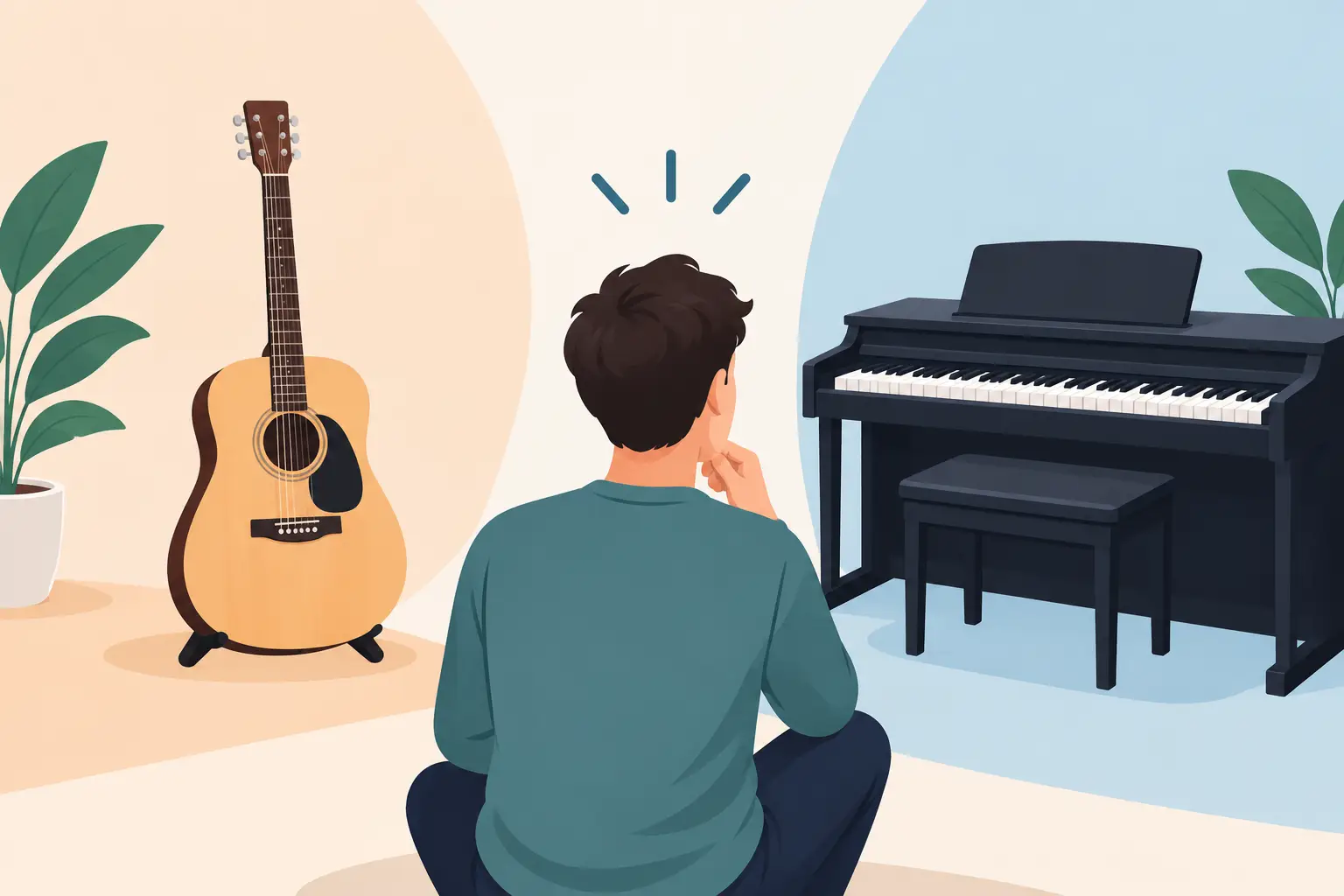
A child who wants to play a favorite song at the next family gathering and an adult who has always wanted to make music face the same first question: guitar or piano beginners, which instrument should come first? There is no single right answer, and that is good news. The best first instrument is the one that makes a student excited to practice again tomorrow.
Both guitar and piano can build confidence, creativity, coordination, and a lifelong connection to music. The choice comes down to the kind of music a student loves, how they want to learn, what feels comfortable in their hands, and the experience they hope to have along the way.
Guitar or Piano Beginners: Start With the Goal
Before comparing keys and strings, think about the musical moment your student wants to create. Do they picture singing along to Taylor Swift, playing campfire songs with friends, joining a band, or writing their own songs? Guitar may be a natural fit. Do they light up when they hear movie themes, pop melodies, classical pieces, or expressive piano ballads? Piano may feel like home.
A beginner does not need to have a perfect long-term plan. They only need a starting point that feels motivating. A student who loves the instrument is much more likely to keep showing up, work through the tricky moments, and enjoy the progress they hear each week.
For parents, it can help to ask a simple question: What songs does your child choose on their own? For adults, ask yourself: What would make you proud to play six months from now? The answer often points in a clear direction.
Why Piano Is a Great First Instrument
Piano gives beginners an immediate, satisfying sound. Press a key, and a clear note comes out. There is no need to build finger pressure on strings or learn how to make a sound before making music. That early success can be especially encouraging for young children and adults who feel nervous about starting something new.
The layout of a keyboard also makes musical patterns easy to see. Notes move from low to high in a straight line, and students can quickly connect what they see with what they hear. This visual structure helps many beginners understand melody, rhythm, chords, and basic music reading.
Piano students can play melody and harmony at the same time, even in the early stages. A beginner may start with a simple right-hand melody, then add left-hand chords or bass notes as coordination grows. That creates a full, rich sound and makes solo playing very rewarding.
Piano is often a strong choice for students who enjoy structure, like hearing recognizable melodies quickly, or want a foundation that can support singing, songwriting, music production, or another instrument later. It is also a comfortable option for younger students because there are no sore fingertips from pressing strings.
There are trade-offs. A full acoustic piano takes space and requires maintenance, while a quality digital keyboard is more practical for many families. A keyboard also stays in one place, so it is not as easy to bring to a friend's house, school, or a jam session. Playing with both hands can feel challenging at first, too, but patient instruction breaks that skill into manageable steps.
Why Guitar Is a Great First Instrument
Guitar is one of the most social instruments a beginner can choose. Students can learn a few chords, strum along with songs they already love, sing while they play, and eventually join a band or play around a campfire. That quick connection to real music is a huge motivator.
It is also portable. A guitar can go to a friend's house, a school event, a family gathering, or a local open mic night. Students who dream of performing contemporary music, writing songs, or playing with other musicians often enjoy the freedom that comes with guitar.
Early guitar lessons teach rhythm in a very hands-on way. Beginners learn to keep a steady beat, change between chords, and listen closely to how their playing fits a song. Those skills are valuable in every musical setting, especially when students are ready for band classes and group performances.
The first few weeks can be physically demanding. Guitar strings require fingertip pressure, and chord changes may feel slow before they become familiar. Younger children also need an instrument that fits their body well. A properly sized guitar and an encouraging teacher make a meaningful difference here. Sore fingertips should be temporary, not a reason to give up.
Guitar may be the better first choice for students who want to accompany themselves while singing, play popular songs with friends, explore rock, country, blues, or folk music, or grow toward a band experience. It can also be a wonderful fit for adults looking for a creative break after work without needing a large setup at home.
Which Instrument Is Easier to Learn?
Piano is usually easier for producing a clean first note. Guitar is often easier for carrying into social situations and playing familiar chord-based songs. But easier is not the same as better.
A beginner's progress depends much more on consistent practice, clear goals, and supportive teaching than on the instrument itself. A student who is excited about guitar will gladly work through early chord changes. A student who loves piano will be willing to practice coordinating both hands. Interest turns effort into momentum.
The best lessons meet students where they are. One student may need short, game-based activities and a favorite movie theme. Another may want a straightforward plan for learning chords to sing with. Personalized instruction keeps the challenge realistic while giving students wins they can feel every week.
Consider Age, Space, and Practice Habits
For very young beginners, piano can be a gentle introduction because every key responds easily and the note pattern is visible. Still, many children do wonderfully on guitar when they have a smaller instrument, a patient instructor, and songs they are excited to learn. Age alone should not decide the instrument.
At home, think about where practice will happen. A digital keyboard with weighted keys and headphones can be an excellent family-friendly solution, particularly when siblings have different schedules. A guitar takes up less room and is easier to store, but it needs to be kept accessible. An instrument tucked in a closet rarely becomes part of a weekly routine.
Practice does not need to mean long, stressful sessions. For beginners, a few focused minutes most days can create real growth. The goal is to build a habit: sit down, play something familiar, try one new skill, and finish feeling successful. That is how confidence grows.
Think Beyond the First Song
Choosing an instrument is also choosing a musical path. Piano can lead toward accompanying singers, composing, music production, classical study, jazz, or playing in a worship setting. Guitar can lead toward songwriting, electric guitar, bass, ensemble playing, and performing with a band. Neither path closes the door to the other.
In fact, many students eventually explore both. Piano knowledge can make guitar chords easier to understand, while guitar rhythm skills can help a piano student play with more energy and confidence. Starting with one instrument gives students a strong musical base, not a permanent label.
Performance opportunities can make that path even more meaningful. When students know they are preparing to share a song at an open mic, jam session, recital, or respected local venue, practice has a purpose beyond checking off assignments. They learn how to recover from mistakes, support other musicians, and feel proud of what they can do in front of an audience.
A Trial Lesson Can Make the Decision Clear
Sometimes the easiest way to choose is to let the student try both experiences with a caring instructor. Watch what happens when they sit at the piano. Notice their reaction when they hold a guitar and make their first chord ring out. The right fit is often less about what seems practical on paper and more about where their curiosity comes alive.
At Matt Burk Music Studio, students can explore their goals in a supportive setting where lessons are built around the music they enjoy and the confidence they want to build. Whether the first step is a keyboard melody or a guitar strum, students deserve instruction that celebrates progress and gives them room to grow.
Bring a favorite song to a free trial lesson, ask every question, and let the first few notes point the way. The best beginning is the one that makes a student want to share their gift with the world.