
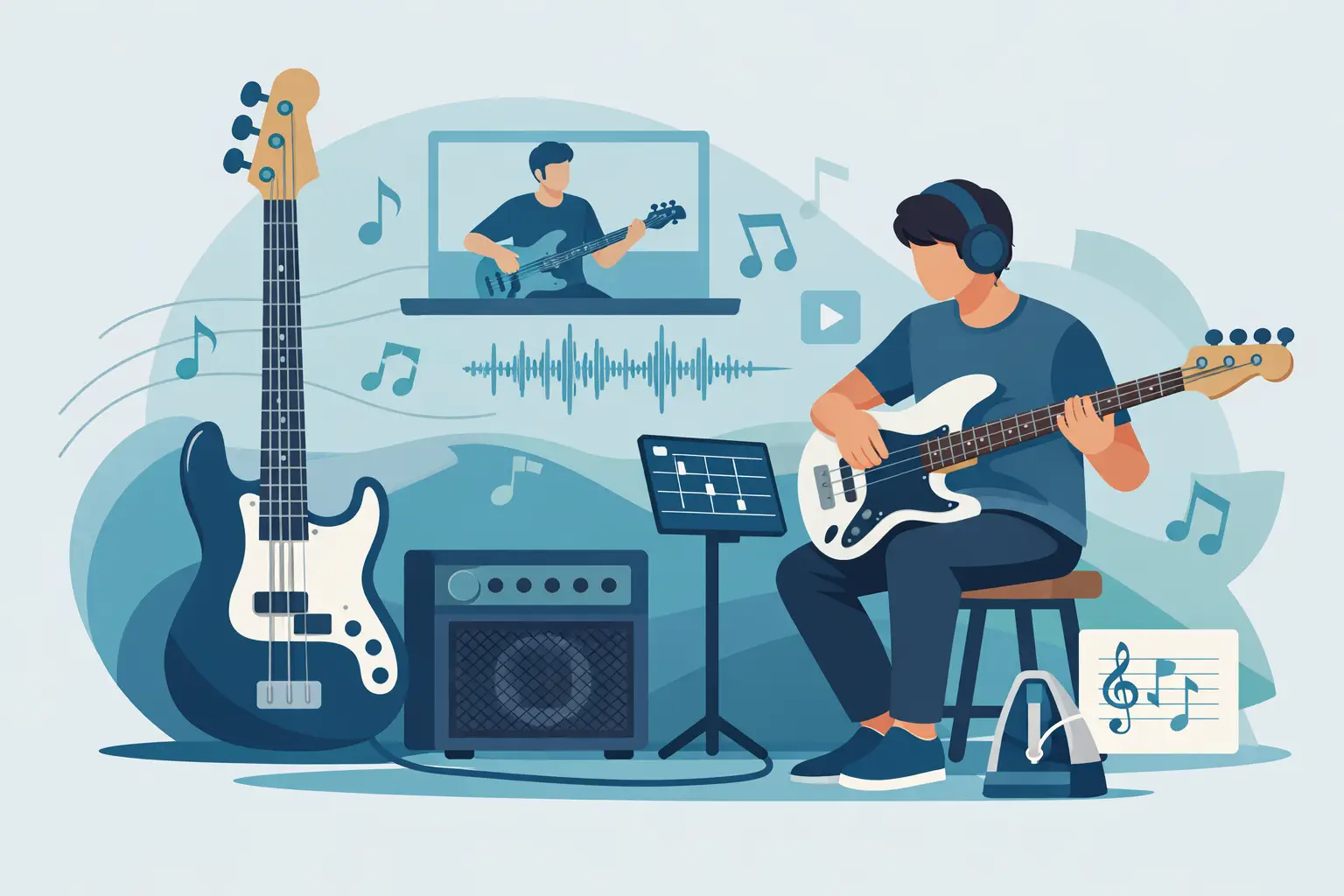
That first bass note surprises a lot of people. It is bigger than they expected, a little rough around the edges, and instantly satisfying. That is exactly why bass lessons for beginners can be such a great place to start. You do not need years of experience or a long list of music theory terms to begin making real music. You need a good instrument setup, a clear path, and an encouraging teacher who knows how to build confidence one step at a time.
For kids, teens, and adults, bass is one of the most rewarding instruments to learn early because progress feels practical. You can hear your role in a song quickly. You are not just playing random exercises. You are learning how to hold down the groove, support the band, and make music feel stronger from the ground up.
Why bass is a smart first instrument
A lot of beginners assume guitar is the default choice, but bass offers something different. The physical approach is often simpler at the start because you are usually playing one note at a time instead of full chords. That does not mean bass is easy. It means the early steps can feel more approachable, especially for students who want to play songs sooner rather than later.
Bass also teaches great musical habits from the beginning. Students learn timing, listening, and consistency. Those are the skills that help in every musical setting, whether someone wants to jam with friends, join a school group, play at church, or eventually perform on a bigger stage.
For younger students, the bass can be a confidence builder because it gives them a clear purpose in the music. For adults, it often feels less intimidating than instruments that put every mistake front and center. On bass, the goal is not to show off. The goal is to make the whole song feel good.
What beginners should learn first in bass lessons
The best bass lessons for beginners do not try to cover everything in the first month. They focus on the fundamentals that make playing feel natural and enjoyable. That usually starts with posture, hand position, tuning, and how to produce a clean note. These things may seem basic, but they matter more than most people realize. A student with solid technique from the start will progress faster and with less frustration.
After that, beginners usually work on reading fretboard patterns, basic rhythm, and simple grooves. Many students start with root notes, quarter notes, and easy song structures. This is where learning gets fun, because now the bass starts sounding like music instead of a practice drill.
A strong teacher will also introduce ear training and musicianship in a way that matches the student's age and goals. A young beginner may learn through call-and-response games and short song sections. An adult beginner may want a little more explanation about how the bass fits with drums and chords. Both approaches can work well. It depends on how the student learns best.
Bass lessons for beginners should feel personal
One of the biggest reasons beginners quit is not lack of talent. It is a mismatch between the teaching style and the student. Some students need structure and weekly goals. Others need a little more creativity and encouragement to stay engaged. Good instruction meets the student where they are.
That is especially important for families choosing lessons for a child. A child who loves classic rock will connect differently than one who wants to play worship music or modern pop. The same goes for adults. Someone returning to music after 20 years will need a different approach than someone picking up an instrument for the first time.
Personalized lessons help students avoid the common trap of feeling behind. There is no prize for rushing through material. Real progress comes from building skill in the right order, celebrating small wins, and keeping the experience fun enough that students want to come back next week.
What to expect in the first few months
Most beginners can make noticeable progress within the first few months if lessons are consistent and practice stays realistic. That does not mean practicing for hours every day. In fact, shorter and more focused practice sessions are usually better. Ten to twenty minutes of quality practice several times a week can do a lot, especially for younger students.
In the early stage, students often learn how to play with a steady beat, move between a few frets comfortably, and perform simple bass lines from recognizable songs. They may also begin learning how to count rhythms, understand basic song forms, and lock in with a backing track or drummer.
This stage is exciting because the student starts to feel like a musician, not just a beginner. That feeling matters. Motivation grows when students can hear the difference in their playing and share it with others.
Practice matters, but so does momentum
A lot of beginners worry about whether they are practicing enough. The better question is whether practice is helping them move forward. Repeating the same mistake for 30 minutes is not helpful. Focused repetition with guidance is.
That is why lesson structure matters so much. A teacher can break big goals into smaller ones, correct issues before they become habits, and keep students from getting stuck. Beginners do best when they know exactly what to work on between lessons and why it matters.
Momentum also comes from encouragement. Students who feel supported are more likely to stay consistent, and consistency is where growth really happens. This is one reason community-based music programs can be such a great fit. When students have chances to join jam sessions, play with others, or work toward a live performance, the learning becomes more meaningful. Practice is no longer just homework. It is preparation for something exciting.
Should beginners learn in private lessons or group settings?
There is no one right answer. Private lessons are usually the fastest route for beginners who want personalized feedback and a plan built around their goals. A teacher can adjust the pace, choose music that fits the student's interests, and troubleshoot technique in real time.
Group or band-based experiences offer something different. They help students develop listening skills, timing, and musical confidence in a social setting. For some beginners, especially kids and teens, that extra sense of community can make a huge difference in motivation.
Often, the best setup is a mix. Private lessons build the individual skills. Group playing helps students apply those skills in real music. That combination can be especially powerful for students who dream of performing someday, even if they are just getting started now.
Choosing the right bass teacher
A great bass teacher does more than explain fingerings. They help students feel capable. They know when to challenge and when to encourage. They understand that beginners need both progress and positive reinforcement.
When choosing a teacher, look for someone who can teach clearly, connect well with the student's age group, and keep lessons organized without making them feel stiff. For children, patience and enthusiasm are essential. For adults, flexibility and respect for their pace matter a lot. In both cases, the best teachers make lessons feel welcoming from day one.
It also helps to find a program that gives students room to grow beyond the weekly lesson. Performance opportunities, community events, and supportive coaching can turn music lessons into something much bigger than a time slot on the calendar. At Matt Burk Music Studio, that student-first approach is a big part of why beginners keep going and gain confidence faster.
The real goal of beginner bass lessons
The goal is not perfection. It is progress with purpose. Beginners need a place where they can ask questions, make mistakes, laugh a little, and keep growing. That is how lasting musicians are built.
If you are a parent, the right lessons can give your child more than music skills. They can build confidence, focus, and the joy of working toward something meaningful. If you are an adult beginner, starting bass can be a fresh creative outlet that fits into real life without pressure or intimidation.
Everyone starts somewhere, and the first few notes do not have to be polished to be powerful. The right bass lesson can turn curiosity into confidence faster than you might think. The important thing is to begin, stay encouraged, and give yourself the chance to enjoy the process.