
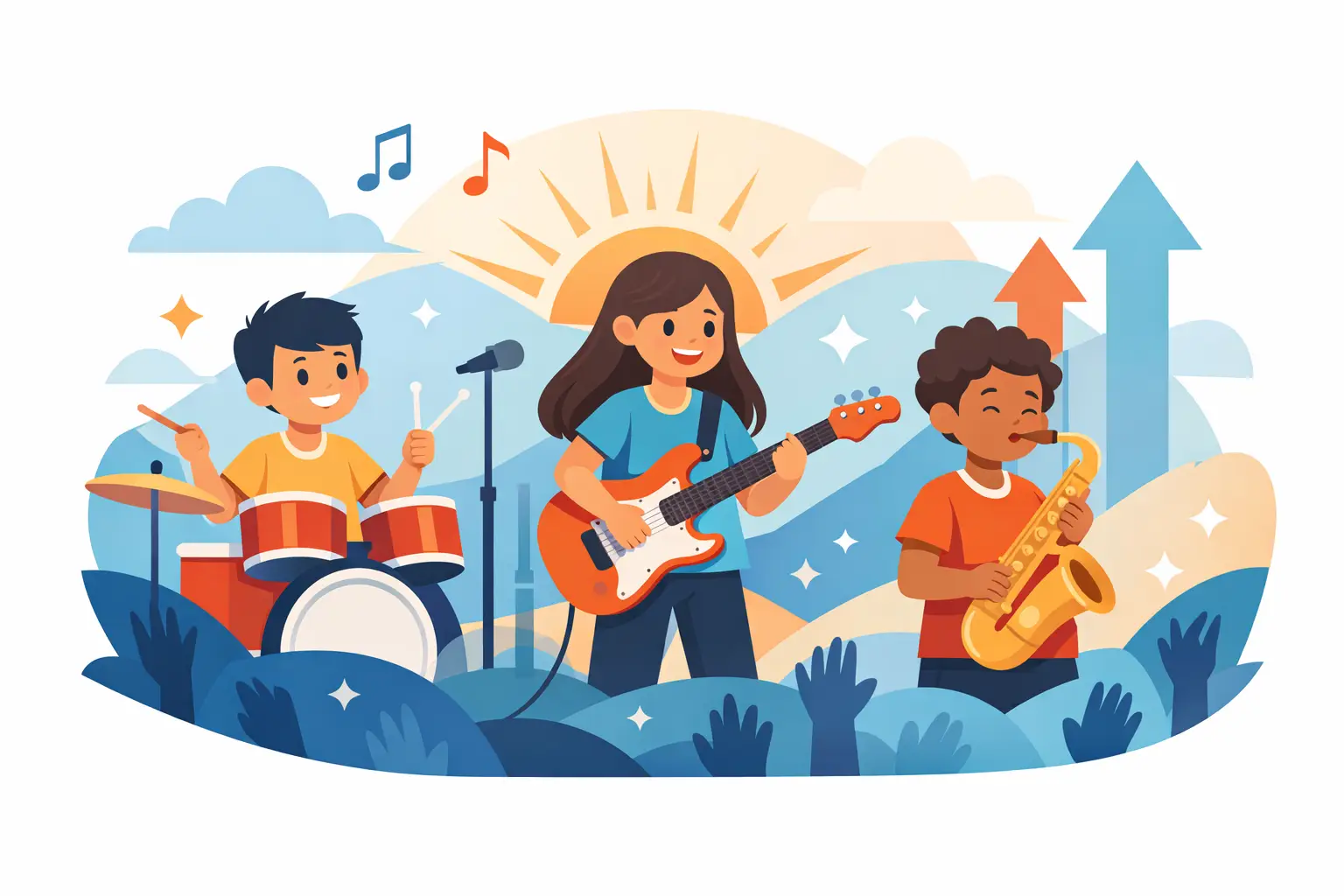
Some kids light up the moment they play with other musicians. You can hear it in the way they lock into a beat, look up for cues, and smile when a song finally clicks as a group. That is the magic of band classes for kids. They turn practice into connection, help students grow faster in real-world musical skills, and give children a reason to stay excited about learning.
For many families, private lessons are the starting point. That makes sense. One-on-one instruction builds technique, good habits, and individual confidence. But there comes a point when many students are ready for something bigger. They do not just want to play notes correctly. They want to make music with other people. That is where a strong band program can make a huge difference.
Why band classes for kids work so well
Kids often learn best when music feels active and social. In a band setting, they are not practicing in isolation. They are listening, responding, adjusting, and creating something together. That keeps them engaged in a way that is hard to replicate alone.
Band classes also make important musical concepts feel practical. Timing matters more when everyone has to come in together. Dynamics matter more when a student learns when to play strong and when to pull back. Even simple skills like counting, following form, and staying focused become more meaningful in a group because students can hear the immediate result.
There is also a confidence piece that parents notice quickly. A child who feels shy in a solo setting may feel more comfortable contributing as part of a team. The group creates support. Students realize they do not have to be perfect to participate. They just need to keep learning, keep listening, and keep showing up.
What kids learn in a band class beyond the instrument
A good band class is not just extra playing time. It teaches musicianship in a different way than private lessons do.
Students learn how to listen across the room, not just to themselves. They begin to understand how drums support groove, how bass shapes feel, how guitar or keys fill harmony, and how vocals or lead instruments sit on top. That broader awareness helps them become more complete musicians.
They also build teamwork. In group music, every student has a role. One child may carry rhythm. Another may lead a section. Another may need to stay steady and simple so the whole song works. Those are valuable lessons for kids because they connect effort, responsibility, and cooperation in a fun setting.
Patience grows too. In a band, students repeat sections, solve problems together, and learn that progress happens in layers. That process can be especially healthy for kids who are used to wanting immediate results. They start to see that improvement is exciting, even when it takes work.
Is your child ready for band classes?
It depends on the child more than the age. Some kids are ready early because they can follow directions, stay with a group, and keep basic time. Others benefit from a little more one-on-one development first.
A student does not need to be advanced to join a beginner-friendly band class. They do need a few foundational skills. Usually that means basic familiarity with their instrument, the ability to play simple parts, and enough focus to rehearse with others. The right program will meet them where they are and group students thoughtfully.
That last point matters. A band class can be incredibly motivating when the students are at compatible levels and the material fits the group. If the gap is too wide, beginners may feel lost and stronger players may feel under-challenged. Great instruction solves that by choosing the right songs, arranging parts carefully, and coaching each student toward a win.
What parents should look for in band classes for kids
Not all group music programs are built the same. Some are highly organized and growth-focused. Others feel more like casual jam time. Both can be fun, but if your goal is real progress, structure matters.
Look for a program that balances encouragement with clear teaching. Kids should enjoy class, but they should also leave knowing what they improved and what to work on next. Rehearsal should have a purpose. Students should be learning songs, practicing ensemble skills, and building toward something meaningful.
Performance opportunities are another big factor. When students know they are preparing for a real event, their motivation often changes. They practice more consistently. They pay closer attention in rehearsal. Most of all, they get to experience the reward of sharing their music with an audience.
You will also want instructors who know how to coach kids kindly and effectively. Teaching a band requires more than musical talent. It takes leadership, patience, and the ability to make each student feel seen. The best teachers know how to challenge students without making them feel overwhelmed.
How band classes support private lessons
Parents sometimes wonder whether a child should choose private lessons or band class. In many cases, the best answer is both.
Private lessons help students build their own skills. Band classes help them apply those skills in a musical setting. One gives focused personal attention. The other develops collaboration, listening, timing, and stage confidence. Together, they create faster and more well-rounded growth.
For example, a student might learn chord changes, rhythm patterns, or vocal technique in a lesson, then use those tools in band rehearsal the same week. That connection makes learning feel relevant. Instead of asking, "Why do I need this exercise?" students can hear exactly how it helps them play better with a group.
This combination is often where momentum really takes off. Kids stay motivated because music becomes something they do with others, not just something they practice at home.
The confidence boost families love most
One of the best things about a strong band program is how visibly it changes kids over time. A student who starts out quiet may begin speaking up in rehearsal. A child who once hesitated to make mistakes may start taking musical risks. A beginner who felt unsure may step onto a stage and realize, "I can do this."
That kind of growth carries beyond music. Kids who learn to prepare, contribute, and perform often bring that confidence into school, social settings, and other activities. They get used to being part of something meaningful. They learn that progress is possible with support and practice.
That is why the environment matters so much. When students feel safe, encouraged, and challenged at the right level, they grow. They do not just become better musicians. They become more confident versions of themselves.
What a great first band experience should feel like
A child’s first band class should feel exciting, not intimidating. They should walk into a room where expectations are clear, the music is approachable, and the teacher helps everyone settle in quickly.
There should be energy in the room, but not chaos. Students should have space to learn, make mistakes, and improve without feeling embarrassed. The class should be fun, but it should also have direction. By the end of rehearsal, kids should feel proud of what they played and eager to come back.
At Matt Burk Music Studio, that student-first approach matters. Kids grow best when they feel supported, coached, and given real opportunities to shine. Band experiences become even more powerful when they are part of a larger musical journey that includes personalized instruction, community, and live performance goals.
If you are a parent in Allen or Frisco wondering whether your child is ready, trust what you are seeing. If they love music, want to play with others, and light up at the idea of performing, band classes may be the next step that keeps them growing.
Music is more fun when it is shared. For many kids, joining a band is the moment lessons turn into something they cannot wait to be part of.