
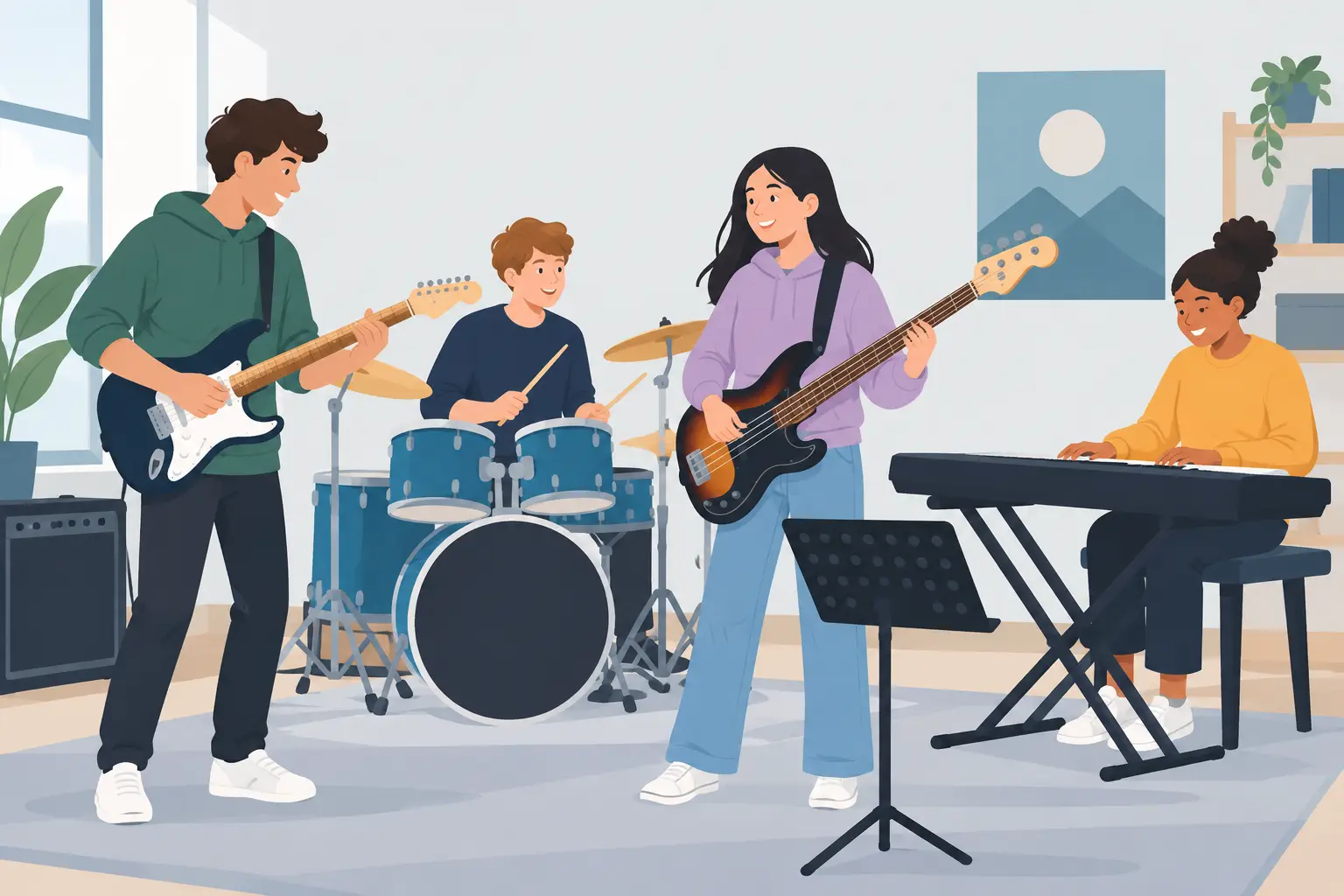
A student can play every note correctly alone in a lesson room and still feel nervous when the song starts with a real group. That is where band experience can change the picture. If you are asking, are band classes worthwhile, the honest answer is yes for many students - especially when the class is guided, welcoming, and built around goals that matter to the musician.
A band class is not simply another hour of practice. It is a chance to listen, react, contribute, recover from mistakes, and realize that music is something people create together. For children and teens, that experience often builds confidence that carries into school, friendships, and public speaking. For adults, it can bring back the fun that made them want to learn music in the first place.
What Students Learn That Private Lessons Cannot Fully Teach
Private lessons are a powerful foundation. Students can work at their own pace, strengthen technique, choose songs they love, and receive focused support from an instructor. Band classes do not replace that personal attention. They give students a place to use those skills in real time.
In a group, students learn how their part fits into the whole song. A guitarist may discover that playing fewer notes makes the music stronger. A drummer learns to keep a steady pulse for everyone else, not just follow a metronome. A singer practices entering at the right moment, hearing harmonies, and communicating with a live audience. Keyboard players, bassists, and other instrumentalists develop the same awareness: listen first, then play with purpose.
That kind of musical awareness is difficult to develop from a worksheet or an isolated practice track. It comes from repetition with other people. Students begin to hear song structure, dynamics, tempo changes, and cues as living parts of the music rather than abstract ideas.
Are Band Classes Worthwhile for Beginners?
They can be, as long as the class is designed for beginners instead of expecting them to perform like seasoned musicians on day one. A great beginner band environment meets students where they are. It uses approachable songs, clear arrangements, patient coaching, and parts that let every musician contribute.
Beginners do not need years of training before they are allowed to experience the joy of making music with others. In fact, an early band experience can make private practice feel more meaningful. The student who is learning a simple chord progression is not just drilling finger placement. They are preparing to help the group play a song next week.
There is a trade-off. A student who has not yet developed basic comfort on their instrument may feel overwhelmed in a fast-moving group. That does not mean band classes are a bad fit. It may mean the right next step is a few private lessons, a semi-private format, or a beginner group with more instructor support. The goal is encouraging progress, not pushing a student into an experience that feels discouraging.
Confidence Grows When Students Have a Role
Many parents hope music lessons will help their child become more confident, and band classes can make that growth visible. Students have a responsibility to show up prepared, pay attention, and support the team. When their bass line holds the groove together or their vocal part completes the chorus, they can hear that their contribution matters.
This is especially valuable for students who are quiet or hesitant. A band gives them a structured way to be seen and heard without putting all the attention on them. They are part of something bigger, but their role is still real. Over time, that can help a student move from "I hope I do not mess up" to "I know what I bring to this song."
Mistakes are part of the process, too. In a supportive class, students learn that a missed note does not end the performance. They listen, find their place, and keep going. That resilience is one of the most practical benefits of playing in a group.
The Motivation Factor Is Real
Practicing at home can be challenging, even for students who genuinely love music. A band class adds a reason to practice that feels immediate: other people are counting on you. That social connection often helps students stay engaged through the awkward early stages of learning an instrument.
Instead of asking, "Do I have to practice?" students start asking, "Can we play that song again?" They may listen more closely to their favorite artists, notice the instruments in a recording, and take more ownership of their part. Progress feels less like a chore because it leads to a shared musical moment.
Of course, motivation should not become pressure. Students need instructors who set clear expectations while keeping rehearsals fun. The best classes celebrate improvement, help musicians solve problems, and choose music that gives students something exciting to work toward.
Performance Experience Makes Practice Feel Purposeful
A performance goal gives a band a direction. Whether students are preparing for a studio event, an open mic, a community showcase, or a respected local stage, they learn how to move from rehearsal to performance with confidence.
This process teaches practical skills that students may not get from solo instruction alone. They practice starting and ending together, communicating between songs, adjusting when equipment behaves differently than expected, and staying focused when an audience is watching. These are skills that grow with every performance.
At Matt Burk Music Studio, band experiences can connect students with jam sessions, open mic nights, and performance opportunities that make their hard work feel meaningful. Students do not have to wait until they are "perfect" to share their gifts. With thoughtful preparation and kind coaching, they can take the stage, have fun, and keep growing.
How to Tell Whether a Band Class Is the Right Fit
The right class should feel like a healthy stretch, not a sink-or-swim test. Start by considering the student’s current comfort level. Can they play a few basic rhythms, chords, notes, or vocal melodies? Are they interested in learning songs with others? Do they respond well to a little structure and teamwork?
Personality matters, but do not assume a shy student is not ready. Some of the quietest students thrive in a band because the shared focus takes the spotlight off them. On the other hand, a student who is highly sensitive to noise or becomes frustrated when plans change may need a smaller group, more preparation, or a slower introduction to ensemble playing.
It also helps to look at the instructor’s approach. Strong band coaching is organized without being rigid. Students should know what to practice and how to improve, but there should also be room for laughter, questions, creativity, and the occasional imperfect rehearsal. Music is challenging. It should still be enjoyable.
What Parents Can Expect From a Good Program
A worthwhile band class has more than a group of students in a room playing loudly at the same time. It has clear groupings by age and ability, song choices that fit the players, helpful arrangements, and an instructor who can guide both the music and the group dynamic.
Parents should expect communication about goals, rehearsal needs, and performance plans. They should also expect growth to look different from student to student. One musician may become more confident performing. Another may make a big leap in timing, listening, or practice habits. All of those wins matter.
The best sign is often simple: the student leaves rehearsal energized. They talk about the song, laugh about a moment with their bandmates, and want to come back. That enthusiasm creates momentum, and momentum is one of the most valuable gifts a music program can offer.
If your musician is curious about playing with others, give them a chance to experience it in a supportive setting. The first rehearsal may feel new, but one shared song can become the moment they realize music is not just something they practice alone - it is something they can confidently share with the world.