
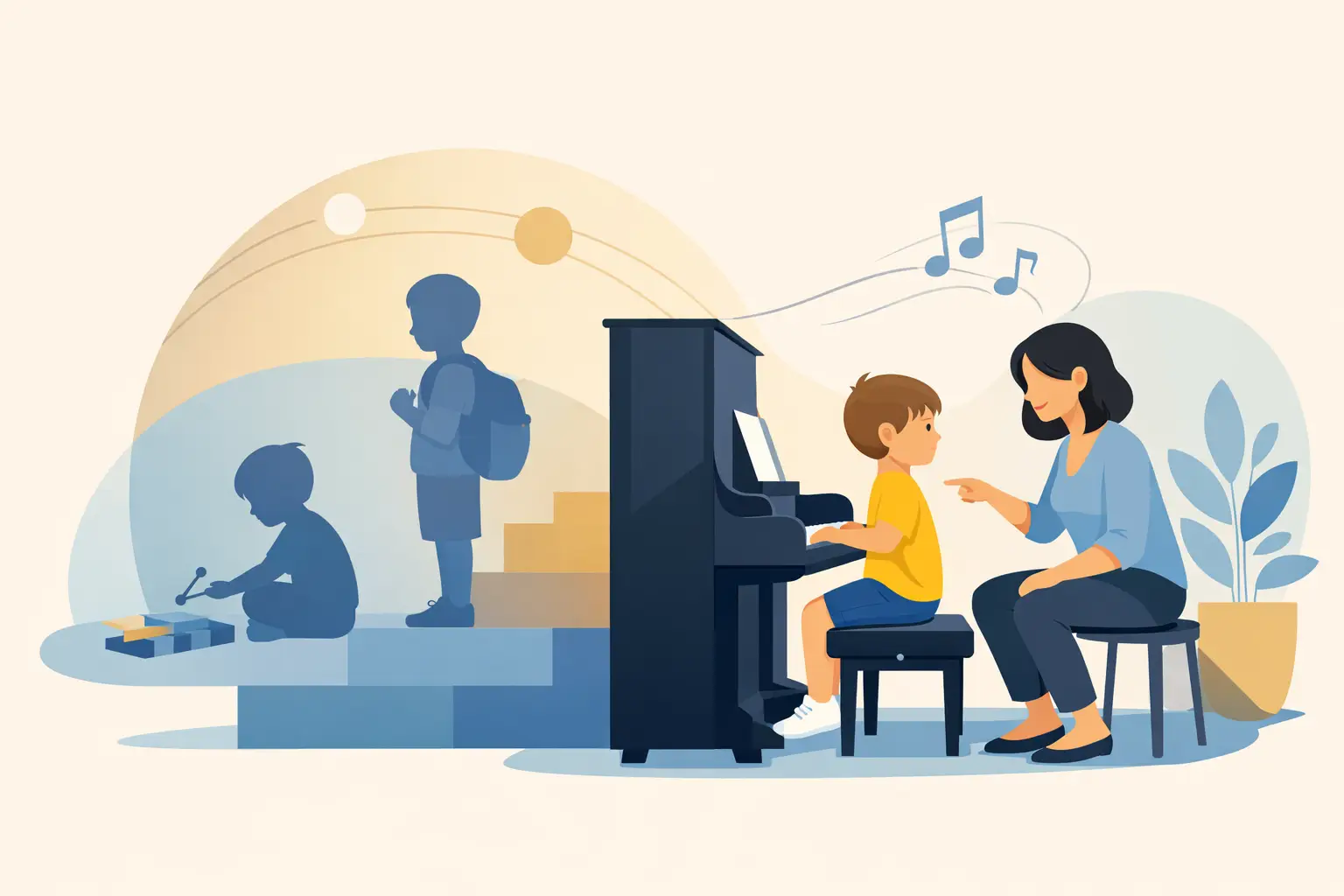
One child climbs onto the bench at four, bangs out a happy pattern, and begs to come back next week. Another is seven before they can sit still long enough to enjoy a full lesson. That is why the real answer to when should kids start piano is not one magic age. It is a mix of readiness, interest, attention span, and the kind of support they will have at home and in lessons.
For parents, this can feel confusing. You do not want to start too early and create frustration, but you also do not want to miss the best window for learning. The good news is that kids do not need a perfect start. They need the right kind of start.
When should kids start piano?
Most children are ready to begin piano lessons somewhere between ages 5 and 7. That range works well because many kids can follow simple directions, recognize patterns, use both hands with more control, and focus for short periods without feeling overwhelmed.
That said, age alone does not tell the whole story. Some four-year-olds are genuinely ready for a playful, beginner-friendly approach. Some six- or seven-year-olds need another season before lessons feel enjoyable. Starting at the right time is less about getting ahead and more about giving your child an experience that feels encouraging from day one.
If your child starts later, that is completely fine too. An eight-, ten-, or even twelve-year-old can make excellent progress, often because they understand instructions more quickly and practice more independently. There is no expired deadline for learning music well.
Signs your child is ready for piano lessons
Readiness usually shows up in everyday moments. If your child enjoys singing along to songs, tapping rhythms on the table, or finding notes on a keyboard, that interest matters. Curiosity is one of the best predictors of a strong start.
Attention span is another big piece. A child does not need to sit perfectly still for an hour, but they should be able to focus on one activity for around 10 to 15 minutes at a time with gentle redirection. Early piano lessons are often broken into short activities, but basic focus still helps.
Physical coordination also matters. Kids need enough hand strength and finger independence to press keys with control, and they should be able to tell left from right at least some of the time. They do not need advanced motor skills, but a little coordination makes lessons smoother and more fun.
Emotional readiness counts too. Can your child try something new without shutting down right away? Can they listen, attempt, and try again when something is hard? Piano is wonderful for building confidence, but the first steps are easier when a child can handle small challenges.
When starting too early can backfire
Parents often hear stories about very young children beginning music lessons at three or four and assume earlier must be better. Sometimes it is. Sometimes it absolutely is not.
If a child is not ready, lessons can start to feel like one more thing they are being asked to do correctly. Instead of building excitement, piano becomes a place where they hear reminders to sit up, use the right hand, count carefully, and practice again. Even a naturally musical child can lose interest if the structure arrives before they are developmentally prepared for it.
This does not mean young beginners should wait by default. It means the lesson style has to match the child. Younger students usually do best with movement, games, singing, short tasks, and lots of encouragement. If the teaching is too rigid or the expectations are too high, the timing can feel wrong even when the child has real potential.
The best age depends on the goal
One helpful way to think about when should kids start piano is to ask what you want piano to do for your child right now.
If the goal is exposure, joy, and a healthy introduction to music, a younger child can begin with a playful approach. If the goal is stronger note reading, more independent practice, and faster technical progress, waiting until five, six, or seven may create a better experience.
Families also have different schedules, energy levels, and expectations at home. A child who is technically ready but already overloaded with school and activities may not have the bandwidth to enjoy lessons. A child with a little more margin in the week may thrive sooner.
There is no prize for starting earliest. The win is finding the point where lessons feel exciting, manageable, and worth continuing.
What practice looks like at different ages
A lot of parents ask about age, but the better question is often whether the family is ready for the practice routine.
For younger beginners, practice is a team effort. A five-year-old may need a parent nearby to help them remember the assignment, stay on track, and keep the mood positive. That does not mean long practice sessions. It usually means short, consistent moments - maybe 5 to 10 minutes at a time - with encouragement and structure.
By ages 7 to 9, many kids can begin taking more ownership, though they still benefit from check-ins and reminders. Older beginners often move faster because they can read instructions, track progress, and understand cause and effect more clearly. Practice becomes less about supervision and more about consistency.
This is one reason some children flourish when they start a little later. They are not only ready for the instrument. They are ready for the routine that helps them improve.
Piano readiness by age
At ages 3 to 4, some children are ready for pre-piano style learning, but many are not ready for traditional private lessons. If they begin this early, lessons should be highly interactive and built around exploration, rhythm, listening, and fun.
At ages 5 to 7, many children hit the sweet spot. They can learn basic technique, note patterns, simple songs, and foundational musicianship while still enjoying imaginative, engaging lessons.
At ages 8 to 12, beginners often progress very well. They usually understand instructions more easily, practice with more independence, and enjoy the feeling of learning real songs sooner.
Teens can be excellent beginners too. In fact, they often benefit from a more goal-driven approach because they know what kind of music excites them and why they want to learn.
How to tell if your child is interested, not just curious
Lots of kids are curious about piano for five minutes. Real interest looks a little different. They come back to the keyboard without being asked. They ask questions about songs. They want to show you what they discovered. They notice music in movies, games, church, school, or the car.
You do not need deep commitment before the first lesson. Kids are allowed to be beginners. But if your child consistently lights up around music, that spark is worth paying attention to.
A good first lesson can also reveal a lot. Sometimes a child who seemed unsure becomes fully engaged once they are in the room with a warm, encouraging teacher. Sometimes a child who said they wanted lessons is not quite ready yet. That is useful information, not failure.
What parents can do to make the start successful
The first step is to keep expectations realistic. Early lessons are about building confidence, listening skills, coordination, and enjoyment. Progress matters, but so does the relationship your child is building with music.
It also helps to choose instruction that meets your child where they are. The best teachers know how to adjust pacing, personality, and goals based on the student in front of them. A child who needs extra encouragement should feel supported. A child who is eager and fast-moving should feel challenged in a healthy way.
At home, a simple routine helps more than pressure. A regular practice time, a quiet place to play, and enthusiastic support go a long way. Praise effort, not perfection. Celebrate tiny wins. That is how confidence grows.
If your child enjoys performing, that can become a powerful motivator too. Recitals, open mics, and low-pressure performance opportunities give lessons a bigger purpose. They help students feel proud of what they are learning and remind them that music is meant to be shared.
For many families in Allen and Frisco, that is exactly why a student-centered studio like Matt Burk Music Studio feels like such a strong fit. Kids are not just learning notes. They are building confidence, having fun, and growing into musicians in a supportive community.
So, when is the right time?
The right time is when your child is ready enough to enjoy the process, not just capable enough to begin. For many kids, that is around 5 to 7. For some, it is earlier. For others, later is the better choice.
If your child shows interest, can focus for short stretches, and seems excited by the idea of learning, it may be the perfect time to try. And if they are not quite there yet, waiting a little is not falling behind. It is setting them up for a better first experience.
Music has a way of meeting kids where they are. The goal is not to force the moment. It is to recognize it when it arrives and give your child a start that feels joyful, encouraging, and full of possibility.