
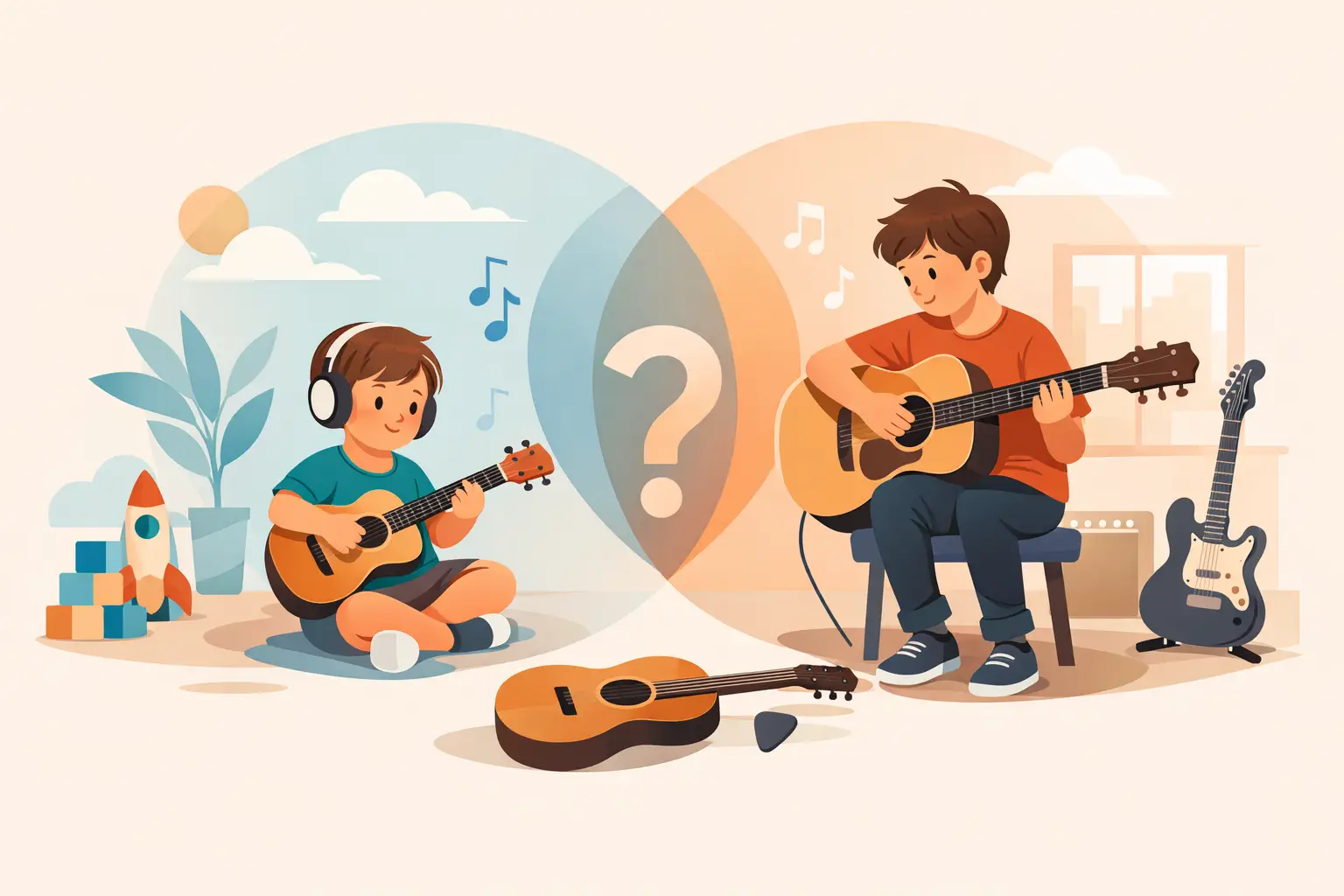
One parent asks at age five. Another waits until ten. Both are usually asking the same thing: when should kids start guitar if you want them to enjoy it, stick with it, and actually make progress?
The honest answer is that there is no single perfect age for every child. Guitar is one of those instruments that depends on physical readiness, attention span, motivation, and the kind of support a student has around them. Some kids are ready earlier than you might expect. Others do much better when they start a little later. The goal is not to start as early as possible. The goal is to start at the right time for your child.
When should kids start guitar lessons?
For many children, a great starting window is around ages 6 to 9. At that age, a lot of kids can focus long enough for a lesson, follow simple step-by-step instruction, and begin building the finger strength and coordination guitar requires.
That said, age alone does not tell the whole story. A focused six-year-old who loves music may be more prepared than an eight-year-old who is not interested yet. On the flip side, a child who starts at ten or twelve is not behind at all. In many cases, older beginners progress quickly because they can pay attention longer, understand instructions more clearly, and practice more independently.
So if you are wondering when should kids start guitar, think less about a magic birthday and more about readiness.
Signs your child is ready for guitar
The best first clue is interest. If your child keeps talking about guitars, pretending to strum, or getting excited when they hear songs with guitar, that matters. Motivation makes a big difference, especially in the early months when fingertips are getting used to the strings and basic skills still feel new.
Attention span is another big piece. A child does not need to sit still for an hour, but they should be able to stay engaged for a short lesson and respond to simple coaching. Learning guitar includes listening, repeating patterns, and trying again when something does not work the first time.
Physical size can matter, but it is not as simple as "small child means wait." What matters more is whether the student can comfortably hold an appropriately sized instrument and press the strings with reasonable control. A smaller guitar can make a huge difference for younger beginners.
Readiness also shows up in how a child handles small challenges. Guitar has a learning curve. Chords buzz. Fingers miss strings. Rhythms get mixed up. Kids who can laugh, reset, and keep going usually have a much better experience.
Is age 5 too young?
Sometimes yes, sometimes no.
Some five-year-olds are absolutely ready for a gentle, playful introduction to guitar. They may do well with short lessons, lots of encouragement, rhythm games, singing, and simple one-string or two-string activities. But many children that age are still developing the coordination and patience needed for steady progress on guitar specifically.
This is where parents can get tripped up. A child may love music at five but not be quite ready for formal guitar lessons. That does not mean music should wait. It may simply mean starting with an approach that builds musical confidence first, then transitioning into guitar as the child grows.
If a five-year-old is excited, coachable, and physically comfortable with a small guitar, it can work beautifully. If lessons feel frustrating right away, waiting a bit is not failure. It is good timing.
Ages 6 to 9: often the sweet spot
This is the range where many kids begin guitar successfully. They are often ready to understand basic lesson structure, remember simple practice routines, and enjoy measurable progress. They can learn chords, melodies, strumming patterns, and the early habits that lead to long-term confidence.
It is also a great age because fun still carries a lot of weight. Kids in this range usually respond really well when lessons combine clear goals with songs they recognize, encouraging instructors, and chances to share what they are learning. When learning feels rewarding, consistency gets much easier.
For families, this is often the point where music becomes more than a passing interest. A student starts to picture themselves as a guitarist, not just a kid trying something once.
Starting later is completely okay
A lot of parents worry they have missed the window if their child is older. They have not.
Starting at age 10, 12, or even later can be a fantastic choice. Older kids often understand cause and effect better. They can see how practice leads to improvement. They may have clearer musical tastes, stronger self-discipline, and more excitement about learning songs they actually love.
In fact, some students who start later move faster in the beginning because they can handle more detailed instruction and stay patient through repetition. They also tend to benefit from goal-driven lessons, especially when performance opportunities or band experiences give them something tangible to work toward.
There is no prize for being the earliest beginner. The win is finding the moment your child is ready to enjoy learning and build momentum.
What can make guitar harder for younger kids?
Guitar is a great instrument, but it does ask a lot from beginners. Pressing strings cleanly takes hand strength. Moving between notes and chords takes coordination. Keeping rhythm while strumming takes focus. For younger children, all three can feel like a lot at once.
That does not mean guitar is the wrong choice. It just means expectations should match the child. A younger beginner may need shorter practice sessions, smaller goals, and more patience while their hands and ears develop.
This is also why the right instructor matters so much. A student-centered teacher knows how to adjust the pace, celebrate small wins, and keep the experience positive while real skills are being built.
How to tell if your child should start now or wait
Ask a few simple questions. Does your child want to play, or do you want them to play? Can they follow directions for short periods? Can they handle beginner frustration without shutting down completely? Do they have access to an instrument that fits them well?
If most of those answers are yes, it is probably worth trying. If the answers are mostly no, waiting a little longer may actually lead to a better first experience.
A trial lesson can help take the guesswork out. It gives you a chance to see how your child responds to the instrument, the teacher, and the lesson format without feeling locked in. For many families, that first session answers more than any article ever could.
What parents can do to help early success
The biggest thing is to keep the pressure low and the encouragement high. Kids do best when lessons feel like a place where they can grow, make mistakes, and have fun. Praise effort, not just results. A child who hears "I love how you kept trying" builds staying power.
At home, consistency beats long practice sessions. Five to ten focused minutes done regularly can be far more effective than one long battle at the end of the week. Help your child create a simple routine, and let the routine feel normal rather than dramatic.
It also helps to keep the experience musical, not mechanical. Let them play songs they enjoy. Let them share what they are learning. If they have opportunities to perform in a low-pressure, supportive environment, confidence often grows much faster. That is one reason many families love community-based programs like Matt Burk Music Studio, where lessons can grow into jam sessions, live performances, and a stronger sense of belonging.
The best age is the age that fits your child
If you are still asking when should kids start guitar, the best answer is this: start when interest, readiness, and support line up. For many kids, that happens around 6 to 9. For some, it starts earlier with a playful introduction. For others, it clicks later and they take off.
You do not need a child prodigy. You do not need perfect practice habits on day one. You just need the right starting point, a teacher who knows how to meet your child where they are, and an environment that makes learning feel exciting.
A confident start in music is not about rushing. It is about giving your child the chance to discover what they can do, one song at a time.