
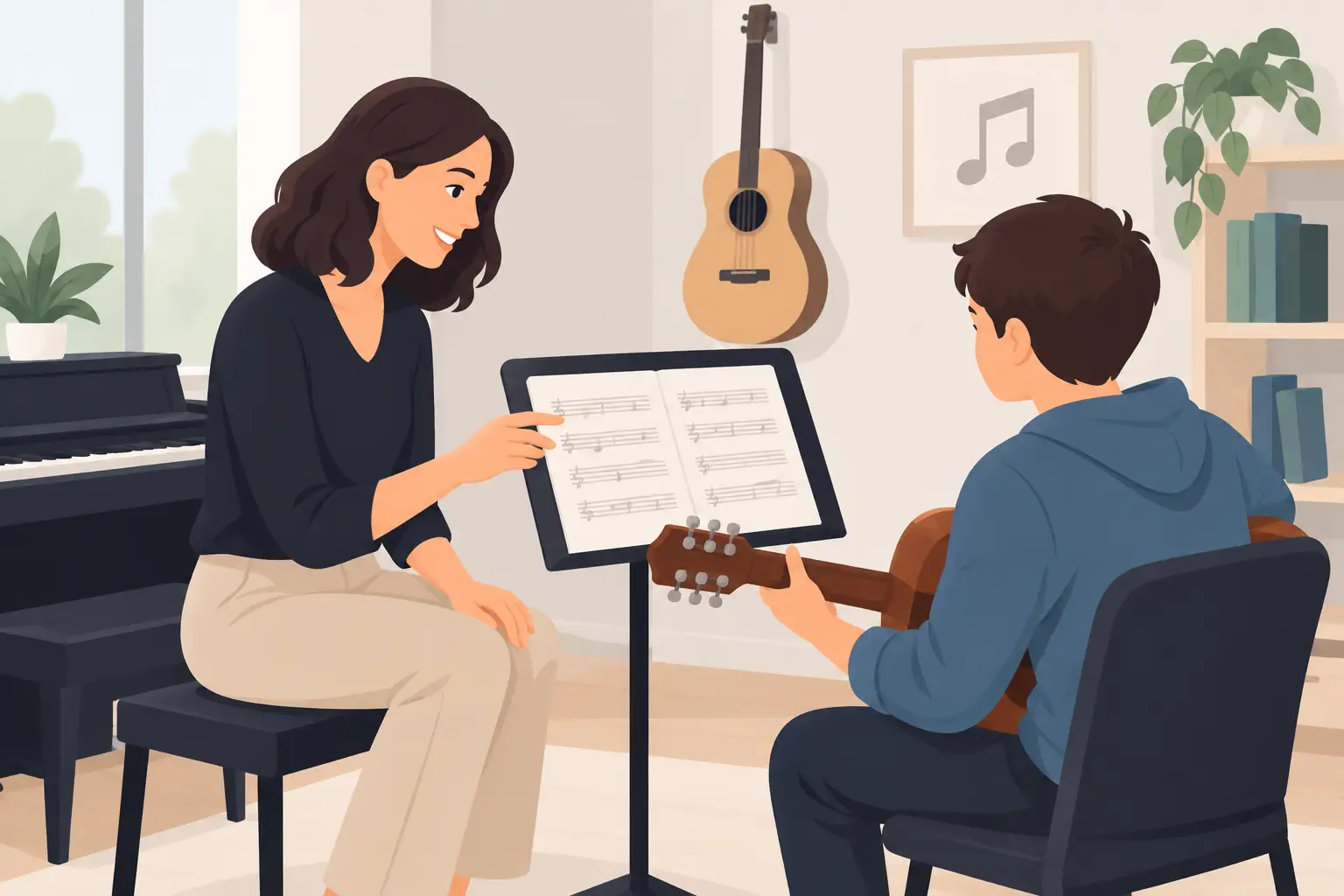
The first few minutes of a music trial lesson can change the way a child, teen, or adult feels about learning an instrument. Instead of walking into a room and being asked to prove what they know, you should feel welcomed, heard, and excited to make music.
If you are wondering what happens during a trial lesson, the short answer is this: you meet an encouraging instructor, talk about what you want from music, try a few activities tailored to your level, and get a real feel for whether lessons are the right fit. It is not a high-pressure audition. It is a chance to picture yourself or your child growing in confidence, having fun, and building skills week by week.
What Happens During a Trial Lesson?
A great trial lesson is personal from the start. Your instructor will want to learn who you are before deciding what to teach. For a young beginner, that may mean asking about favorite songs, artists, school activities, or whether they have ever tried an instrument before. For an adult, the conversation may focus on goals such as playing for relaxation, singing with confidence, joining a band, writing songs, or returning to an instrument after years away.
This conversation matters because there is no single reason people take music lessons. One student may dream of playing on stage. Another may want a creative outlet after work. A parent may be looking for an activity that helps a child gain focus, confidence, and a sense of accomplishment. Your lesson should begin with those goals, not with a one-size-fits-all plan.
The instructor will also ask practical questions. What days and times work for your family? Are you interested in private lessons, semi-private lessons, a band class, or music production? Do you have an instrument at home? None of these answers need to be perfect. They simply help create a starting point that fits your real life.
You Will Get to Make Music
The best way to know whether lessons feel right is to participate. During a trial, your instructor will usually guide you through a few simple, achievable activities based on your age, instrument, and experience level.
A beginning piano student might learn how to find a group of keys, create a steady beat, and play the first notes of a familiar melody. A first-time guitar player may learn how to hold the guitar comfortably, make a sound, and try an easy rhythm. A voice student may explore breathing, posture, and a short section of a song they enjoy. A drummer may learn a basic groove, while a future music producer may experiment with beats and sounds.
If you already have experience, the lesson can go further. You may play a song you know, work through a challenge that has been holding you back, or talk through the style of music you want to explore next. An experienced instructor can quickly identify strengths to celebrate and skills to develop, without making you feel judged.
The goal is not to cover everything in one session. It is to create a meaningful win. That might be one clean chord, a rhythm you can repeat, a lyric sung with more confidence, or the simple realization that music is more possible than you thought.
Your Instructor Will Learn How You Learn
Every student responds differently. Some children learn quickly through games and movement. Others want a clear routine and small, measurable steps. Some adults appreciate the structure of reading music, while others feel energized by learning songs first and building theory along the way.
A trial lesson gives the instructor a chance to notice what helps you engage. Are you excited by a favorite song? Do you learn best by watching, listening, reading, or repeating? Would a calm, patient pace build confidence, or are you ready for a bigger challenge?
This is especially valuable for parents. You are not just choosing an instrument or a time slot. You are choosing a teacher who can encourage your child, communicate clearly, and make progress feel rewarding. A child does not need to be naturally fearless or unusually talented to thrive in music. They need patient guidance, a positive environment, and regular opportunities to see that their effort is paying off.
Questions Are Part of the Lesson
You do not need to arrive knowing exactly what to ask. In fact, a trial lesson is the right place to ask the questions that may be keeping you from getting started.
Parents often want to know how much practice is realistic, when a child might be ready to perform, and what happens if schedules change. Adult students may wonder whether they are too old to begin, whether they need to read music, or how quickly they can learn songs they love. These are all fair questions, and the honest answer often depends on the student.
Progress is built through consistency, but it does not require perfection. A young student with a busy school schedule may begin with short, focused practice sessions several days a week. An adult with a demanding job may make meaningful progress with a practical plan that respects limited time. The right lesson program should support your goals without making music feel like one more source of pressure.
You can also ask about the bigger experience beyond weekly instruction. For many students, motivation grows when there is something exciting ahead: a jam session, an open mic night, a masterclass, a band experience, or a live performance. Matt Burk Music Studio gives students opportunities to develop those real-world skills in a supportive community, including performances at respected local venues.
What a Trial Lesson Is Not
A trial lesson is not a test, and nobody expects you to walk in prepared. You do not need to know scales, own expensive gear, or have a perfect singing voice. You do not need to decide that music will become your whole identity before you try it.
It is also not a promise that every student will want exactly the same path. Some students light up when they imagine performing onstage. Others are happiest learning songs at home, creating original music, or playing with friends. Both paths are meaningful. Your instructor can help you set goals that feel exciting and realistic for you.
There can be a little nervousness, especially for a child entering a new room or an adult returning to something they have not tried in years. That is normal. A kind teacher knows how to make the first moments comfortable. Often, the nerves fade as soon as the student makes their first sound or recognizes a song they know.
How to Get the Most From Your First Visit
Come as you are, but bring a few thoughts with you. Think about the music you enjoy, what you hope to gain, and any concerns you have about lessons. If you have played before, bring a song, method book, or question that shows where you are right now. If you are brand new, curiosity is enough.
Parents can help by letting their child answer questions when possible. It is helpful for the instructor to hear what the student enjoys and what makes them nervous or excited. At the same time, your observations matter. You know your child best, and a good teacher will welcome your input as you build a plan together.
After the lesson, take a moment to notice how you feel. Did your child leave smiling, talking about what they learned, or eager to come back? Did you feel encouraged instead of intimidated? Could you picture music fitting into your family’s routine or your own week? Those reactions often tell you more than any sales pitch.
Your first lesson does not need to answer every musical question. It only needs to open the door to what could happen next: stronger skills, more confidence, new friendships, favorite songs brought to life, and a chance to share your gifts with the world. Book a trial lesson, make that first sound, and give yourself permission to enjoy the beginning.