
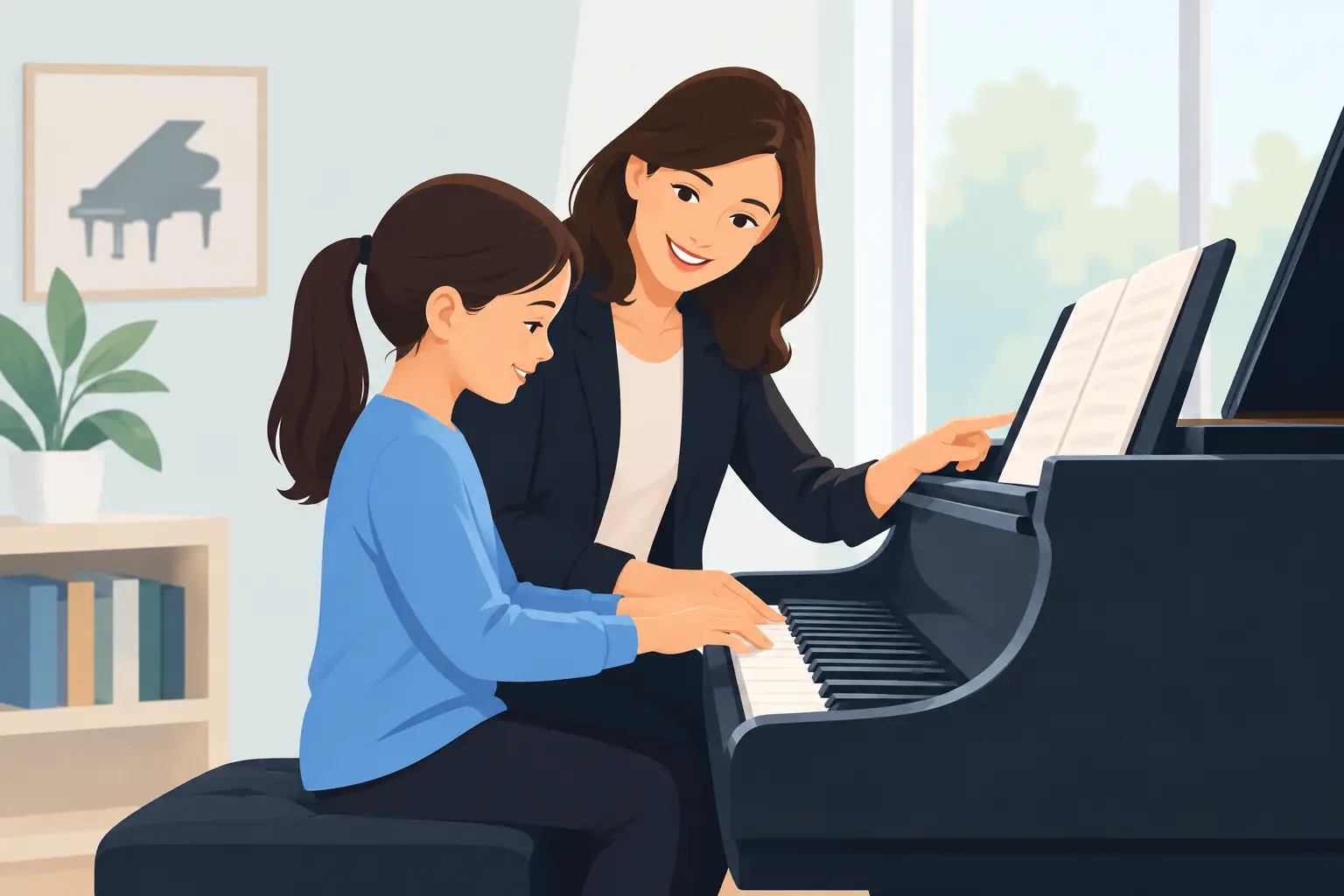
The first piano lesson can shape how a student feels about music for years. A great teacher can turn a shy child into someone excited to share a song, help a busy adult finally play the music they have always loved, or give a teen a creative outlet that feels completely their own. That is why piano teacher selection is about more than finding an instructor with open time on the calendar. It is about finding a guide who sees the student, understands the goal, and makes progress feel possible.
For families in Allen and Frisco, the best fit is rarely the teacher with the longest list of credentials alone. Experience matters, but so do communication, encouragement, lesson structure, and opportunities to use new skills in the real world. The right piano teacher helps students build technique and confidence at the same time.
Start With the Student's Goal
Before comparing teachers, get clear on what success would look like for the student. A young beginner may need a patient, playful introduction that makes practice feel manageable. A teen may want to learn favorite songs, write music, or prepare for an audition. An adult might be returning after decades away and need flexible lessons without pressure.
There is no single right reason to take piano lessons. The important thing is that the teacher takes that reason seriously. A student who wants to play pop songs should not feel as though every lesson is a detour through music they do not enjoy. At the same time, a student who dreams of classical repertoire needs a teacher who can develop the reading, technique, and musical expression that goal requires.
Ask a potential teacher how they personalize lessons. Listen for an answer that includes both the student's interests and a plan for growth. Fun matters, but students also need a clear path forward. The best lessons connect enjoyable music with the foundational skills that make more music possible.
What to Look for During Piano Teacher Selection
A warm personality is a strong start, especially for nervous beginners, but it should be paired with thoughtful teaching. During piano teacher selection, look for someone who can explain how they assess a student's current level, set goals, and adjust when something is not clicking.
A good teacher does not use the same script for every learner. Some students learn quickly by ear. Others thrive with visual patterns, written music, repetition, or movement. Children often need lessons broken into short, engaging activities. Adults may appreciate knowing why a technique works and how to practice efficiently between sessions. A teacher who notices those differences can prevent frustration before it takes hold.
It is also helpful to ask how progress is measured. “We will see how it goes” may be fine for a casual first conversation, but a quality program should be able to describe milestones. Those may include playing a complete song with steady rhythm, reading a new piece independently, using proper hand position, improvising over chords, or performing for an audience.
Credentials Matter, but Connection Matters Too
Training and teaching experience are valuable. A teacher should have a solid command of piano skills and enough experience to guide students safely through technique, repertoire, and musical challenges. If a student has advanced goals, such as competitions, auditions, or college preparation, specialized experience becomes even more important.
Still, the most accomplished performer is not automatically the best teacher for every student. Teaching requires listening, patience, encouragement, and the ability to break a difficult skill into small wins. A student may forget the name of a scale, but they will remember whether their teacher made them feel capable of learning it.
Pay attention to how the teacher speaks to the student during a trial lesson. Do they correct mistakes in a way that feels clear and kind? Do they celebrate effort without giving empty praise? Do they invite questions? These details reveal whether lessons will become a source of confidence or another place where a student feels afraid to get something wrong.
Ask About the Lesson Experience Beyond the Bench
Private piano instruction is the foundation, but it does not have to be the entire musical experience. Students often stay motivated when they can share what they are learning with others. Recitals, open mic nights, jam sessions, masterclasses, and collaborative classes can give piano students a reason to practice and a chance to feel proud of their work.
Performance opportunities are especially valuable because confidence grows through repetition. The first time a child plays for a room of people may feel big. With supportive coaching and regular chances to perform, that same child can learn how to manage nerves, recover from a small mistake, and keep going. Those lessons reach far beyond music.
Not every student wants to perform on a large stage right away, and that is okay. A strong studio offers gradual options, from playing for family to sharing at a small community event. What matters is that performance is treated as a skill to build, not a test students have to pass.
At Matt Burk Music Studio, students can grow from personalized lessons into a wider music community, with opportunities to perform, collaborate, and celebrate progress along the way. That kind of support helps students see themselves not just as people taking lessons, but as musicians with something worth sharing.
Consider Scheduling, Policies, and Family Support
The right teaching relationship needs room to grow, and practical details can make a major difference. Parents juggling school, sports, and family schedules need clear communication and reasonable options when life gets busy. Adult students need a program that respects work and family responsibilities instead of making missed lessons feel like failure.
Ask how scheduling works, what happens when a student needs to reschedule, and whether there are long-term contracts. Flexible policies do not mean lessons lack structure. They simply remove unnecessary stress so students can focus on learning.
Also ask how the studio communicates with families. Younger students make the best progress when parents understand what is happening in lessons and how to support practice at home. That does not mean parents need to become piano teachers. A simple routine, a clear practice goal, and encouraging words after a tough week can make a meaningful difference.
For adults, support may look different. They may want practice strategies that fit into 15-minute windows, help choosing music they genuinely enjoy, or permission to move at a pace that works for their life. The best teacher meets students where they are while still inviting them to stretch.
Use the Trial Lesson Wisely
A trial lesson is not just a chance to see whether the student can play a few notes. It is a chance to notice how the student feels when they leave. Are they smiling? Do they have a song or idea they want to try at home? Did they feel heard? Even a reserved student may show interest by talking about the teacher later or sitting down at the piano without being asked.
Parents should also leave with useful information. A teacher should be able to explain what they observed, suggest an appropriate starting point, and describe what the first few months could look like. Be cautious if the conversation is all sales pressure or vague promises. You deserve clear answers and a plan that feels right for your family.
If the first teacher is not the right match, keep looking. That is not a failure for the student or the instructor. Musical growth is personal, and the right connection can change everything.
Choose Progress That Feels Good
The strongest piano education balances challenge with encouragement. Students need enough structure to develop real skills, but they also need room to enjoy the process, explore music they love, and recognize their own improvement. A teacher who can create that balance gives students more than weekly lessons. They give them a place to grow brave, creative, and proud of what they can do.
When you find a teacher who combines expertise, kindness, clear goals, and a genuine belief in the student, give the relationship time to grow. One small song, one steady practice habit, and one encouraging lesson can become the beginning of a lifelong connection to music.