
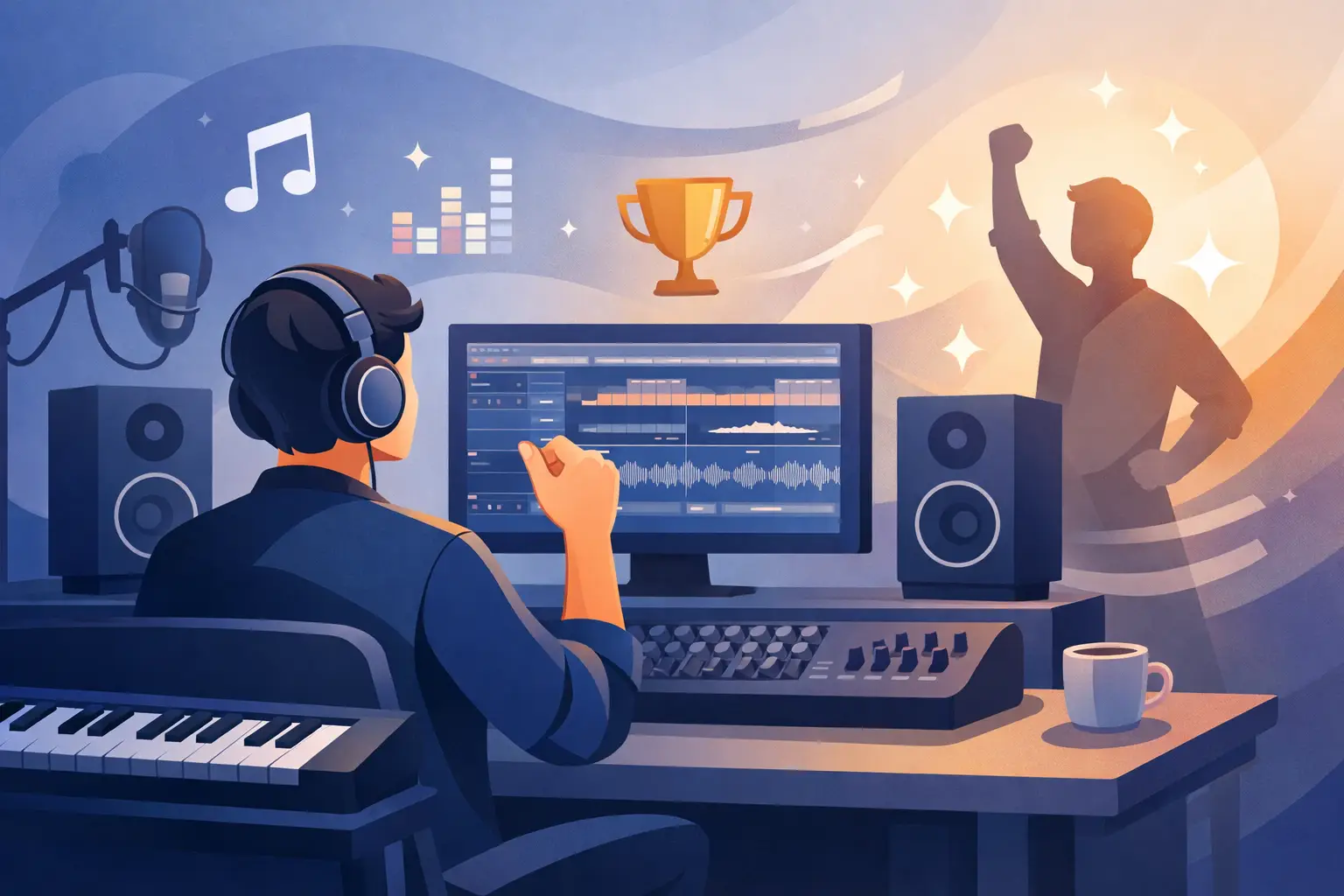
A song idea can start anywhere: a piano pattern played after school, a guitar riff recorded into a phone, a drum beat that will not leave your head. Music production gives that idea a path forward. Instead of letting a great musical moment disappear, students learn how to shape it into something they can replay, improve, and proudly share.
For beginners and experienced musicians alike, music production is not about owning the most expensive equipment or knowing every button in a recording program. It is about learning how to listen, make choices, and bring a personal musical vision to life. With the right guidance, students can move from "I have an idea" to "I made this."
What Music Production Really Teaches
Music production is the process of creating a finished recording. That may include writing a song, arranging instruments, recording vocals, building beats, editing performances, mixing levels, and preparing a track to share. Some students love every part of that process. Others start with one goal, such as recording an original song or making a beat, then discover new skills they enjoy along the way.
The best lessons make the process feel manageable. A younger student might begin by creating a simple beat, adding a melody, and learning how to record one instrument at a time. A teen who writes songs may focus on chord progressions, vocal recording, and building a full arrangement. An adult returning to music might want to finally capture songs that have lived in their head for years.
There is no single right starting point. The goal is to meet the student where they are and give them clear next steps that feel exciting rather than overwhelming.
It Builds Musical Skills You Can Hear
Production makes musicianship practical. Students hear how timing affects a groove, why one chord change creates more emotion than another, and how a quiet vocal can get lost behind a loud guitar. They begin making musical decisions with purpose.
That listening skill carries into every instrument. A piano student learns how to support a singer. A drummer learns how different beat choices change a song's energy. A vocalist gains a better sense of phrasing, harmony, and tone. Production does not replace instrument lessons. It gives students another way to use the skills they are building.
It Gives Students Ownership
Performing music written by someone else is valuable. Creating a track of your own is a different kind of confidence boost. Students choose the sounds, make revisions, solve problems, and hear their ideas take shape. Even a simple first recording can become proof that their voice matters.
That ownership is especially meaningful for students who are shy about performing at first. Recording gives them time to experiment privately, listen back, and improve without the pressure of getting everything perfect on the first try. Then, when they are ready, they have something real to share with family, friends, or a supportive musical community.
A Smart Way to Start Music Production
Many families assume they need a full home studio before production lessons can begin. Usually, they do not. A computer or tablet, beginner-friendly recording software, headphones, and a small microphone or MIDI keyboard can be enough for a productive start. What matters most is having a setup that a student can use consistently.
Starting simple has an advantage: fewer distractions. When students have access to hundreds of sounds and effects before they understand the basics, it is easy to spend an entire session scrolling instead of creating. A focused setup helps them learn the essentials first: tempo, rhythm, melody, recording, and balance.
As skills grow, equipment choices can grow too. A student who records vocals may benefit from a better microphone and a quiet recording space. A budding beat maker may want a MIDI controller with pads and keys. A guitarist may eventually add an audio interface to record with better sound quality. Those upgrades should support a real goal, not create pressure to buy gear for its own sake.
The Skills That Turn Ideas Into Finished Songs
Finishing a song is often harder than starting one. Most students can create an exciting eight-bar loop. Learning how to turn that loop into an intro, verse, chorus, bridge, and ending is where production instruction becomes especially helpful.
A strong lesson plan teaches students how to arrange a track so it develops over time. They learn to create contrast by adding or removing instruments, changing the rhythm, or adjusting the energy before a chorus. They also learn that space is part of the arrangement. A song does not need every instrument playing all the time to feel full.
Recording introduces another valuable habit: doing more than one take. Students learn to listen for details without becoming overly critical. The goal is not perfection. The goal is to make intentional choices. Sometimes the first take has the best feeling. Other times, a second take has better timing or clearer lyrics. Learning to evaluate those differences develops patience, focus, and musical judgment.
Mixing comes later, but it can be introduced in an approachable way. Students can begin by setting volume levels so each part is heard, placing sounds left or right, and using simple effects with care. They do not need to become professional audio engineers before they can make recordings they are proud of. A clean, balanced track that communicates the song is a meaningful accomplishment.
Why Personal Coaching Makes a Difference
Tutorials can teach a quick trick, but they cannot listen to a student's track and ask the question that moves it forward: What do you want this song to feel like? Personalized instruction turns scattered information into progress.
An experienced teacher can help a student choose a realistic project, learn the software without frustration, and build one skill at a time. They can also connect production to the student's musical interests. If a student loves pop, country, rock, worship music, hip-hop, or film scores, lessons can use that enthusiasm as a starting point.
At Matt Burk Music Studio, students can build production skills alongside private lessons, band experiences, jam sessions, and performance opportunities. That connection matters. A student might record a song they wrote in a lesson, play it with other musicians, refine it after hearing it live, and gain confidence each time they share their work.
Progress Looks Different for Every Student
For one student, progress may mean learning to record a clear vocal track without feeling intimidated by the microphone. For another, it may mean producing an original beat each week, completing a first full song, or creating a demo to bring to band class. Some students want a future in music. Others simply want a creative outlet that feels like their own.
Both goals are worth celebrating. Production lessons should have structure, but they should also leave room for curiosity. A student who is excited about a new sound, a lyric idea, or a favorite artist's arrangement is already bringing energy to the learning process. Great coaching channels that energy into skills they can keep using.
Parents often see the benefits beyond the recording itself. Students practice problem-solving when a track does not sound the way they expected. They learn persistence when they revise a section. They gain confidence when they play their work for someone else. Those are meaningful wins, whether the finished song stays in the family playlist or becomes the beginning of a bigger musical dream.
Make the First Project Small and Meaningful
The best first production project is rarely a ten-song album. It might be a 60-second instrumental, a favorite song cover, a beat with an original melody, or a simple recording of voice and piano. A project should be small enough to finish and personal enough to matter.
Finishing creates momentum. Once students know they can complete one track, the next project feels less mysterious. They begin setting bigger goals naturally: adding harmony vocals, recording live drums, collaborating with friends, or writing songs that are ready for a stage.
Every great producer, songwriter, and recording artist began with a first attempt. Give your musical ideas a place to grow, keep the process fun, and let each finished song remind you that your voice deserves to be heard.