
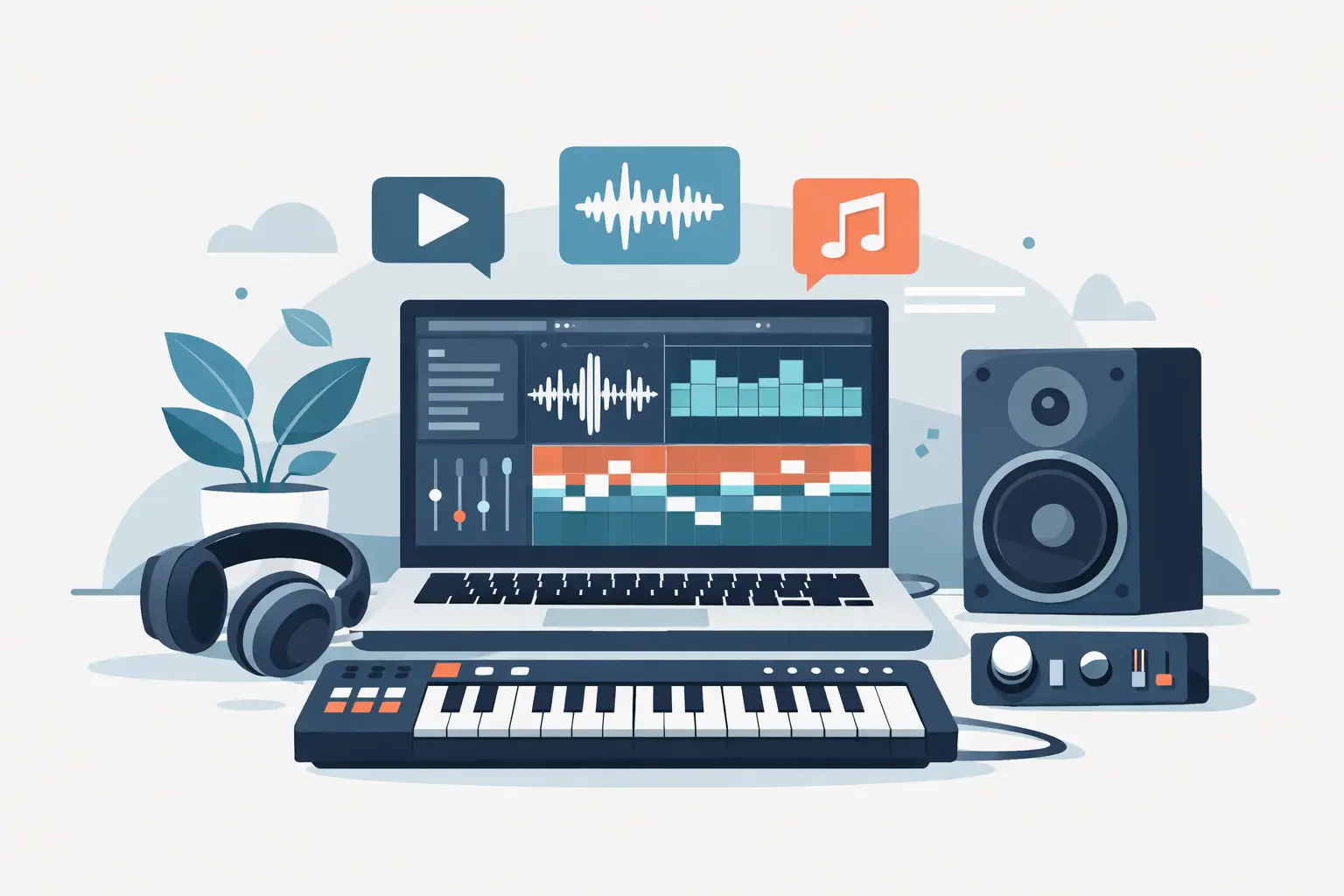
A great song idea can arrive in the back seat after school, during a late-night practice session, or while you are playing three chords on the piano. The exciting part is that you do not need a giant studio to turn that idea into music people can hear. This music production fundamentals guide focuses on the skills that help beginners move from a short musical spark to a finished track they are proud to share.
Production is not just about pressing buttons or owning expensive equipment. It is the process of making musical choices: choosing a tempo, shaping a sound, building sections, recording a performance, and helping every part work together. Young musicians, adult beginners, singers, instrumentalists, and songwriters can all learn it one clear step at a time.
Start With the Song, Not the Gear
A computer, a pair of headphones, and a beginner-friendly digital audio workstation, often called a DAW, are enough to begin learning. A DAW is the software where you record, arrange, edit, and mix music. GarageBand, BandLab, Logic Pro, Ableton Live, and similar programs all handle the same core jobs, even if their screens look different.
It is tempting to spend weeks comparing microphones, plugins, and speakers. Those tools can be useful, but they cannot replace a memorable melody, steady rhythm, or focused arrangement. Start with what you have, learn how to use it well, and upgrade when a limitation is actually getting in the way.
Before recording, decide what your song is trying to say or make people feel. Is it energetic, reflective, funny, intense, peaceful, or built for a crowd to sing along with? That answer guides choices such as tempo, instrument sounds, and dynamics. A clear direction keeps a beginner from adding parts simply because the software offers them.
Music Production Fundamentals Guide: Build a Strong Foundation
The fastest way to make productions sound more musical is to strengthen the same foundations used in lessons, rehearsals, and live performance: time, pitch, listening, and structure. Production software can correct small problems, but it cannot make a rushed rhythm feel confident or turn an unfinished idea into a complete song by itself.
Find the Pulse and Set the Tempo
Tempo is the speed of the song, measured in beats per minute, or BPM. A relaxed ballad might sit around 70 BPM, while an upbeat pop or rock song may land closer to 110 or 130 BPM. There is no single correct number. The right tempo is the one that lets the lyric, groove, and performance breathe.
Use a metronome or the DAW's click track when you record. At first, it may feel less natural than playing freely, especially for musicians who are used to practicing alone. Stay with it. A consistent pulse makes editing easier, helps layers line up, and prepares students to play confidently with a band.
If a part feels difficult at full speed, slow the tempo down and record a clean version. You can gradually increase it as your control improves. Slowing down is not falling behind. It is how strong musicians build accuracy.
Learn the Difference Between MIDI and Audio
Most beginner projects use both MIDI and audio. MIDI is performance information, such as which notes were played, how long they lasted, and how hard they were played. It can trigger a virtual piano, drum kit, bass, or synth. Because MIDI is editable, it is a helpful place to experiment with chord progressions and beats.
Audio is recorded sound. A vocal into a microphone, a guitar through an interface, or a live drum recording becomes audio. Audio captures the unique character of a player's voice, touch, tone, and phrasing. You can edit it, but it is less flexible than changing MIDI notes after the fact.
Neither is better in every situation. MIDI can help a new producer sketch an arrangement quickly. Audio often brings the human personality that makes a track feel alive. Many great projects begin with MIDI drums and piano, then add real vocals, guitar, bass, or percussion as the song develops.
Choose a Simple Song Shape
Listeners like having something familiar to hold onto. For many beginner songs, a verse, chorus, verse, chorus, bridge, final chorus structure works beautifully. The verse moves the story forward, while the chorus delivers the main idea or hook.
Start by creating a short loop with drums, chords, and a bass line. Once it feels good, do not copy and paste it for three minutes without changes. Remove an instrument in the verse, add harmony in the chorus, or introduce a new rhythm before the bridge. Small contrast keeps the listener engaged.
A useful question is, “What should grow here?” It might be volume, the number of instruments, vocal energy, or the emotional intensity of the lyric. Arrangement is how you guide that growth.
Record Performances That Feel Real
Good recordings begin before the record button. Tune the instrument, warm up the voice, choose a quiet space, and rehearse the most challenging phrase. If you are recording at home, turn off noisy fans when possible and keep the microphone away from bare corners that create distracting reflections.
Set recording levels carefully. You want a healthy signal that is easy to hear without clipping, which is digital distortion caused by recording too loudly. If the meter is hitting red, turn the input down and try again. A clean, slightly quieter recording gives you more room to work later.
Do not chase a perfect full take immediately. Record several passes, then listen for the version with the best combination of accuracy and feeling. A vocal with one tiny imperfection may be more compelling than a flawless take that sounds cautious. The goal is not to erase personality. It is to present it clearly.
For younger students, recording is also a powerful confidence-builder. Hearing yourself back can feel strange at first, but it teaches self-awareness in a positive, practical way. With patient coaching, students learn to notice what worked, identify one improvement, and celebrate real progress.
Make a Clear, Balanced Mix
Mixing is the stage where you balance the recorded tracks so the song feels organized and exciting. Beginners sometimes reach for effects first, but volume and panning should come before most other decisions. Turn tracks up and down until the important musical idea is easy to hear. Then use panning to place some sounds slightly left or right, creating space around the lead vocal or main instrument.
EQ changes the balance of frequencies. It can reduce muddiness in a busy low-mid range or add clarity to a vocal. Compression controls dynamic range, making loud and quiet moments more consistent. Reverb adds a sense of room or distance. These are useful tools, but more processing is not always better.
If the mix sounds crowded, try muting a part before adding another plugin. Often, the solution is arrangement rather than technology. A track with fewer well-chosen parts can sound bigger than one packed with competing sounds.
Check your mix at a comfortable volume on more than one listening system, such as headphones, a car stereo, and a small speaker. Do not make major choices after listening loudly for a long time. Your ears get tired, and tired ears make unreliable decisions.
Finish More Songs, Even the Small Ones
The habit that changes beginners into producers is finishing. A 45-second song with an intro, a clear middle, and an ending teaches more than ten exciting loops that never leave the project folder. Finishing teaches decision-making, patience, and the ability to hear what a song needs next.
Give each project a realistic goal. One week, produce an eight-bar drum groove with a bass line. Another week, record a chorus with two vocal layers. Later, create a complete two-minute song. Small milestones make the process feel manageable and give students visible evidence of growth.
Save versions as you work. If you make a bold change and dislike it, you can return to an earlier version instead of losing your progress. This makes experimentation feel safer, which is especially valuable when you are still learning what you like.
Learn Production by Making Music With Others
Music production can be a solo skill, but it grows faster in a supportive musical community. A singer may hear a melody idea differently after working with a pianist. A guitarist may discover that a simpler part serves the song better once drums and bass enter. Sharing work teaches communication, listening, and creative flexibility.
At Matt Burk Music Studio, production skills can connect naturally with private lessons, band experiences, and performance development. Students can strengthen the instrument or voice behind their recordings, learn how songs work in a group, and gain the confidence to share their music beyond their bedroom or practice room.
Your first production does not need to sound like a commercial release. It needs to sound like a real step forward: your rhythm, your choices, your musical voice. Pick one idea this week, give it a beginning and an ending, and let yourself enjoy the moment it becomes a song.