
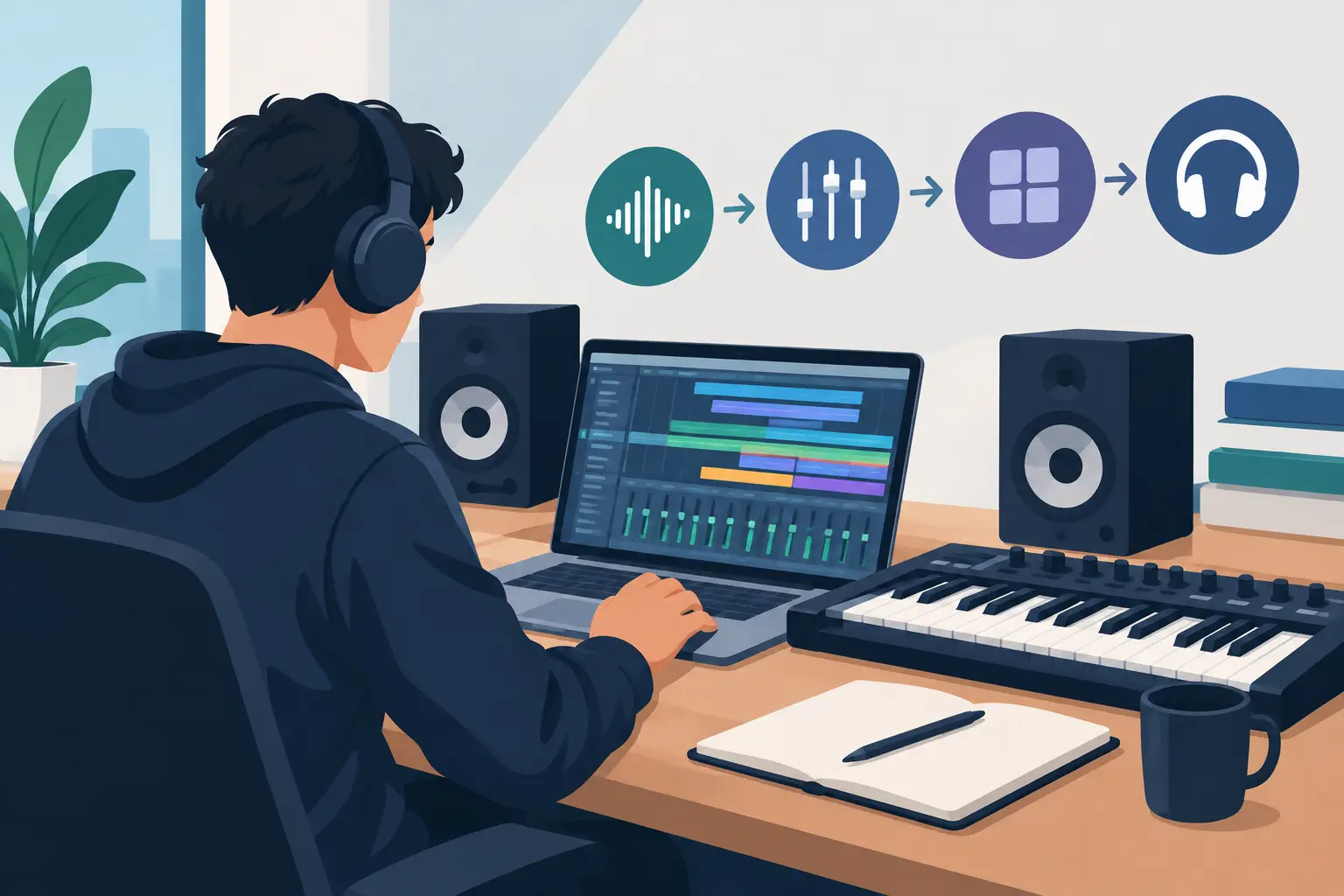
A great song idea can disappear fast when a student does not know how to turn it into a beat, a melody, or a finished recording. A thoughtful music production curriculum gives that idea a path forward. Instead of randomly clicking through software or copying a tutorial without understanding why it works, students learn how to create music they are proud to play for others.
For kids, teens, and adults, production is more than a computer skill. It is a creative outlet, a way to build confidence, and an exciting bridge between the music they love and the music they can make. The best learning experience keeps that excitement alive while giving each student clear, manageable next steps.
What a Music Production Curriculum Should Actually Teach
Music production lessons should not begin and end with learning where the buttons are. Software matters, but it is only the tool. A student who understands rhythm, song structure, sound choices, and basic recording techniques can make meaningful progress in almost any digital audio workstation.
A strong curriculum starts with the fundamentals students can hear right away. They learn how to build a steady beat, create a bass line that supports it, choose chords and melodies that fit together, and arrange those ideas into sections such as an intro, verse, chorus, and outro. These skills give beginners early wins while creating a solid foundation for more advanced work.
From there, students learn the production choices that make a track feel intentional. They explore tempo, MIDI, virtual instruments, loops, audio recording, layering, editing, panning, volume balance, and simple effects. The goal is not to overwhelm them with every feature in a program. The goal is to help them listen closely, make choices, and understand how those choices affect the emotional impact of a song.
A curriculum should also include songwriting and musicianship. A student does not need years of piano training to start producing, but learning basic rhythm, chord patterns, scales, and ear training makes the process far more rewarding. Those skills help students get past the frustrating moment when they can hear something in their head but cannot yet create it on the screen.
A Clear Path From First Beat to Finished Song
Beginning producers often assume talented artists sit down and instantly create a polished track. In reality, most music comes together through a repeatable process: gather ideas, develop the strongest ones, make decisions, revise, and finish. Students gain confidence when their lessons make that process feel approachable.
Early lessons may focus on creating a short beat or eight-bar musical idea. That first project teaches timing, basic navigation, and how to save work correctly. Small projects are valuable because they remove pressure. A young student can leave a lesson excited that they made something original, while an adult beginner can build momentum without feeling like they have to complete an album on day one.
As students progress, projects become more complete. They might arrange a full instrumental, record vocals or guitar, create a remix, produce an original song, or make background music for a video. Each project introduces new skills at the right time. For example, recording vocals creates a natural reason to discuss microphone technique, editing, and effects. Building a song’s chorus creates a natural reason to talk about energy, contrast, and arrangement.
Finishing matters. Many producers have folders full of promising ideas and very few completed songs. A supportive instructor helps students make the final decisions that turn a loop into a track. It may not be perfect, and that is okay. Completing a project teaches focus, problem-solving, and pride. The next song will be stronger because the student finished the last one.
Personalized Goals Make Production Lessons More Meaningful
There is no single right reason to learn music production. One student may want to create hip-hop beats, another may want to write pop songs, and another may be interested in recording their own voice and acoustic guitar. A teen may dream of releasing original music. An adult may simply want a creative hobby after work. The curriculum should make room for all of those goals.
That is why personalized instruction is so valuable. The core skills remain important, but the examples and projects can change based on what motivates the student. A student who loves electronic music can learn arrangement through a dance track. A drummer can use production lessons to develop beats and learn how live rhythm translates into programmed rhythm. A singer can learn to layer harmonies, comp vocals, and create demos that capture their style.
Parents should also look for lessons that meet children at an age-appropriate level. Younger students often thrive with short, hands-on projects and familiar musical styles. Teens may be ready to explore more technical concepts, develop an artist identity, and share their work with peers. Adults may prefer a focused plan that respects their time and connects directly to their favorite genres.
The right pace depends on the student. Some students love detail and want to spend time shaping every sound. Others are energized by fast creative results and benefit from learning advanced editing later. Great instruction does not force everyone into the same timeline. It helps each student keep growing without losing the fun that brought them to music in the first place.
Production Skills Grow Faster When Students Make Music With Others
Music production can feel like a solo activity, but it does not have to be. Collaboration teaches students how to listen, communicate ideas, accept feedback, and create something larger than they could make alone. Those are valuable musical skills and valuable life skills.
When a production student also plays an instrument, sings, joins a band class, or participates in a jam session, the connection becomes especially powerful. They begin to hear how a real drummer approaches a groove, how a guitarist creates texture, or how a vocalist changes a melody with phrasing. Then they can bring those ideas back into their productions.
Performance opportunities add another layer of purpose. Sharing a finished song at an open mic, playing an original piece for family, or contributing tracks to a group project gives students a reason to refine their work. Public performance is not required for every producer, but having welcoming opportunities available can help students realize that their music deserves to be heard.
At Matt Burk Music Studio, music production can be part of a bigger musical journey that includes private instruction, band experiences, community events, and real performance milestones. That community support helps students feel encouraged as they move from experimenting at home to sharing their gifts with the world.
What Families and Adult Students Should Look For
The best music production curriculum balances structure with creativity. If lessons are all theory, students may lose the joy of making music. If lessons are all experimentation, students may have fun but struggle to understand how to improve. Students need both: freedom to explore and a teacher who can explain the next useful step.
Look for instruction that includes hands-on projects, regular feedback, and realistic goals. Ask whether students can work in the styles they enjoy, whether they will learn foundational musicianship along with software, and how the instructor helps them finish songs. It also helps to know what equipment is needed at home. A simple, dependable setup is often enough to begin. Students do not need an expensive studio full of gear before they learn to create great ideas.
Convenience matters too. Families have busy schedules, and adults often need lessons that fit around work and responsibilities. Flexible scheduling and a welcoming first lesson remove a lot of pressure. The most important thing is getting started with guidance that feels personal, encouraging, and clear.
A student’s first beat may be simple. Their first mix may have rough edges. But every finished idea is proof that they are learning how to turn imagination into music. Give them a place to create, a teacher who believes in their progress, and a goal worth working toward. The songs will follow.