
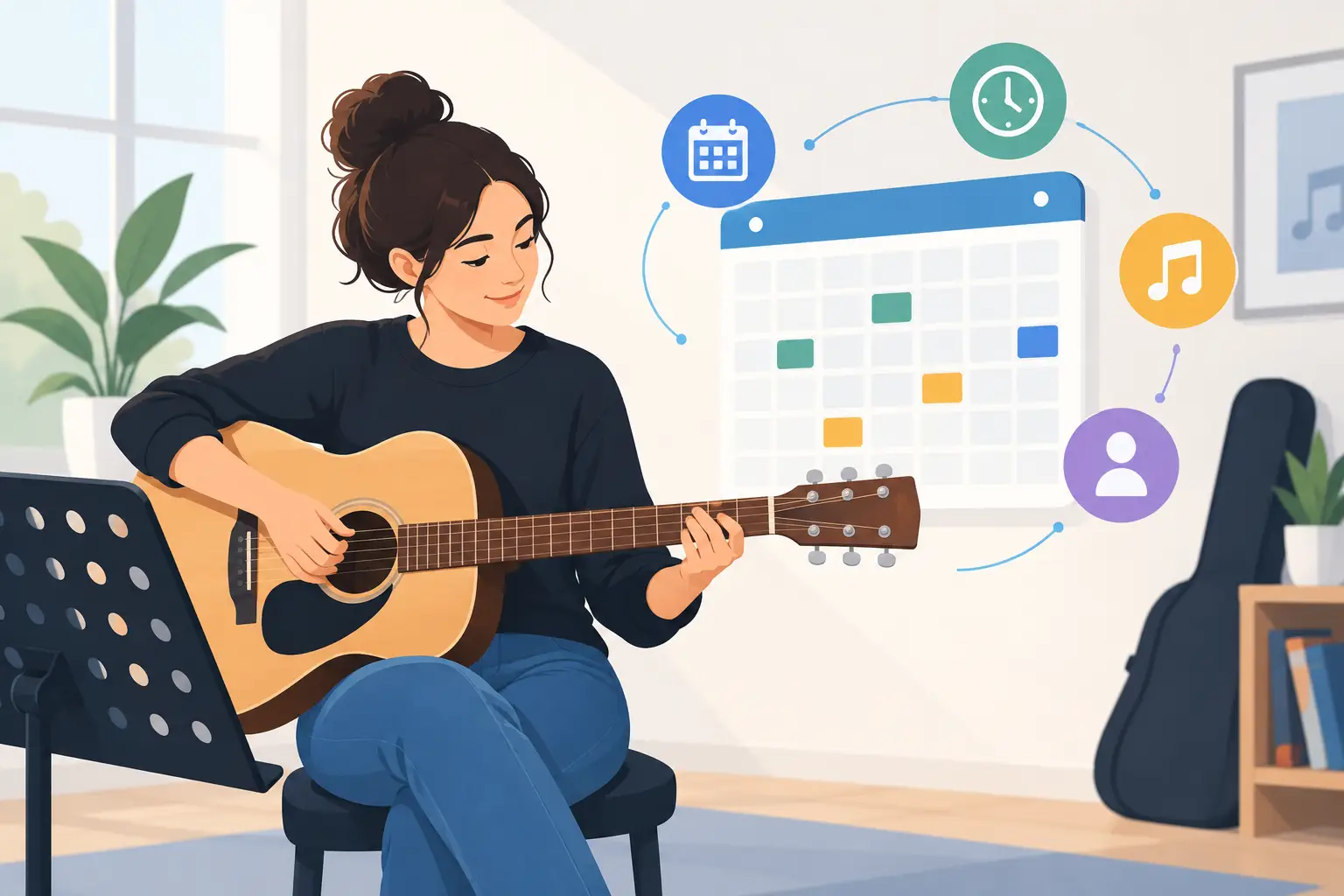
A missed piano lesson should not make a child feel like they have fallen behind. A work trip should not force an adult guitarist to give up on a goal they were finally excited about. That is how flexible lesson scheduling helps: it keeps real life from becoming the reason music stops.
For busy families in Allen and Frisco, calendars fill quickly with school events, sports, appointments, travel, and the occasional unexpected sick day. Adults have their own version of the same challenge: meetings run late, commutes change, and family responsibilities take priority. Music lessons work best when they provide structure without adding unnecessary pressure.
How Flexible Lesson Scheduling Helps Students Stay Consistent
Consistency matters in music, but consistency does not mean every week will look identical. It means a student continues to show up for their goals over time. When families have reasonable options to reschedule, they are more likely to protect that long-term commitment instead of treating one conflict as a reason to quit.
A student who misses one drum lesson because of a school event can return the next week feeling supported rather than embarrassed. An adult voice student who needs to adjust a lesson around a work deadline can keep building momentum instead of thinking, “I’ll get back to this someday.” Those small moments shape whether music becomes a lasting part of someone’s life.
Flexible scheduling also gives students a better chance to arrive mentally ready. Rushing from a game, a long school day, or a stressful meeting straight into a lesson can make it hard to focus. Moving a lesson when possible may mean the student walks in calmer, more prepared, and ready to enjoy making music.
Progress Is Built Over Months, Not Perfect Weeks
No musician has a perfect schedule all year. Holidays happen. Families travel. Kids get sick. Adults have demanding seasons at work. The goal is not to avoid every interruption. The goal is to have a lesson plan that can handle interruptions without losing the bigger picture.
When instruction is personalized, an experienced teacher can adjust the pace when needed. If a student had less practice during a hectic week, the lesson can focus on a smaller, achievable win: cleaning up a chord change, improving one section of a song, or finding a practice routine that works for the week ahead. That kind of coaching keeps confidence growing.
Flexible Scheduling Reduces Pressure for Parents
Parents already carry a lot of logistical responsibility. Adding a rigid lesson policy to an already crowded family calendar can turn an activity that should be joyful into one more source of stress. Flexible options help parents say yes to music because they know one scheduling conflict will not erase the value of their investment.
This matters especially for children who are still learning how to manage commitments. A student may have a band concert, a major test, a soccer tournament, or a family event in the same week. With support from the studio, parents can teach an important lesson: responsibilities can be managed without abandoning something meaningful.
That does not mean flexibility should become a reason to put lessons off repeatedly. Students still benefit from a regular weekly time and a familiar routine. For most families, the best approach is to choose a dependable lesson slot, then use rescheduling options when life genuinely gets in the way. Structure creates habits. Flexibility keeps those habits realistic.
More Choice Builds Student Ownership
Music is personal. Students make stronger progress when they feel that their lessons belong to them, not just to a calendar. Offering scheduling choices gives students and families a voice in how music fits into their lives.
For a teen balancing advanced classes and activities, that may mean choosing a lesson time that leaves room to decompress after school. For an adult beginner, it may mean finding a time when they are not exhausted from work. For a younger child, it may mean avoiding the hour when hunger and fatigue make every task feel harder.
The right time does not magically create motivation, but it removes an unnecessary obstacle. When students can arrive with energy, they are more likely to ask questions, try something challenging, and leave proud of what they accomplished.
At Matt Burk Music Studio, the goal is not simply to fill a weekly appointment. It is to help each student build skills, confidence, and a relationship with music that can grow for years.
Better Attendance Creates More Performance-Ready Musicians
Students who stay connected to their lessons are better prepared when a performance opportunity comes along. Whether they are learning a favorite song for an open mic night, preparing to join a band class, or getting ready to play for family and friends, progress feels more exciting when it has a purpose.
Flexible scheduling supports that readiness because it helps students avoid long gaps in instruction. During lessons, teachers can track what is improving, catch habits before they become frustrating, and help students set practical goals. Even when a schedule shifts, the musical plan can stay moving forward.
Performance development is not only about memorizing notes. Students learn how to recover from mistakes, listen to other musicians, communicate through a song, and trust themselves in front of an audience. Those skills grow through repeated, encouraging guidance. A scheduling model that keeps students involved makes those moments possible.
A Flexible Studio Still Needs a Clear Plan
The most helpful scheduling policies are generous and organized. Families should know how to communicate conflicts, what rescheduling options are available, and how to keep their student’s progress on track. Clear expectations protect both the student experience and the teacher’s ability to serve everyone well.
If your schedule changes often, be honest about it from the beginning. A good music school can help you choose a lesson format and time that fit your needs, whether that is private instruction, semi-private lessons, or a combination of lessons and group experiences. The best option depends on the student’s age, goals, availability, and preferred learning style.
It is also wise to protect practice time, even if it is brief. Flexible lessons work best when they are paired with flexible practice. Ten focused minutes on a busy day can be more valuable than waiting for a free hour that never arrives. A teacher can help students create a simple plan for the days when life is full.
Music Should Fit Into a Full Life
A packed schedule does not mean your child is too busy for music. It may mean they need a music program that respects their time while giving them something positive to look forward to each week. The same is true for adults who have spent years saying they will learn “when things slow down.”
Things may not slow down. But music can still have a place. With personalized instruction, encouraging teachers, and scheduling that allows for real life, students can keep moving toward the moment when they play a song they love, step onto a stage, or realize they are more capable than they thought.
Choose a lesson schedule that gives music a real place on the calendar, then give yourself permission to adjust when life calls for it. The next lesson can be more than another appointment - it can be the hour that reminds a student what they are capable of creating.