
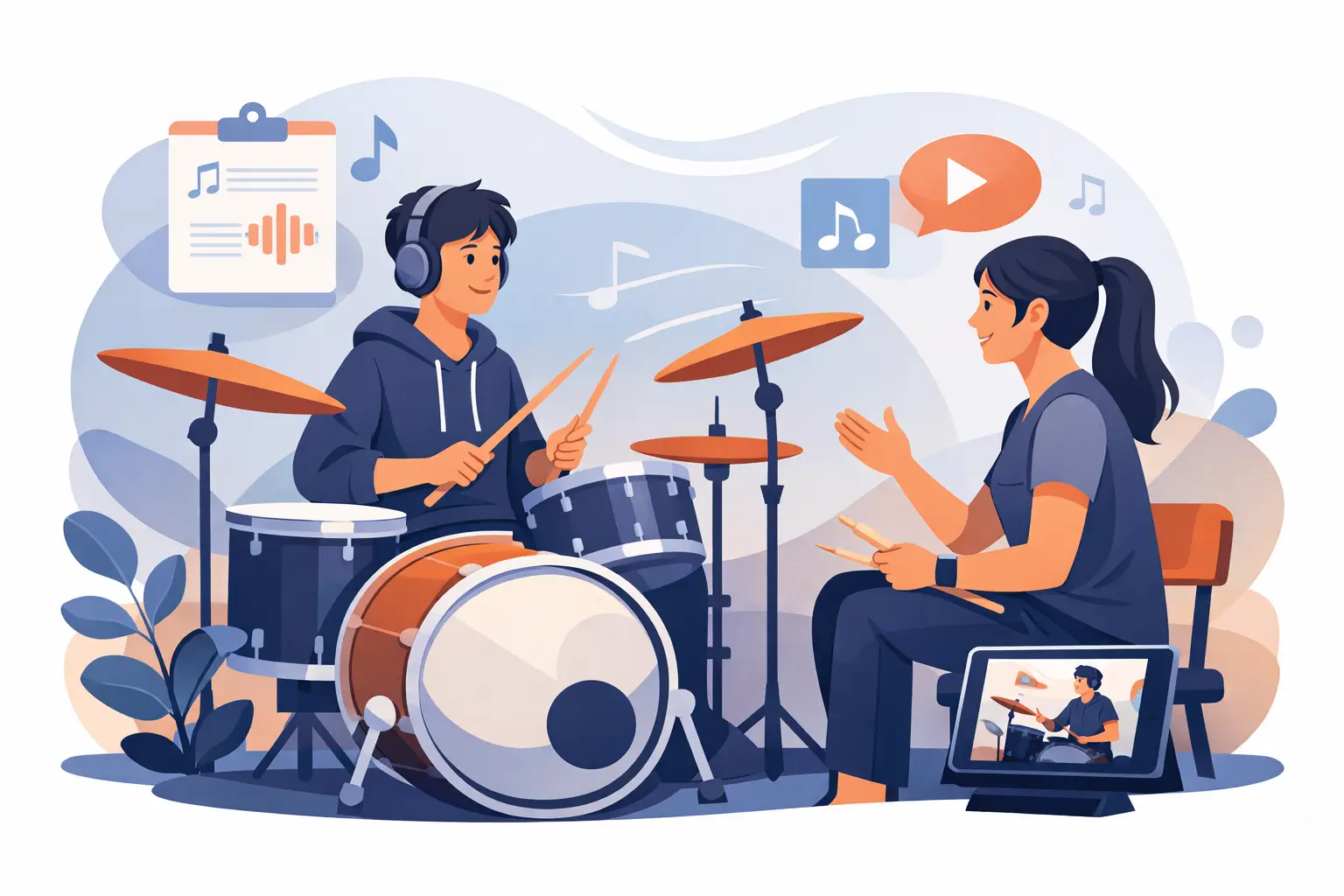
Some teens light up the second they sit behind a drum kit. Others are curious but hesitant, wondering if they are too busy, too late, or not naturally musical enough to start. The truth is that drum lessons for teens can be one of the best ways to build confidence, discipline, creativity, and plain old excitement - especially when lessons are shaped around the student instead of forcing every teen into the same box.
Drums are physical, expressive, and rewarding right away. A teen can learn a simple groove early on and feel that spark of success from the very first lesson. That matters. When students feel progress quickly, they are more likely to keep showing up, keep practicing, and keep believing they can grow.
Why drum lessons for teens work so well
Teen years come with a lot of pressure. School gets harder. Schedules get fuller. Confidence can rise and fall fast. Music gives teens something solid to build, and drumming offers a special kind of outlet because it blends focus with energy.
A good drum lesson does more than teach beats and fills. It helps a student listen closely, stay steady, and work through challenges one step at a time. For some teens, drums become a healthy release after a long school day. For others, it becomes the first activity where they feel fully themselves.
There is also a practical side. Drumming develops timing, coordination, memory, and consistency. Those skills carry into other parts of life. A teen who learns to break down a difficult rhythm, practice it slowly, and improve over time is learning a mindset that helps far beyond music.
What makes teens stay motivated
Not every teen wants the same music experience. That is where many programs miss the mark. Some students want to play rock songs as soon as possible. Some want to join a band. Some are drawn to worship music, jazz, pop, punk, or metal. Others are total beginners who just want to try something new without feeling embarrassed.
The best drum lessons meet teens where they are. If a student loves a certain style, that style should be part of the lesson plan. If they need more structure, the teacher can provide clear weekly goals. If they are shy, lessons can build skill and confidence at a pace that feels safe and encouraging.
This is also where personality matters. Teens respond best when they feel respected. They do not want to be talked down to, and they do not want every lesson to feel like another class at school. They need an instructor who can challenge them while still making the process fun.
What teens should learn in quality drum lessons
A strong lesson program balances fun with fundamentals. If lessons are only fun, students may hit a plateau quickly. If lessons are only technical, many teens lose interest. The sweet spot is a personalized mix of both.
In the beginning, most teens need to learn posture, stick grip, basic note values, counting, and simple grooves. Those building blocks matter because they make everything else easier later. Once that foundation is in place, students can start developing fills, reading rhythm notation, improving speed and control, and playing with more musicality.
Song-based learning is a big part of what keeps teens engaged. Playing along with music they actually enjoy helps them connect technique to real performance. It also gives them clear wins. Learning a groove is nice. Playing a song they recognize and love feels bigger.
Over time, a well-rounded student may also work on dynamics, independence between hands and feet, ear training, improvisation, and playing with other musicians. Not every teen needs the exact same path, and that is the point. Progress tends to happen faster when lessons are built around personal goals.
Private lessons, group playing, and performance
Private instruction is often the best place to start because it gives teens individual attention. The teacher can spot habits early, adjust the pace, and choose material that fits the student's personality and experience level. For beginners especially, that personal guidance can make the difference between feeling overwhelmed and feeling capable.
At the same time, teens often grow the most when they get opportunities beyond the lesson room. Playing with other musicians teaches listening, timing, communication, and adaptability in a way solo practice cannot. Performance opportunities can be just as valuable. They give students a reason to prepare, push through nerves, and experience the pride that comes from sharing music with others.
That is one reason many families look for more than a basic lesson studio. A teen may start with private drum instruction, but band experiences, jam sessions, and live performances can turn music from a weekly appointment into a real part of their identity.
How parents can tell if a drum program is the right fit
Parents do not need to be musicians to spot a good learning environment. Start by asking whether the lessons are truly personalized. A quality program should be able to explain how instructors adapt for beginners, busy teens, and students with different goals.
It also helps to look at the studio culture. Is it supportive, organized, and encouraging? Do students seem excited to be there? Are instructors experienced but approachable? Teens make the most progress when they feel challenged and comfortable at the same time.
Flexibility matters too. Families are juggling sports, school events, tests, travel, and changing calendars. A program can have excellent teachers and still be hard to maintain if scheduling is rigid. When a studio makes it easier to stay consistent, students are much more likely to keep momentum.
Parents should also consider whether the studio offers a path forward. Beginner lessons are important, but what happens after the first few months? Can a teen continue into higher-level playing, band settings, recording, or performance? When students can picture where their growth leads, they stay invested.
Common concerns about drum lessons for teens
One of the biggest worries parents have is noise. That is fair. Drums are not exactly subtle. But there are workable solutions, from practice pads to electronic kits to thoughtful practice schedules at home. A committed teacher can help families find a setup that supports progress without taking over the whole house.
Another concern is time. Teens are busy, and not every student will practice an hour a day. The good news is that steady progress does not require perfection. Consistent weekly lessons and focused practice, even in shorter blocks, can go a long way. What matters most is building a routine that a teen can realistically maintain.
Some families also wonder if their teen is starting too late. Usually, the answer is no. Teens often learn quickly because they can understand instructions, connect with musical goals, and take ownership of their progress. A motivated teenager can make excellent strides, even as a complete beginner.
Why the right teacher changes everything
A drum teacher is not just showing a student where to place their hands and feet. They are shaping the student's confidence. They are helping them push through frustration, celebrate progress, and keep going when a new rhythm feels awkward or hard.
That relationship matters a lot during the teen years. Students need someone who can teach clearly, set strong expectations, and still keep lessons positive. Encouragement is not fluff. It is part of how progress happens. Teens tend to work harder when they feel seen, capable, and supported.
At Matt Burk Music Studio, that student-first approach is a big reason families keep coming back. Teens are not treated like they need to fit one mold. They are guided toward their own goals, whether that means learning favorite songs, building serious technique, or preparing to perform with confidence.
When a teen is ready to start
Usually, the best time is when interest shows up. Not months later. Not after a perfect schedule appears. If a teen is tapping on desks, air-drumming in the car, or talking about wanting to play, that curiosity is worth taking seriously.
Starting lessons does not mean a family is signing up for pressure or perfection. It means giving a teen a chance to try something exciting with the support of a great teacher. Some students jump in fast. Others take a little time to warm up. Both are normal.
The important thing is finding a place where they can grow at their own pace, enjoy the process, and see what they are capable of becoming. A great drum lesson is not just about keeping time. It is about helping a teen find their voice, trust their effort, and feel proud of what they can create next.