
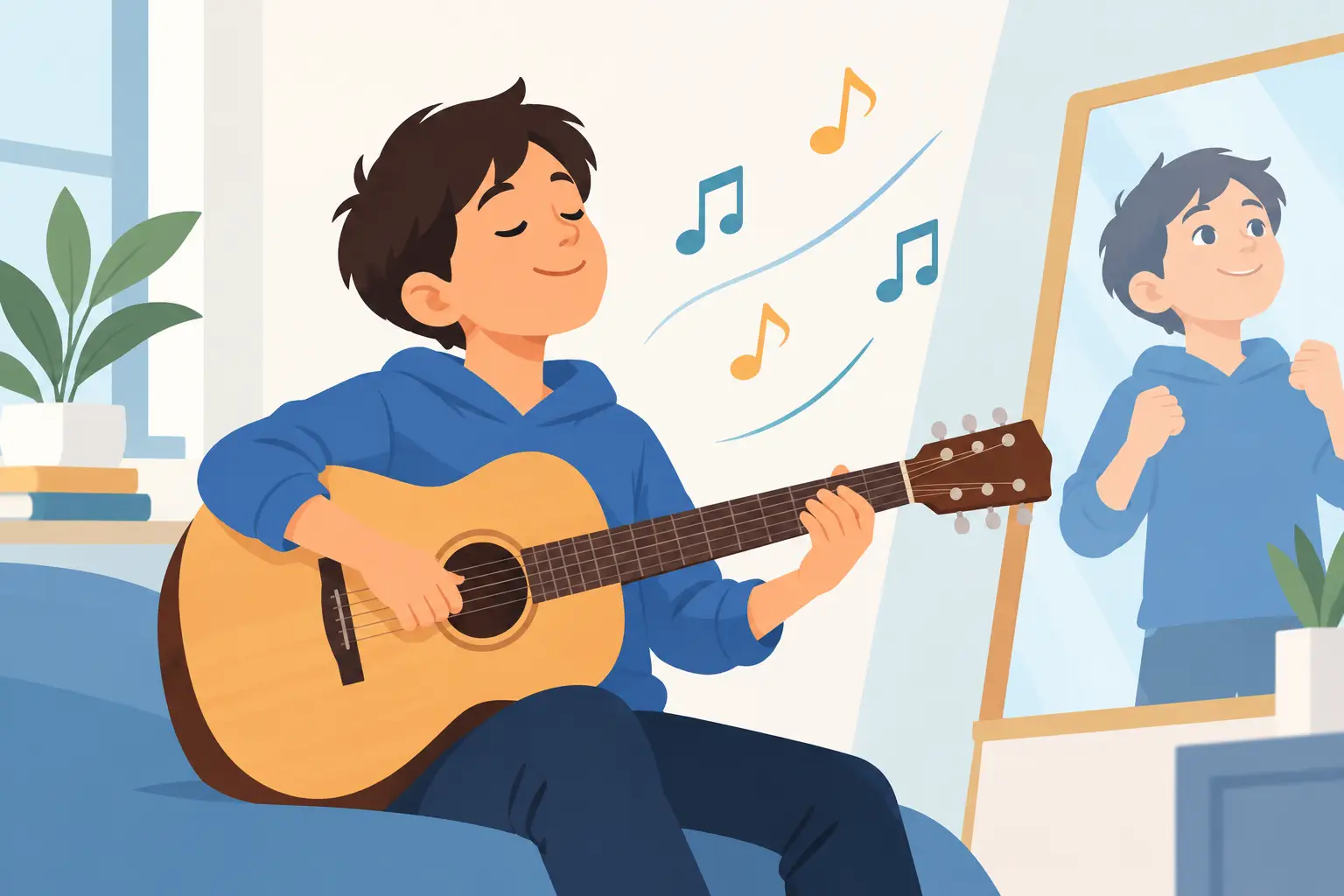
The moment a child gained confidence through music may not have looked dramatic at first. It might have been a child sitting a little taller after playing four clear notes, volunteering to sing the next line, or walking into a lesson with a song request instead of a worried look.
Those moments matter. Music gives children a place to try, make mistakes, improve, and be heard. With patient guidance and goals that feel exciting rather than overwhelming, a shy beginner can grow into a young person who trusts their own voice, ideas, and ability to keep going.
Why Music Builds Confidence Differently
Children build confidence when they can see that effort leads somewhere. Music makes that connection easy to feel. A student may struggle with a chord progression on Monday, practice it in small pieces during the week, and play it smoothly at the next lesson. That is real proof: “I could not do this yet, and now I can.”
Unlike a single test or a single game, music offers many ways to succeed. One child may feel proud of remembering a rhythm. Another may light up when they write a lyric, learn the opening of a favorite song, or make it through their first performance. The path is personal, which is especially helpful for kids who do not thrive under one-size-fits-all expectations.
Music also gives children ownership. They are not just being told what to think or repeat. They are making choices about sound, style, expression, and goals. When a student says, “I want to play that song,” and then works toward it with an encouraging teacher, motivation becomes confidence.
Small Wins Come Before Big Applause
Parents sometimes picture confidence as a child stepping onto a stage without nerves. That can happen over time, but confidence usually starts much smaller. It begins with the courage to try one note, then another. It grows when a child learns that a missed note is not a disaster and that practice is not punishment.
A great music lesson creates room for those small wins. The instructor sets a challenge that is reachable, celebrates genuine progress, and adjusts when a student needs a different approach. A beginner should not be pushed through material that feels impossible just to keep up with a rigid curriculum. At the same time, they should not stay in their comfort zone forever.
That balance matters. A child needs enough support to feel safe and enough challenge to discover what they can do. When lessons are personalized around the student’s interests and pace, progress feels rewarding instead of intimidating.
Mistakes Become Part of the Process
Many children are afraid to make mistakes in front of others. Music gives them a healthy way to practice recovering. If a student loses their place in a song, they can stop, laugh, find the beat, and begin again. If a guitar chord buzzes or a piano scale slips, the teacher can show them what to change without making them feel embarrassed.
This is a powerful lesson that reaches far beyond music. Children learn that mistakes are information. They show us what to practice next. Over time, that mindset can help a child speak up in class, join a team, take on a new hobby, or try something challenging without giving up at the first stumble.
How a Child Gained Confidence Through Music and Community
Private practice is valuable, but confidence often grows faster when children realize they are part of a musical community. Seeing other students learn, perform, and cheer each other on helps a child understand that everyone starts somewhere.
Jam sessions, band classes, open mic nights, and group workshops create low-pressure chances to participate. A student who is not ready for a solo may feel comfortable playing a simple rhythm alongside others. A young singer may begin by sharing one chorus with a group before taking on a full song. Each experience expands what feels possible.
The right environment makes a big difference. Children need adults and peers who celebrate effort, not just perfection. They need to know they will be treated kindly if they are nervous. When the room feels supportive, performing stops being a scary test and becomes a chance to share something they have worked hard to create.
Performance Has a Purpose
A performance goal gives practice meaning. Instead of practicing only because a parent says it is time, students can connect their effort to a moment they are excited about: playing for family, joining a band, performing at an open mic, or stepping onto a respected local stage.
Performance should be introduced thoughtfully. Some students are eager to be in the spotlight right away. Others need more time, and that is okay. Forcing a terrified child onto a stage can make music feel stressful. Giving them a clear, gradual path toward performance can make it empowering.
A child might first play for their instructor, then for a parent in the lesson room, then for a small group of students. Later, they may be ready to perform at a community event. The goal is not to erase nerves completely. Even experienced musicians feel nervous sometimes. The goal is to show students that they can prepare, take a breath, and do meaningful things even when they feel a little shaky.
What Parents Can Do at Home
Parents do not need musical training to help confidence grow. The most helpful support is usually simple, consistent, and encouraging. Ask your child what they are working on and let them show you, even if it is only ten seconds of a song. Notice effort specifically: “Your hands looked more relaxed today,” or “You kept going when that part was hard.”
Try not to turn every practice session into a correction session. Children need room to explore and enjoy their instrument. If practice has become a daily battle, it may be time to talk with the instructor about shorter practice goals, favorite songs, or a different routine. Sometimes ten focused, positive minutes are more effective than thirty frustrated ones.
It also helps to avoid comparing children to siblings, friends, or viral videos online. Musical growth is not a race. One student may learn quickly by ear while another reads music with care. One may be bold onstage but need help with steady practice. Confidence grows when a child feels seen for their own progress.
Choosing a Lesson Experience That Helps Kids Grow
The instructor-child relationship matters just as much as the instrument. Look for a teacher who can build skills while keeping lessons fun, who listens to your child’s goals, and who knows how to make challenging material manageable. A great teacher does not simply point out what went wrong. They help students understand what to try next.
It is also wise to ask about performance opportunities and the studio culture. Does the program offer ways for students to play with others? Are beginners welcomed? Is there a clear path from first lesson to live performance? The best experience combines individual attention with chances to build courage in a real community.
At Matt Burk Music Studio, students can explore piano, guitar, voice, drums, bass, ukulele, music production, and more while receiving personalized coaching and opportunities to perform. A free trial lesson gives families a friendly way to see what kind of instruction helps their child feel comfortable, capable, and excited to learn.
Confidence is not something a child either has or does not have. It is built one brave attempt at a time. Give your child a place to make music, be encouraged, and share their progress, and you may be surprised by how much of their voice they are ready to bring into the world.