
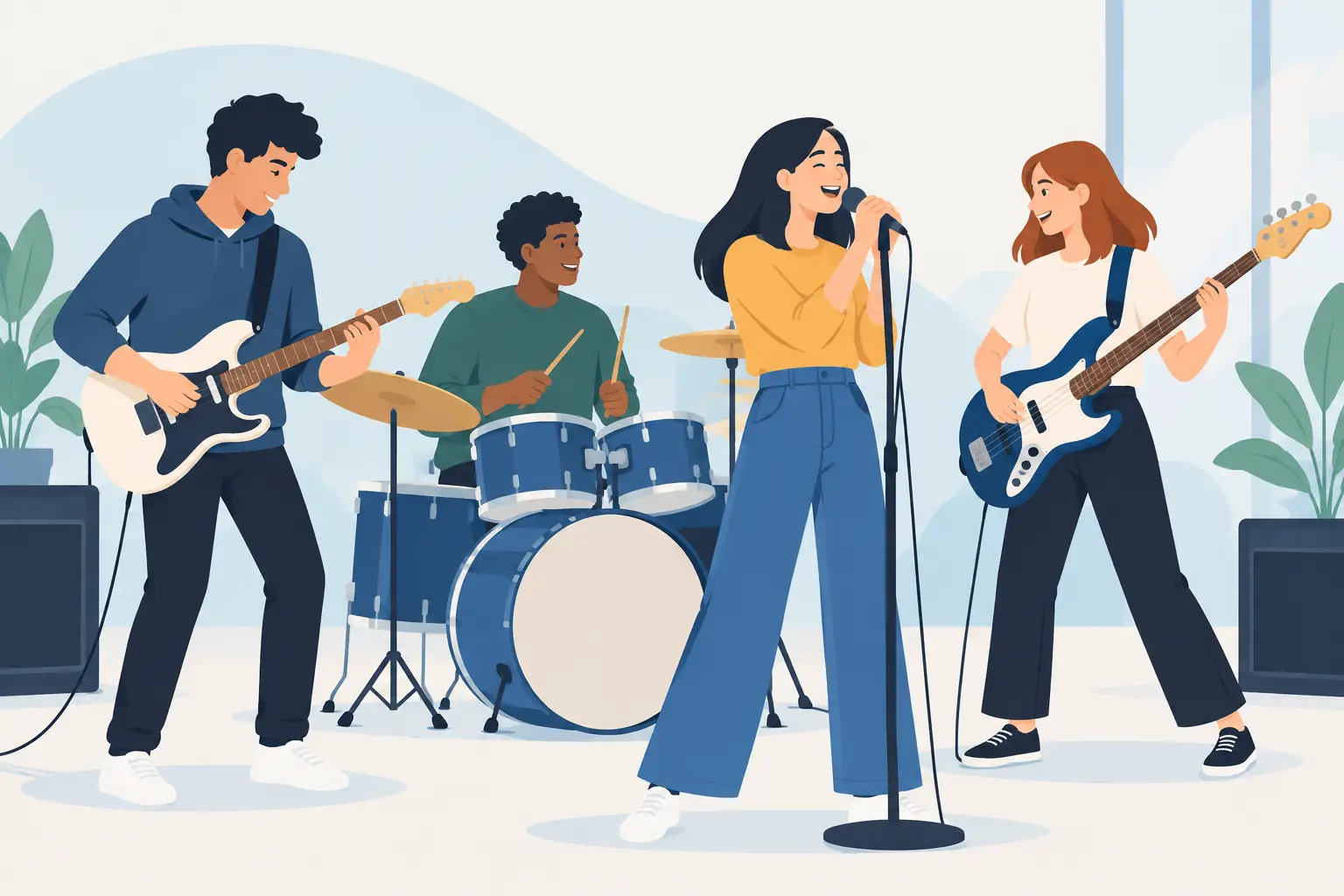
A student can learn chords, scales, and songs in a private lesson. But the moment they count in a tune with a drummer, listen for a bass line, and help a band land on the final beat together, music takes on a whole new purpose. Band classes give musicians the exciting chance to turn individual skills into real songs, real teamwork, and real confidence.
For kids, teens, and adults in Allen and Frisco, joining a band can be the motivation that makes practice feel meaningful. It is not about being perfect before you start. It is about learning how to contribute, growing at your own pace, and experiencing the joy of making music with other people.
What Happens in Band Classes?
A great band class is a guided rehearsal experience where students learn to play together under the direction of an experienced instructor. Rather than simply showing up and running through songs, students develop the practical habits that make a group sound connected: listening, keeping time, communicating, recovering from mistakes, and supporting one another.
Students may play guitar, bass, drums, piano, keyboard, or sing, depending on the group and the song selections. Instructors help each musician understand their role. A guitarist might learn when to play a full chord progression and when to leave space. A vocalist may work on entering confidently after an instrumental intro. A drummer learns to drive the song while following the group instead of playing alone.
Song choices should feel motivating and appropriate for the players involved. That may mean recognizable rock and pop songs, current favorites, or classics that teach essential skills. The goal is not to force every student into the same mold. The goal is to help each player become a dependable, expressive part of the group.
Why Playing With Others Builds Faster Growth
Private lessons remain an excellent place to build technique, learn music theory, and work toward personal goals. Band classes add a different kind of learning that cannot be fully recreated alone at home.
When students play in a group, they discover that timing is more than a metronome exercise. They feel what it means to hold a steady groove so everyone else can rely on them. They learn to watch for cues, adjust their volume, and stay focused even when another musician makes a mistake. These are musical skills, but they are also life skills: responsibility, awareness, patience, and teamwork.
Band settings also give practice a clear destination. Instead of asking, “Why do I need to work on this part again?” students know their preparation affects the entire group. That accountability can be especially helpful for young musicians who need a fun, positive reason to stay consistent between lessons.
For adult students, playing with others can be a refreshing way to reconnect with music. Many adults assume they need years of experience before joining a group. In reality, a supportive, well-matched band environment can help them gain comfort much faster than waiting until they feel completely ready. Most musicians never feel completely ready at first. They grow by participating.
Band Classes Build Confidence That Lasts
Confidence does not come from avoiding difficult moments. It comes from working through them with the right support.
In a band, students learn that a missed note does not have to stop the song. They can keep the beat, find their place, and come back in. That ability to recover is one of the biggest confidence builders a musician can develop. It replaces the fear of mistakes with a practical mindset: keep listening, keep going, and trust what you have practiced.
Students also learn that their contribution matters. The simplest bass line can make a song feel complete. A steady drumbeat can hold the entire group together. A single harmony can lift a chorus. When musicians hear how their part supports the band, they begin to see themselves as capable performers rather than students waiting for permission to be good.
That sense of belonging matters, too. Music can be personal, but it is also deeply social. A band gives students a place to make friends, celebrate progress, and share a common goal. For many young musicians, rehearsal becomes the highlight of the week.
The Difference Between a Jam Session and a Guided Band
Casual jam sessions can be fun, especially for experienced players who already know how to follow chord changes and communicate musically. But newer musicians often need more structure to feel successful. Without guidance, the loudest or most advanced player can unintentionally take over, while others become unsure of what to do.
A guided band class creates a better starting point. Students are placed with peers who have compatible skill levels and goals. The instructor chooses or adapts material so every musician has a meaningful role. Rehearsals are organized, yet still fun. There is room for creativity, but students also receive clear feedback on the skills that will help the group improve.
This balance is valuable because every player develops differently. One student may have strong rhythm but need help with stage presence. Another may sing confidently but be new to working with a live drummer. A skilled instructor notices those details and coaches students toward the next achievable step.
From Rehearsal Room to the Stage
Performance is often where band learning becomes unforgettable. Preparing for a live audience teaches students how to manage nerves, organize their equipment, start and end songs together, and stay present when the room is full of energy.
A performance does not need to feel intimidating. When students have rehearsed consistently, understand their parts, and know they have their bandmates beside them, stepping onstage can become a proud milestone. Families get to see the effort behind the music, and students get to experience the thrill of sharing a song they built together.
At Matt Burk Music Studio, students can grow beyond weekly instruction through band experiences, jam sessions, open mic events, and opportunities to perform at respected local venues. These moments help turn musical goals into memories that students and families carry with them long after the applause ends.
Who Is Ready to Join a Band?
Many parents wonder whether their child needs to reach a certain level before participating. The honest answer is that it depends on the group. A student should be able to play or sing a few basic parts with some consistency and be ready to listen, practice, and work as part of a team. They do not need to be an advanced musician.
The same is true for teens and adults. A band is not just for the person who already knows every solo. It is for the student who wants a goal, enjoys the sound of live music, and is willing to improve one rehearsal at a time. The right class meets musicians where they are while giving them something exciting to work toward.
Before joining, it helps to consider the student's instrument, current experience, musical interests, schedule, and comfort level. A thoughtful placement process matters. The best group is not necessarily the most advanced one. It is the group where a student feels challenged, supported, and eager to return.
How to Help Your Musician Get the Most From a Band Class
The best preparation is simple: encourage steady practice and a positive attitude. Students do not need marathon practice sessions. Short, focused time with their assigned songs can make a major difference. Listening to the original recording, reviewing difficult transitions, and practicing with a metronome or backing track can help students arrive ready to contribute.
Parents can support younger musicians by treating rehearsal like a team commitment. Being on time, bringing the right instrument and materials, and practicing the agreed-upon parts shows respect for everyone in the group. Just as important, celebrate effort. Ask what song they are working on, what felt easier this week, or what they are excited to perform.
For adult musicians, give yourself permission to be a beginner in a group setting. You do not have to compare your first rehearsal to someone else's years of experience. Show up prepared, stay curious, and enjoy the process. The confidence will follow the repetition.
A band can begin with a few chords, a simple beat, and a room full of nervous excitement. With caring coaching, regular rehearsal, and a chance to perform, those small beginnings can become something powerful: musicians who know they can listen, lead, recover, and share their gifts with the world.