
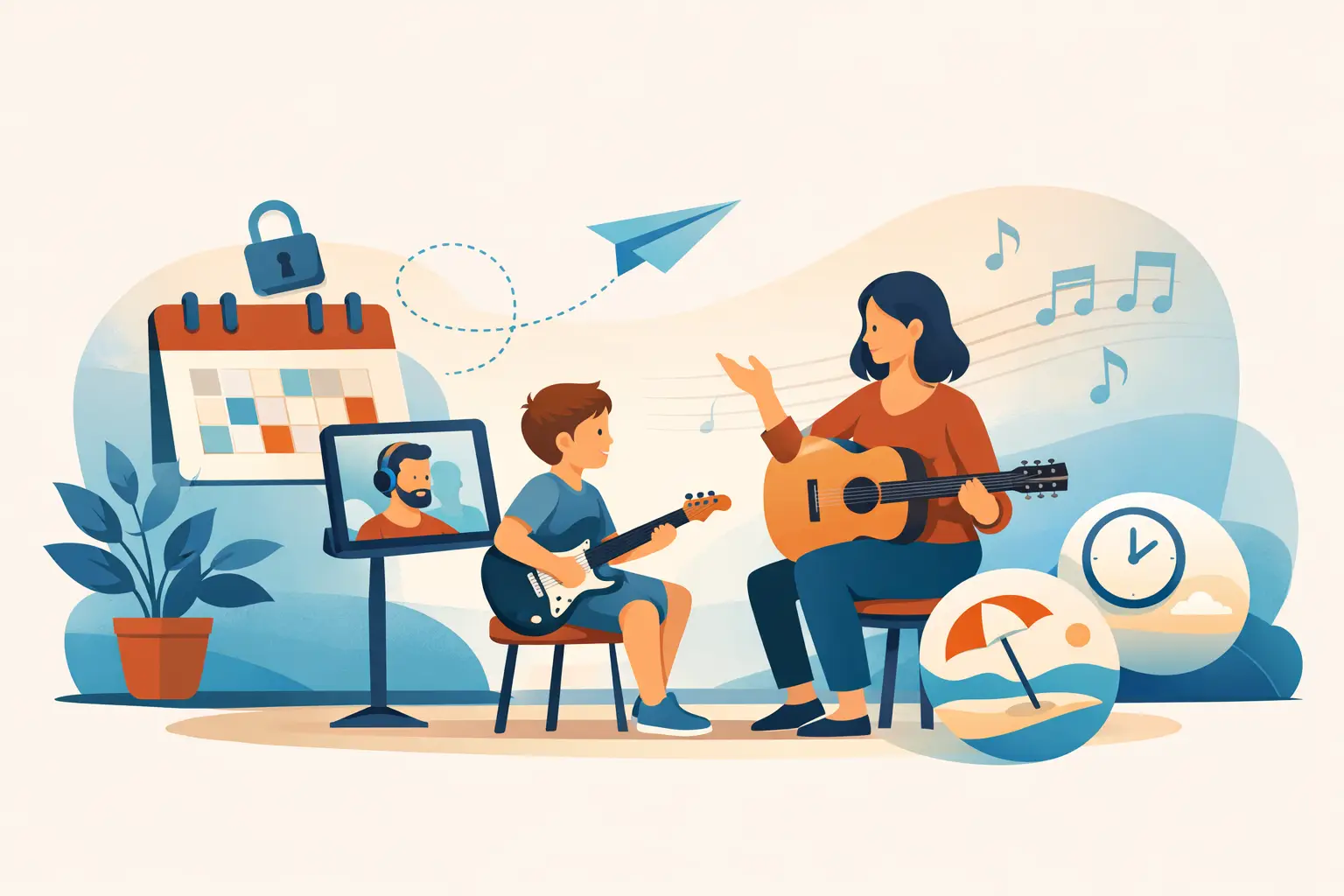
You should not have to sign away a semester of your life just to try piano, voice, drums, or guitar. For many families and adult students, no contract music lessons make it easier to start, stay motivated, and keep music feeling exciting instead of stressful.
That flexibility matters more than people think. Kids get busy. Work schedules shift. Interests grow and change. Sometimes a student wants to test the waters with ukulele before moving to guitar, or start with private lessons and later join a band class. A rigid contract can make that feel complicated. A student-first lesson model makes it feel possible.
What no contract music lessons really mean
At the simplest level, no contract music lessons mean you are not locked into a long-term commitment just to get started. You can begin lessons, see how the fit feels, and continue because the experience is valuable, not because paperwork says you have to.
That does not mean the lessons are casual or unstructured. Great instruction still depends on consistency, clear goals, and regular practice. The difference is that commitment is earned through progress, encouragement, and a positive experience. Students keep showing up because they can hear improvement, feel supported, and enjoy the process.
For parents, this can remove a major barrier. Signing a contract for a child who has never taken lessons can feel like a gamble. For adults, it can be even more personal. Plenty of adults want to learn music but hesitate because they are not sure how lessons will fit with work, family, and everything else already on the calendar. Flexibility lowers that pressure.
Why families and adults look for no contract music lessons
Most people are not avoiding commitment because they do not care. They are avoiding commitment because they want the right fit.
A seven-year-old beginner may need a teacher who knows how to keep lessons fun while building strong fundamentals. A teen vocalist may want help preparing for auditions or performances. An adult beginner may want to learn favorite songs at a comfortable pace without feeling like they are back in school. Those are very different goals, and families want room to choose a program that actually supports them.
No contract music lessons make that first step easier because they reduce risk. Instead of worrying about being stuck, students can focus on what really matters. Does the teacher connect well with the student? Is the lesson pace right? Does the student leave feeling encouraged? Can the schedule work week after week?
Those early questions are important. When they are answered well, retention usually takes care of itself.
Flexibility helps students stay longer
This sounds backward at first, but it is often true. The less trapped students feel, the more likely they are to continue.
When lessons are built around the student instead of the contract, motivation tends to be healthier. Students stay enrolled because they are reaching goals. Parents keep bringing their kids because they can see growth in skill and confidence. Adults continue because lessons become a bright spot in the week, not another obligation.
There is also a practical side. Life in Allen and Frisco can move fast. Between school activities, sports, work travel, family events, and traffic, schedules do not always cooperate. A studio that offers flexibility and reasonable rescheduling support gives students a better chance to keep momentum without feeling punished by normal life.
That does not mean flexibility solves everything. Progress in music still comes from regular attendance and practice. But flexible policies can protect that progress when real life gets messy.
No contract does not mean no standards
This is one of the biggest misconceptions around no contract music lessons. Some people hear “no contract” and assume the lessons must be less serious. In a strong studio, the opposite can be true.
The best programs combine flexibility with direction. Students still need individualized goals, instructor feedback, skill-building, and accountability. A beginner pianist may be working on rhythm, note reading, and posture. A guitar student may be building chord fluency and strumming control. A voice student may be developing breath support and stage confidence. Those outcomes do not happen by accident.
What changes is the relationship. Instead of asking students to commit first and hope the experience delivers, the studio delivers first. Trust grows from there.
What to look for in no contract music lessons
Not all flexible lesson programs are created equal. If you are comparing options, look beyond the words “no contract” and pay attention to how the whole experience is built.
Start with personalization. Good lessons are not one-size-fits-all. A child beginner, a teen performer, and an adult hobbyist need different teaching approaches. The best studios take time to understand goals, learning style, musical interests, and pace.
Next, look at the environment. Students grow faster when they feel safe, encouraged, and challenged in the right ways. That is especially important for beginners and kids who may be nervous. A welcoming teacher can make the difference between a student who gives up quickly and one who lights up every week.
Then consider opportunities beyond the lesson room. Performance opportunities, jam sessions, masterclasses, and community events can turn music from a private hobby into something students really live. For many learners, that is where confidence takes off. It is one thing to practice at home. It is another to share a song on stage and realize, “I can actually do this.”
Finally, pay attention to support. Flexible scheduling, clear communication, and a smooth onboarding process matter. Families are busy. Adult students are busy. The easier a studio makes it to start and stay consistent, the better the experience tends to be.
The trade-off: freedom works best with a plan
No contract music lessons are a great fit for many students, but freedom works best when it is paired with intention.
If a student signs up with no real goal, skips lessons often, and rarely practices, the lack of a contract will not create progress. In some cases, a family may mistake flexibility for optional participation. That can lead to slow results and frustration.
The better approach is to treat lessons seriously while appreciating the flexibility. Show up regularly. Communicate schedule changes early. Set goals that feel exciting and realistic. Maybe that goal is playing a first recital piece, joining a band, writing an original song, or simply getting comfortable with the basics after years of wanting to start.
When students have both freedom and a plan, they usually do very well.
Why this model is especially helpful for beginners
Beginners often need the most encouragement and the least pressure. That is true for kids and adults.
A child may be curious about drums but not yet know if it is the right instrument. An adult may have wanted to sing for years but feel nervous about taking the first lesson. No contract music lessons create a lower-pressure entry point. Students can try, learn, and build confidence without feeling like one decision has to map out the entire year.
That first stage matters. Early wins are powerful. Learning a simple song, keeping a beat, playing a recognizable chord progression, or performing for family at home can create real momentum. A flexible program gives students room to discover whether they love music lessons while they are already making progress.
A better question than “Do I have to commit?”
The more useful question is this: “Will this help me or my child grow?”
That growth can look different for every student. For one person, it is technical skill. For another, it is confidence. For another, it is finally having a creative outlet after a long workweek. Music lessons can do all of that when they are personalized, supportive, and consistent.
That is why no contract music lessons appeal to so many families and adult learners. They remove unnecessary friction at the start, then make space for a stronger kind of commitment - the kind built on trust, progress, and enjoyment.
At Matt Burk Music Studio, that student-first approach matters because music should feel like an opportunity, not a trap. When lessons are fun, focused, and flexible, students are much more likely to keep going, keep growing, and share their gifts with the world.
If you are considering lessons, give yourself permission to start without overthinking the long term. The right fit often becomes obvious once a student feels supported, sees progress, and starts having fun.