
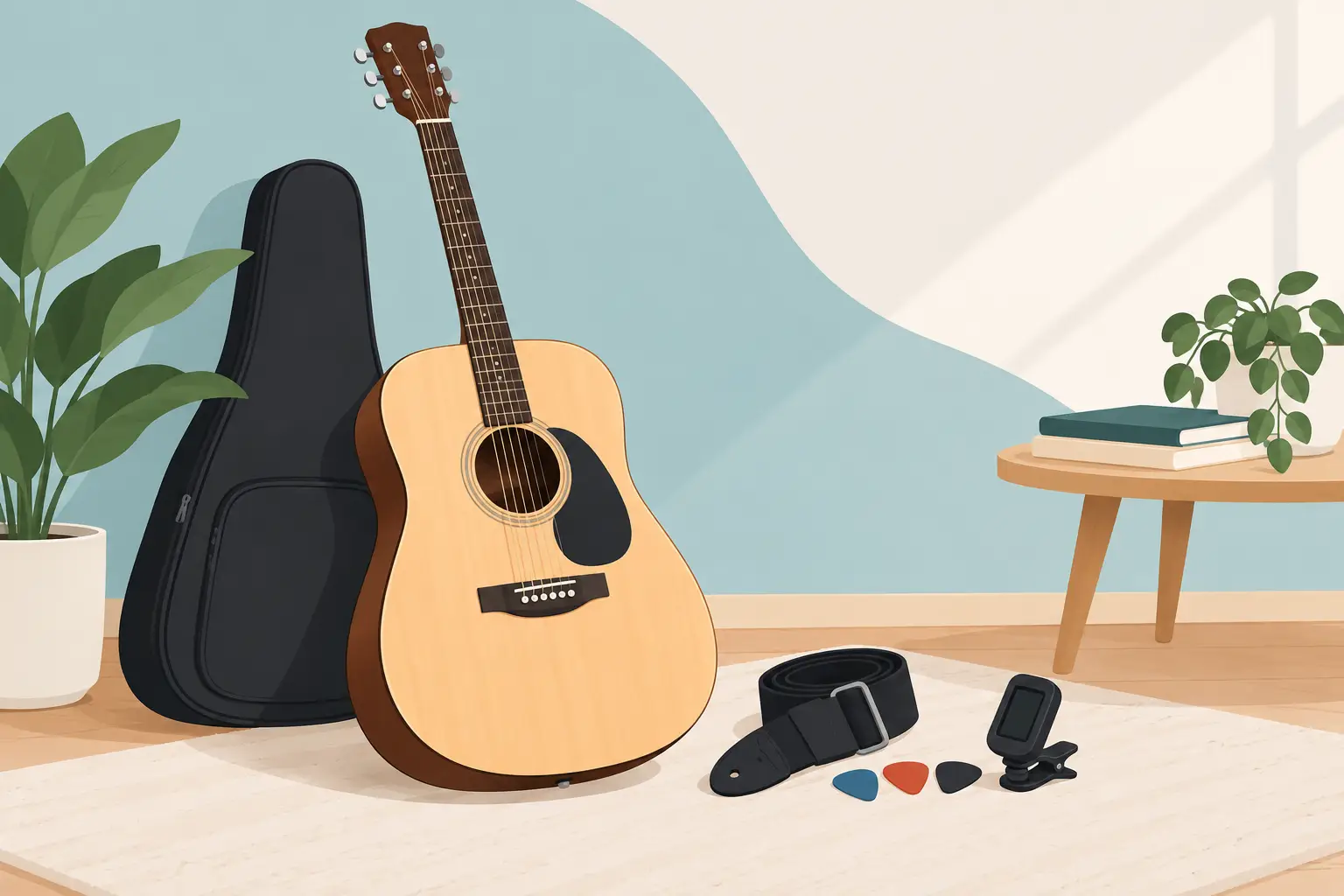
A first guitar should make someone want to pick it up again tomorrow. That is the real test behind any starter acoustic guitar review. A guitar can look beautiful on a stand, but if the strings feel painfully high, the body is too large for the player, or it will not stay in tune, enthusiasm can disappear fast.
For children, teens, and adult beginners, the best first acoustic guitar is not always the most expensive one or the one with the flashiest brand name. It is the guitar that feels comfortable, sounds clear enough to make practice rewarding, and supports the musical goals that matter to the player. Whether that means singing favorite songs at home, joining a school group, or eventually stepping onto a local stage, the right instrument makes those first steps feel possible.
What a Good Starter Acoustic Guitar Should Do
A beginner guitar does not need to be perfect. It does need to be playable. The biggest difference between a frustrating guitar and an encouraging one is often the setup: how the strings sit above the fretboard, how smoothly the tuning machines work, and whether the instrument plays in tune as notes move up the neck.
A strong starter acoustic guitar should offer a comfortable neck, reliable tuning, a body size that fits the player, and a sound that makes basic chords feel satisfying. These details matter more than decorative inlays, glossy finishes, or a long list of extras in the box.
It also helps to set realistic expectations. Entry-level guitars use less expensive materials and hardware than professional instruments. That is completely fine. A beginner does not need a premium instrument to learn chords, rhythms, songs, and confident performance habits. They need an instrument that invites consistent practice.
Starter Acoustic Guitar Review: The Features That Matter
Comfort comes before volume
Many first-time players assume a larger guitar must be better because it sounds bigger. For a child or smaller-framed teen, though, a full-size dreadnought can feel like a lot of guitar to hold. If the player has to reach too far around the body or struggles to see the fretboard while sitting naturally, practicing becomes more difficult than it needs to be.
Smaller body styles are often a great fit for younger students, smaller adults, and anyone who wants an easygoing playing experience. A concert, parlor, or folk-style acoustic can be more comfortable without sounding small or weak. Full-size dreadnoughts can be wonderful for older teens and adults who want a bold strumming sound, especially for singing along with popular songs.
The best choice depends on the player, not a label on the guitar. Holding several guitars in person is valuable whenever possible. Sit down, place the guitar on your leg, and notice whether the shoulders can relax. If the guitar feels awkward before the first chord, it will not get more comfortable during a 20-minute practice session.
String height can make or break the experience
String height, often called action, is one of the most important things parents and adult beginners should check. When strings sit too high above the fretboard, pressing down takes extra strength. Chords buzz, fingertips hurt more than they should, and beginners may think they are doing something wrong.
A well-set-up beginner guitar should still require effort - building finger strength is part of learning - but it should not feel like fighting the instrument. Many affordable guitars improve dramatically after a professional setup. This small adjustment can include lowering the action, checking the neck, smoothing sharp fret edges, and making sure the guitar plays in tune.
If a guitar is in the budget but feels stiff, do not immediately rule it out. Ask whether the price leaves room for a setup. A modest guitar with a thoughtful setup can be a better learning partner than a more expensive guitar that has never been adjusted.
Tuning stability builds confidence
Beginners need to hear the results of their work. When they learn a G chord and it sounds sour because the guitar slipped out of tune, that can be discouraging. Reliable tuning machines are not glamorous, but they are a major part of a positive first-guitar experience.
Every guitar needs regular tuning, especially with new strings. A beginner should expect to tune before playing and sometimes during practice. Still, a decent starter guitar should hold its tuning reasonably well after the strings have settled in. Pair the guitar with a simple clip-on tuner and teach the player how to use it from day one. That skill creates independence quickly.
Sound should inspire, not intimidate
A beginner acoustic does not need the rich, complex sound of a high-end solid-wood guitar. It should have a clear, balanced voice that makes simple strumming patterns and single-note melodies easy to hear. Listen for a sound that feels lively rather than thin, muffled, or overly harsh.
There is a trade-off here. Solid-top guitars often offer more warmth and response, but they usually cost more and may be more sensitive to temperature and humidity. Laminated-top guitars are often durable, affordable, and a very practical choice for families. For a first instrument, reliability and playability usually matter more than chasing a particular tonewood.
Choosing the Right Size for the Player
Size is especially important for younger guitarists. A full-size guitar is not a graduation requirement, and buying one too soon can slow a child's progress. Students should be able to hold the guitar comfortably, reach around the body, and form chords without straining their wrist.
A three-quarter-size guitar can work well for many elementary-age players. A smaller-bodied full-scale guitar may suit older children and teens who need a more manageable body without giving up standard fret spacing. Adults should not automatically choose the largest guitar either. Plenty of adult beginners enjoy smaller acoustic guitars because they are easier to hold on the couch, in a lesson room, or around a campfire.
For very young students, a nylon-string classical guitar may be worth considering. Nylon strings are gentler on early fingertips, though the wider neck has its own adjustment period. Steel-string acoustics are typically the better match for students who want to play modern pop, rock, country, folk, or singer-songwriter music.
What to Avoid When Buying a First Guitar
The lowest-priced guitar package can be tempting, particularly when it includes a case, picks, strap, and tuner. Sometimes those packages are a smart starting point. Other times, the guitar itself is so difficult to play that the accessories do not matter.
Be cautious of instruments with sharp fret ends, visibly bowed necks, loose tuning pegs, cracks, lifting bridges, or strings that sit extremely high. Also be careful with used guitars that have been stored in a hot garage, attic, or trunk. Texas heat can be tough on wooden instruments, and repair costs can quickly erase the savings of a bargain purchase.
Do not assume a child will outgrow a guitar in a few months and therefore does not deserve a quality instrument. A thoughtfully chosen starter guitar can last through years of lessons, songs, jam sessions, and first performances. It does not have to be expensive, but it should give the student a fair chance to succeed.
Let the Student's Goals Shape the Choice
The right guitar depends on what the player hopes to do with it. A student who wants to strum and sing current songs may love a comfortable steel-string acoustic with a warm, full sound. Someone interested in fingerpicking may prefer a smaller-bodied guitar with clear note separation. A student planning to perform with a band eventually may benefit from an acoustic-electric model, although a built-in pickup is not essential for the first year of learning.
At Matt Burk Music Studio, we see how much faster students grow when their instrument fits both their body and their musical goals. A guitar lesson can help with more than chords and songs. An experienced instructor can check posture, hand position, tuning habits, and whether the guitar itself is creating unnecessary obstacles.
A free trial lesson is also a great time to bring in a guitar you already own or are considering buying. Getting a little guidance before making a purchase can save a family from choosing an instrument that looks right online but feels wrong in a student's hands.
The best first guitar is the one that gets played. Choose a comfortable instrument, keep it tuned, celebrate the first clean chord, and let each small win build toward the moment the student is ready to share their music with someone else.