
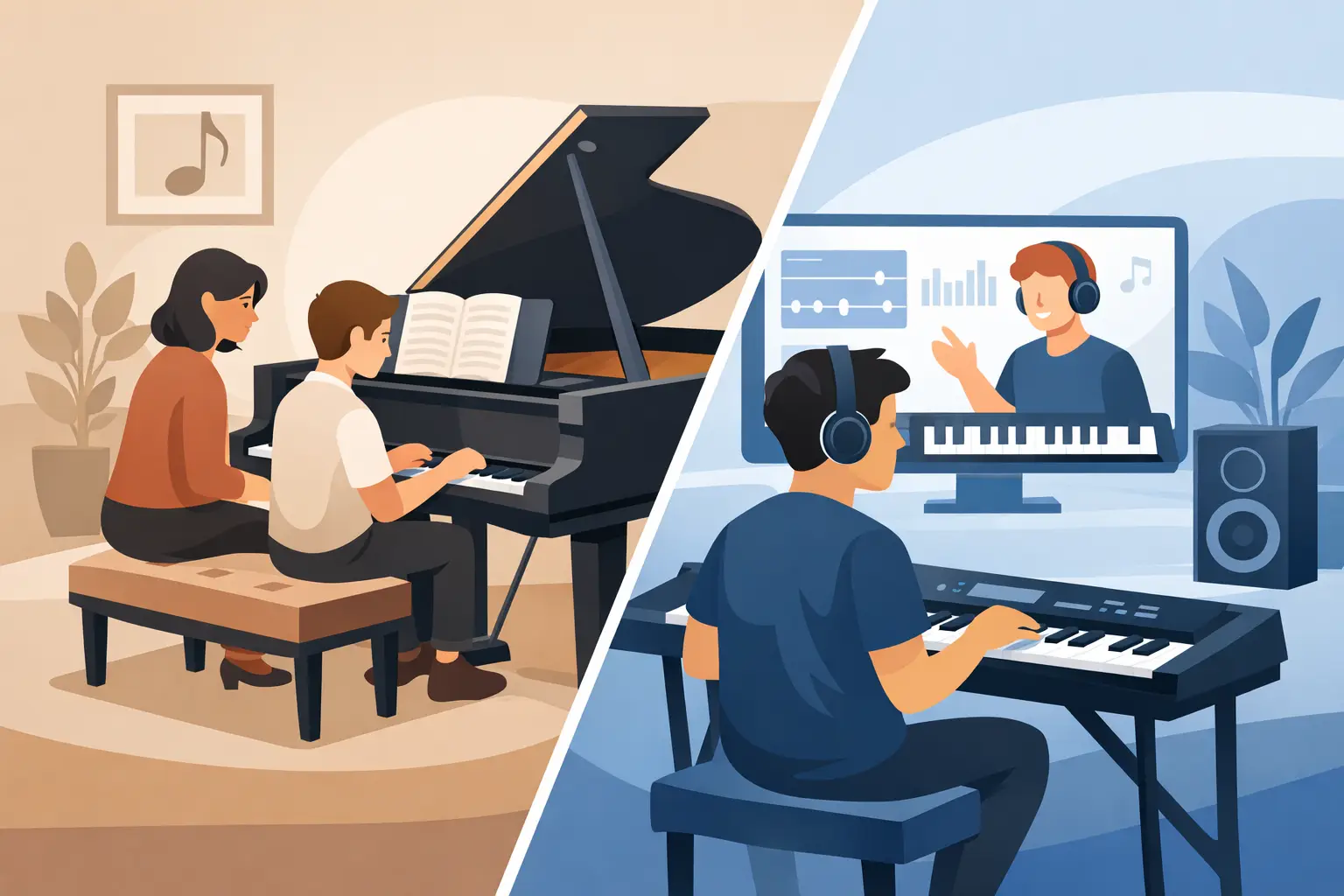
A lot of families start with the same question after a child shows interest in music or an adult decides it is finally time to learn: piano lessons vs keyboard classes - which one actually makes more sense? It is a fair question, because while the two can look similar from the outside, they often lead to very different learning experiences.
The best choice usually comes down to goals. If you want strong technique, reading skills, expression, and long-term musical growth, piano lessons are often the better path. If you want a lower-cost entry point, a casual introduction, or a quick way to explore basic playing on an electronic instrument, keyboard classes can be a great place to start. Neither option is automatically better for everyone. What matters is where the student wants to go.
What is the real difference between piano lessons vs keyboard classes?
At first glance, both involve black and white keys, songs, and hand coordination. But the instrument and the teaching approach can be quite different.
Piano lessons are usually built around learning touch, posture, dynamics, note reading, rhythm, phrasing, and control on an acoustic piano or a weighted digital piano. The goal is not just to play notes, but to make music with confidence and expression. Students often work one-on-one with a teacher who adjusts the lesson to their pace, personality, and goals.
Keyboard classes tend to focus more on the electronic keyboard as its own instrument. That may include learning chords, simple melodies, rhythm patterns, built-in sounds, and basic accompaniment styles. In some programs, keyboard classes are taught in groups, which can make them social and fun, but also less personalized.
This is where many families get tripped up. A keyboard can be used to begin piano study, especially if it has weighted keys and a responsive touch. But a keyboard class is not always the same thing as piano instruction. One is often centered on broad musical exposure. The other is usually centered on skill development over time.
When piano lessons make more sense
If a student wants a strong foundation, piano lessons usually offer more depth. That foundation matters whether the student dreams of playing classical music, worship music, pop songs, jazz, or even writing original songs later on.
Private piano instruction gives students space to build good habits early. Hand position, finger strength, timing, listening, and reading music all develop more naturally when a teacher can give immediate feedback. For younger beginners, that kind of guidance can prevent frustration. For teens and adults, it often speeds up progress because the lessons are tailored instead of generic.
Piano lessons also tend to support long-term confidence. When students can sit down at an instrument and really understand what they are doing, they are more likely to stick with it. They are not just copying keys from memory. They are learning how music works.
That deeper training becomes especially valuable for students who may want to perform. Playing in front of others takes more than knowing a few chords. It takes consistency, control, and preparation. A student-first lesson environment with coaching and performance opportunities can help bridge the gap between practicing at home and sharing music with confidence.
When keyboard classes are a good fit
Keyboard classes can be a smart choice in the right situation. If the goal is simply to try music without a big commitment, they can offer a low-pressure starting point. That is especially true for younger kids who are still exploring what instrument excites them most.
They can also work well for students who enjoy a group setting. Some learners feel more comfortable when they are surrounded by peers, and classes can bring a sense of energy that keeps beginners engaged. If the class includes fun songs, rhythm games, and basic keyboard patterns, it may be just the thing to spark early interest.
For adults, keyboard classes sometimes feel less intimidating than private lessons. A casual class can make music feel approachable, especially for someone who is worried about being judged or falling behind. If the main goal is recreation and stress relief, that can be enough.
Still, there is a trade-off. Group classes usually move at one shared pace. If a student catches on quickly, they may get bored. If they need more time, they may feel rushed. That is not a flaw in the class format. It is just the reality of teaching multiple people at once.
The instrument itself matters more than people think
One big reason the piano lessons vs keyboard classes decision feels confusing is that people use the words piano and keyboard interchangeably. But the feel of the instrument changes the learning experience.
An acoustic piano has weighted keys and a full range of tone and dynamics. Students learn how to control volume, shape phrases, and develop finger strength. A quality digital piano can offer much of that same training if it has weighted keys and proper touch sensitivity.
Many basic keyboards have lighter keys and fewer keys overall. They can be excellent for certain uses, especially for beginners on a budget or students interested in pop production and electronic music. But they do not always build the same technique. Moving later from a light keyboard to a real piano can feel like a big adjustment.
That does not mean you need an expensive setup on day one. It just means the equipment should match the goal. If the goal is serious piano study, weighted keys matter. If the goal is musical exploration, a simpler keyboard may be perfectly fine at first.
What parents should consider for kids and teens
For children, the right choice often depends on attention span, personality, and goals. Some kids thrive in a group and love the social side of learning. Others need individual attention to stay focused and feel successful.
Parents should also think beyond the first few weeks. It is easy to choose based on convenience alone, but progress builds motivation. When a student can hear improvement, play songs they enjoy, and feel supported by a teacher who knows them, they are more likely to keep going.
That is why personalized lessons are such a strong option for many families. They create room for fun and structure at the same time. A child can learn fundamentals, request favorite songs, and grow toward performances without feeling boxed into a one-size-fits-all class.
For teens, ownership matters even more. They often stay committed when lessons connect to their actual interests, whether that is current songs, songwriting, playing with others, or preparing for the stage. A flexible lesson model can meet them there.
What adult beginners should consider
Adults often ask a slightly different question. They are not just comparing piano lessons vs keyboard classes. They are asking which option fits real life.
That usually means looking at scheduling, budget, pace, and comfort level. Some adults want serious progress and appreciate private lessons because they make every minute count. Others want a relaxed start and like the idea of learning in a class with lower pressure.
If you are an adult beginner who has always wanted to play well, private piano lessons are often worth it. They remove the guesswork. You get direct feedback, a plan that fits your goals, and encouragement that keeps momentum going. If you are returning after years away from music, that personal guidance can be the difference between getting stuck and moving forward.
On the other hand, if your goal is casual fun and you mostly want to experiment with sounds, chords, and simple songs, keyboard classes may be enough. The right answer depends on what would make you excited to come back next week.
The hidden factor: motivation
The format matters, but motivation matters more. Students improve when lessons feel rewarding, manageable, and connected to something meaningful.
That could be mastering a favorite song, gaining confidence, playing in a recital, joining a band class, or just having a creative outlet after a long school or work week. The more clearly a student can see their path, the easier it is to stay engaged.
This is where a supportive studio environment can change everything. At Matt Burk Music Studio, students are not treated like they are all supposed to learn the same way. They are coached toward personal goals in a fun, encouraging environment with real opportunities to grow and perform. For many students, that kind of support turns music lessons from another activity into something they truly look forward to.
So which one should you choose?
Choose piano lessons if you want strong fundamentals, personal attention, expressive playing, and a path that can grow with the student for years. Choose keyboard classes if you want a casual introduction, a group environment, or a simple way to explore music before committing more deeply.
If you are unsure, that is actually normal. Many students do not need a forever decision on day one. They just need a starting point that feels welcoming and clear. A good first lesson should help you see what fits, what motivates the student, and what kind of support will help them succeed.
The right music program should make growth feel possible, not overwhelming. When students feel seen, encouraged, and excited to play, they tend to surprise themselves with how far they can go.