
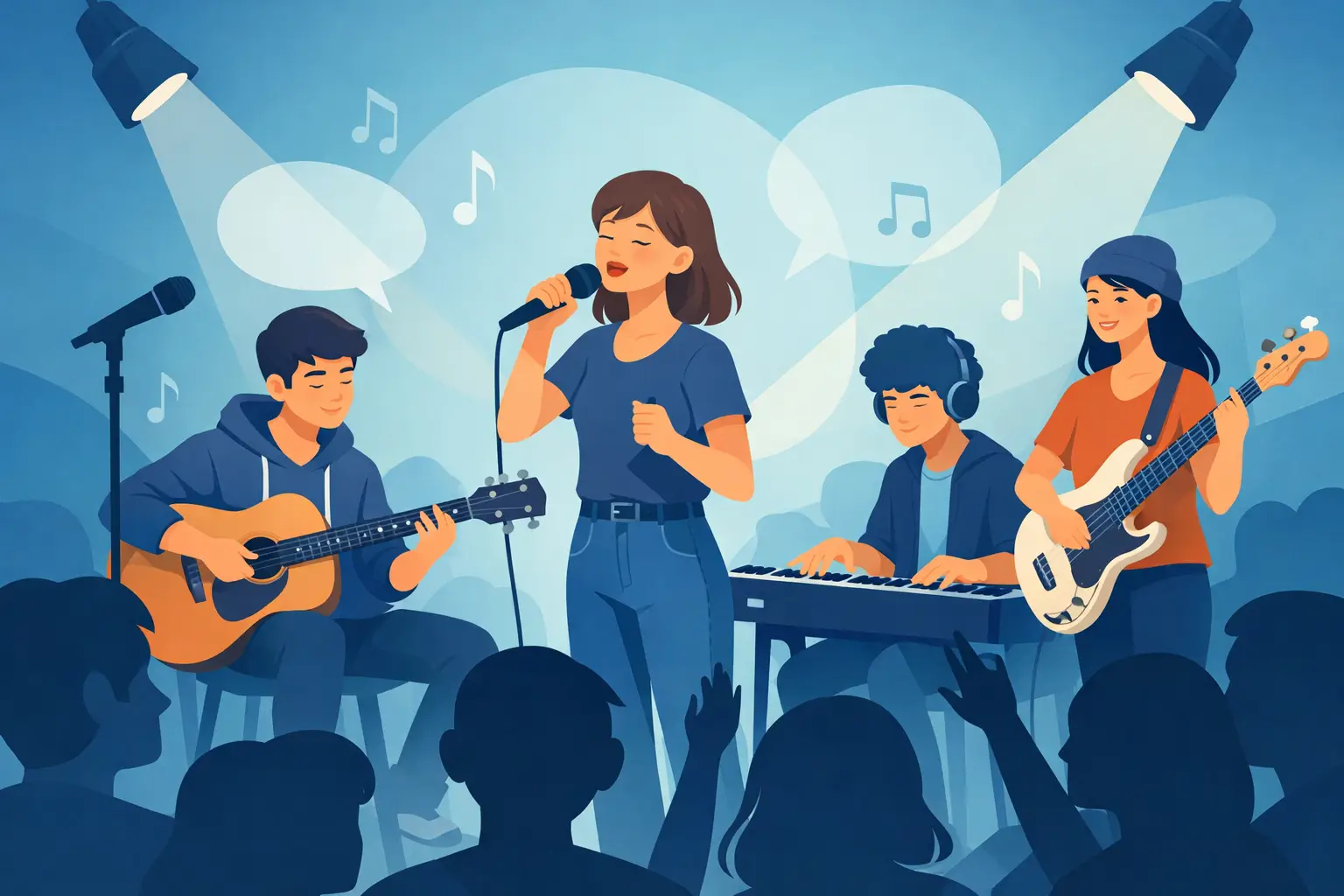
A student steps up to the microphone, adjusts their grip on the guitar, and glances at the crowd for half a second. That moment right before the first note is where so much growth happens. An open mic for young musicians is not just a chance to perform. It is where practice starts turning into confidence, where nerves become focus, and where students begin to feel like real artists.
For parents, that matters because music lessons are about more than getting through a method book. For students, it matters because performing gives purpose to the work they do each week. When young musicians have a safe, encouraging place to share what they have learned, they usually improve faster, care more deeply, and enjoy music on a whole new level.
Why an open mic for young musicians works so well
Private lessons build skills, but performance brings those skills to life. A student can play a song beautifully in a lesson room and still feel unsure the first time people are listening. Open mic nights help bridge that gap in a way that feels exciting instead of overwhelming.
The best part is that open mic events create a middle ground. They are not usually as high-pressure as a formal recital or competition, but they are still real performances. Students learn how to walk on stage, introduce a song, recover from small mistakes, and keep going. Those are not side benefits. They are core musical skills.
Young musicians also tend to practice differently when a performance is coming up. They listen more carefully, pay attention to details, and start thinking about expression rather than just notes. A deadline can be motivating, but a meaningful one is even better. Knowing they will play for family, friends, and a supportive audience gives students a reason to prepare with purpose.
Confidence grows one performance at a time
Many parents hope music lessons will help their child become more confident, and they are right to hope for that. Still, confidence rarely appears out of nowhere. It usually comes from doing something that feels a little scary, getting through it, and realizing, I can do this.
That is exactly why an open mic for young musicians can be such a powerful part of a student’s development. It gives kids and teens a clear win. Maybe the song is simple. Maybe their hands shake a little. Maybe they miss a chord and recover. It still counts. In fact, those moments often build the strongest kind of confidence because it is earned, not borrowed.
This matters for adult beginners too, but for younger students especially, performance can change how they see themselves. They stop thinking of music as only a weekly activity and start seeing themselves as someone who can share their gifts with other people.
What makes a youth open mic truly supportive
Not every performance setting is equally helpful. A good open mic for young musicians should feel welcoming from the moment a student arrives. The environment matters just as much as the stage.
A supportive event usually includes a warm audience, encouraging hosts, and clear expectations. Students should know what will happen, how long they will play, and what kind of setup they can expect. Surprises tend to increase nerves, while structure helps students settle in.
It also helps when the culture is positive. The goal is not perfection. The goal is growth. When students hear applause for effort, improvement, and courage, they learn that performing is not about proving they are flawless. It is about communicating, connecting, and getting stronger each time.
That said, there is always a balance. If an event is too casual, some students may not take preparation seriously. If it feels too intense, newer performers may shut down. The sweet spot is a setting that feels real, organized, and upbeat.
How young musicians benefit beyond the stage
Performance experience shows up in lessons almost immediately. Students who participate in open mic nights often become more focused during practice because they can see the point of what they are learning. Timing, tone, posture, stage presence, and memorization all start to feel more relevant.
There is also a social benefit that families sometimes underestimate. Music can be deeply personal, and that is part of what makes it meaningful. But students thrive when they realize they are part of a community too. At open mic events, they get to hear other singers, drummers, pianists, guitarists, and bands at different levels. That can be inspiring in a healthy way.
Instead of thinking, I am the only one struggling with this, they start to think, Everybody is learning, and everybody starts somewhere. That shift can reduce anxiety and increase motivation.
For some students, open mic participation also reveals goals they did not know they had. A child who thought they only wanted lessons may suddenly want to join a band class. A teen who felt shy about singing may discover that performing is their favorite part of music. Real experiences help students find their direction.
Preparing for an open mic for young musicians
Preparation should build confidence, not pressure. The right approach depends on the student’s age, experience level, and personality. A first-time performer usually does best with a song they genuinely enjoy and can play comfortably. This is not the moment to pick the hardest piece they know.
Students should practice starting and ending the song cleanly, since those are the moments that can feel most exposed on stage. It also helps to rehearse how they will walk up, get set, and begin. Small routines make a big difference.
Parents can help by keeping the mood encouraging. Instead of asking for perfection, focus on readiness and effort. Questions like, Do you feel prepared to share your song? are usually more helpful than, Can you play it without any mistakes?
Teachers play a huge role here too. Good coaching includes the music itself, but it also includes mindset. Students need practical strategies for nerves, like taking a breath before starting, keeping their eyes on a familiar spot in the room, and moving forward even if something goes wrong.
What families should look for in a music program
If performance is important to your child’s growth, it makes sense to choose a music program that treats it as part of the learning journey rather than an afterthought. Some studios teach songs well but offer very few chances to use those skills in public. Others create regular opportunities so students can build stage confidence little by little.
That steady exposure often works better than waiting for one big annual event. A recital can be exciting, but open mic nights, jam sessions, and casual performance experiences give students more reps. And when confidence is the goal, reps matter.
This is one reason community-focused studios stand out. At Matt Burk Music Studio, students are not just learning alone in a room. They are developing as performers through lessons, coaching, and real opportunities to share music in supportive settings. That combination helps students grow faster and enjoy the process more.
When a student is nervous, should they still do it?
Usually, yes - with the right support. Feeling nervous before performing is normal. It does not mean a student is not ready. It usually means they care.
The real question is whether the challenge matches the student. For one child, singing one verse into a microphone may be the perfect next step. For another, performing a full song with accompaniment may feel just right. Growth happens when the experience stretches a student without overwhelming them.
If a student is extremely anxious, the answer may be to start smaller. They might perform for a tiny audience first, play with a teacher, or share part of a song instead of the whole thing. Progress still counts, even when it comes in small steps.
That is the beauty of a well-run open mic. It creates room for different personalities, different skill levels, and different goals. Some students are ready to command the stage. Others are simply ready to begin. Both deserve encouragement.
Music has a special way of pulling hidden strengths to the surface. Sometimes all a young musician needs is one good performance opportunity, one supportive room, and one moment of courage to realize they are capable of more than they thought. That is why open mic experiences matter so much - not because every student wants to be famous, but because every student deserves the chance to be heard.